

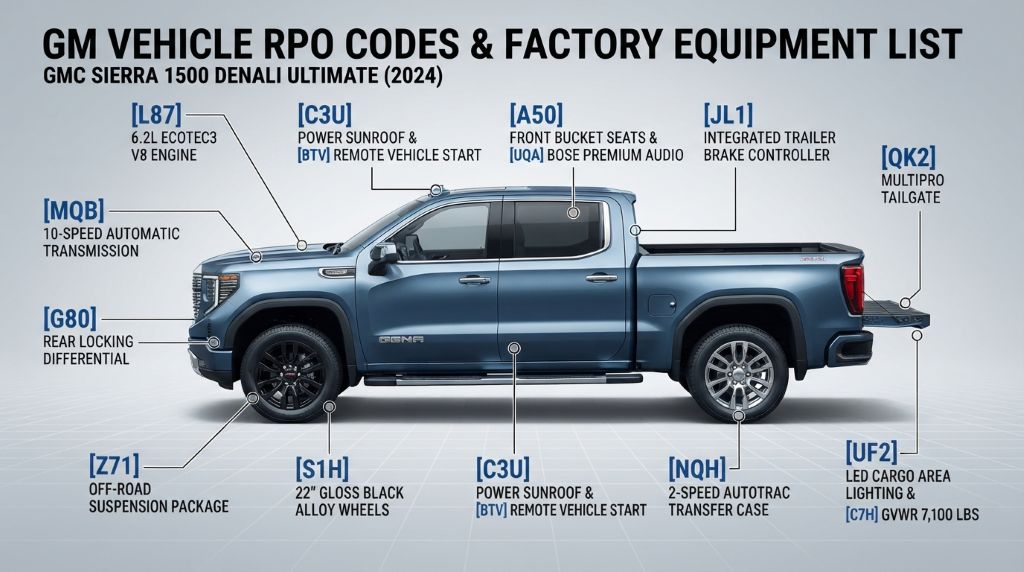
Key Takeaways
- An RPO code lookup by VIN reveals every factory-installed option on a GM vehicle.
- GM has no public per-VIN RPO database, so most lookups rely on the physical SPID label.
- Third-party services reconstruct RPO data using licensed VIN-level build records.
- Matching codes to your exact VIN prevents costly parts-ordering mistakes.
- Classic Corvette owners often rely on the original tank sticker instead of a modern label.
Ordering a transmission for a used truck without confirming its exact build feels like betting money on a guess. A shop owner once told me he replaced a customer’s axle twice before realizing the VIN pointed to a different gear ratio than assumed. One accurate RPO code lookup would have solved the problem before the first purchase.
This guide explains how VIN-based RPO lookups work, where the data comes from, and how to use it correctly.
What an RPO Code Lookup by VIN Actually Does
An RPO code lookup by VIN connects a vehicle’s unique 17-character identifier to its factory build sheet. This process reveals every option installed during production, not just the advertised trim level. Buyers, mechanics, and appraisers all benefit from this level of detail.
Unlike a basic VIN decode, which shows general specifications like make and model, an RPO lookup goes deeper. It uncovers specific packages, axle ratios, interior colors, and technology features baked into that exact vehicle. This distinction matters enormously for parts accuracy.
However, GM doesn’t offer a public per-VIN RPO database on its own website. This gap surprises many owners who expect instant online access similar to a recall search. Instead, most reliable data comes from the physical label attached to the vehicle itself.
Third-party services have stepped in to fill this gap. These platforms reconstruct RPO configurations using licensed VIN-level build data, when that data exists for a given VIN. Coverage varies by model year, so older or lower-volume vehicles sometimes return incomplete results.
I’ve tested several of these tools while researching used trucks for family members. Results proved accurate when cross-checked against the physical SPID label, though not every VIN returned a complete list. This inconsistency makes verifying results against the sticker itself a smart habit.
Understanding this limitation prevents frustration. A VIN-based lookup works best as a starting point, not a final answer. Cross-referencing with GM’s original documentation remains the gold standard for absolute certainty.
How to Perform an RPO Code Lookup by VIN
Running an accurate lookup requires combining VIN data with physical verification whenever possible. The process differs slightly depending on your vehicle’s age and available records.
Follow these steps for the most reliable results:
- Locate your VIN on the dashboard, door jamb, or registration paperwork.
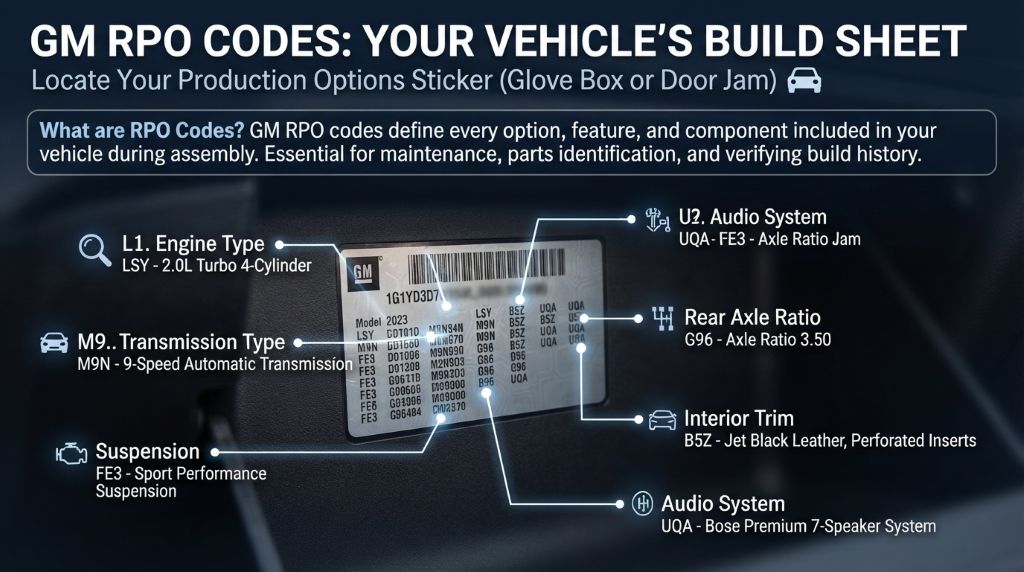
- Find the physical SPID label inside the glovebox, console lid, or trunk area.
- Enter your VIN into a reputable RPO decoder tool for a second reference point.
- Compare both results, noting any discrepancies between the label and digital lookup.
- Confirm ambiguous codes, like reused engine designations, against your specific model year.
The SPID label remains your most trustworthy source, since GM installs it directly at the factory. Digital tools add convenience, especially when the physical label has faded or gone missing over time. Many older vehicles suffer exactly this problem after decades of sun exposure.
For pre-1984 vehicles, the process changes entirely. Classic car owners typically rely on the original build sheet instead of a modern label. Corvette owners specifically look for the famous tank sticker, tucked above the fuel tank during assembly.
Dealership service departments sometimes offer free VIN-based printouts too. This option works well for GM’s electronic records, which extend back to at least 1990 models. Calling ahead saves a wasted trip if your local dealer doesn’t offer this service.
I always recommend photographing both the VIN and SPID label together. This single habit prevents confusion later, especially when ordering parts from a supplier who needs exact confirmation.
Why VIN-Specific Data Beats Generic Code Lists
Generic RPO code lists explain what each code typically means, but they can’t confirm what your specific vehicle actually has installed. This distinction separates a useful reference from an authoritative answer.
Consider the code LS1 as an example. This designation identified a Pontiac engine decades before it became famous as a Corvette powerplant in the late 1990s. A generic list might show both meanings without clarifying which applies to your car. A VIN-specific lookup, paired with your model year, removes that ambiguity completely.
Axle and differential codes present similar risks. Multiple codes sharing the same prefix can indicate different gear ratios depending on the drivetrain configuration. Ordering blind from a generic list increases your odds of receiving mismatched parts.
Insurance appraisals and resale negotiations also benefit from VIN-specific documentation. Claiming a vehicle has a specific performance package means little without proof tied to that exact VIN. Buyers researching options like Z51 or Magnetic Ride Control want confirmation, not assumptions.
According to automotive documentation on RPO systems, dealerships and service centers rely on these codes to retrieve exact vehicle specifications without extensive paperwork. This function only works reliably when the data traces back to the correct VIN, not a generalized model description.
Data density also varies significantly across model years and trims. Higher-volume vehicles typically return more complete records than limited-production or older models. Knowing this limitation helps set realistic expectations before you start searching.
Common Mistakes When Looking Up RPO Codes by VIN
Even experienced owners make avoidable errors during an RPO lookup. Recognizing these mistakes early saves both time and money on parts or research.
Watch for these common pitfalls:
- Trusting a single digital source without cross-checking the physical SPID label
- Ignoring model year context when a code has multiple historical meanings
- Assuming missing codes mean the vehicle lacks that option entirely
- Ordering parts before confirming axle or differential codes against the actual VIN
- Overlooking reproduction SPID labels, which aftermarket vendors sell and which may not reflect the true factory build
That last point deserves extra attention. Reproduction labels exist for restoration purposes, but they sometimes appear on vehicles where the original label went missing. A buyer assuming authenticity without verification risks paying for options that were never actually installed.
Another overlooked mistake involves assuming GM’s database covers every VIN equally. Coverage gaps exist, particularly for older or specialty vehicles built in smaller numbers. Therefore, patience and multiple verification sources matter more than speed.
For additional background on how this coding system developed, the Regular Production Option overview on Wikipedia offers useful historical context.
Frequently Asked Questions
Can I look up RPO codes using just my VIN?
Yes, though GM has no public per-VIN database, so results often come from third-party services using licensed build data.
Where is the most reliable RPO code source?
The physical Service Parts Identification label inside your vehicle remains the most trustworthy source available.
Do older GM vehicles have RPO codes I can look up?
Yes, GM’s electronic records extend back to at least 1990, and older cars often have a build sheet or tank sticker instead.
Why do two RPO lookup tools sometimes show different results?
Coverage and data completeness vary by provider, so cross-checking multiple sources improves overall accuracy.
Does a missing RPO code mean the option isn’t installed?
Not always. Faded labels or incomplete digital records can cause codes to appear missing even when the option exists.
A careful RPO code lookup by VIN saves you from costly parts mistakes and confirms your vehicle’s true factory build. It can also help you plan routine maintenance with greater confidence, especially when checking components that affect everyday reliability. For example, understanding how long should a car battery last? can help you know when to inspect or replace your battery. Have you compared your VIN lookup results against your SPID label? Share your experience in the comments, and pass this guide along to fellow GM owners researching their vehicles.