

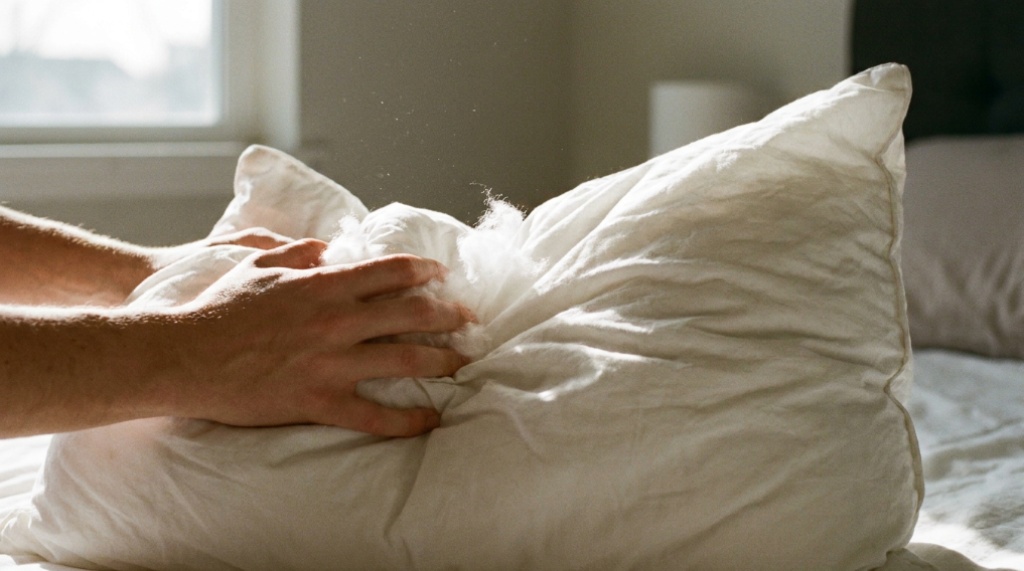
You fluff your pillow every night, yet by morning it looks like a deflated pancake. Before you blame the pillow, consider what’s happening inside it. Down-alternative fills — usually polyester clusters or microfiber — lose loft for two very different reasons: the fill gets compressed, or it gets dirty. Washing fixes the second problem, but washing too often can cause the first. If you’ve invested in soft supportive hotel style pillows, you already know how much difference proper loft makes. So how often should you actually wash them
Quick Answer
Wash down-alternative pillows every 4 to 6 months. If you sweat heavily, sleep without a pillowcase protector, have allergies, or sleep with pets, wash them every 2 to 3 months instead. Washing more often than every 2 months can break down synthetic fill fibers and reduce loft faster than dirt ever would.
Key Takeaways
- Every 4–6 months is the standard interval for most sleepers; 2–3 months if you sweat, have allergies, or sleep with pets.
- Loft loss comes from two sources: fill compression (fixed by fluffing and rotation) and contamination (fixed by washing).
- A pillow protector extends your wash interval more effectively than washing more often.
- Drying matters as much as washing — damp clumps of synthetic fill are the number-one cause of permanent flatness.
- If a pillow stays flat after a proper wash and dry, the fill is worn out and washing won’t bring it back.
Why the 4-to-6-Month Rule Exists
Down-alternative pillows are filled with synthetic materials, most commonly polyester fiber clusters or siliconized microfiber. These fills are engineered to trap air between fibers, and that trapped air is what you feel as loft and support. Two things work against that structure over time.
First, the fill compresses from nightly use. This is mechanical, not hygienic, and it’s mostly reversible through fluffing and rotation. Second, the pillow absorbs moisture, oils, and dead skin cells from your scalp and face. Over months, that buildup causes the fill to clump, smell, and lose its springiness. Washing removes the buildup. But every wash cycle also stresses the fibers — heat, agitation, and detergent gradually make synthetic clusters brittle and less able to bounce back.
That tension is why the 4-to-6-month window exists. It’s frequent enough to remove contamination before it damages the fill, and infrequent enough to avoid accelerating fiber breakdown through over-washing, To ensure your feeding setup is just as comfortable and supportive, read more about how lightweight nursing pillows make breastfeeding easier.
When You Should Wash More Often
Some sleepers genuinely need a shorter interval. Consider washing every 2 to 3 months if any of the following apply:
- You sweat heavily at night or sleep in a warm room without air conditioning.
- You have allergies, asthma, or dust-mite sensitivity. Allergens accumulate in pillow fill faster than most people realize, and washing removes them.
- You sleep with pets that share your bed. Pet dander and oils transfer to pillows quickly and linger.
- You eat in bed, apply heavy skincare products before sleeping, or sleep without a pillowcase protector.
- You’re recovering from an illness and want to reset the pillow.
If you fall into two or more of these categories, lean toward the 2-month end. If you use a waterproof pillow protector and change your pillowcase weekly, you can comfortably stretch to 6 months or even a bit longer.
When Washing Actually Hurts Loft
There’s a common assumption that a cleaner pillow is always a loftier pillow. That’s not quite true. Synthetic fills degrade with each wash cycle, and the damage is cumulative.
The biggest threats during washing are:
- Heat. Hot water and high dryer temperatures can melt or warp polyester fibers, causing them to fuse and lose their ability to spring back.
- Agitation. A vigorous cycle or an overloaded machine batters the fill clusters and breaks them down.
- Detergent residue. Excess soap left in the fill attracts moisture and causes clumping, which reads as flatness.
- Incomplete drying. Damp fill is the most common cause of a pillow that never regains its shape.
If your pillow is losing loft every few weeks and you’ve been washing it monthly, the washing itself may be the problem. Try a longer interval with a protector, and see if loft holds better.
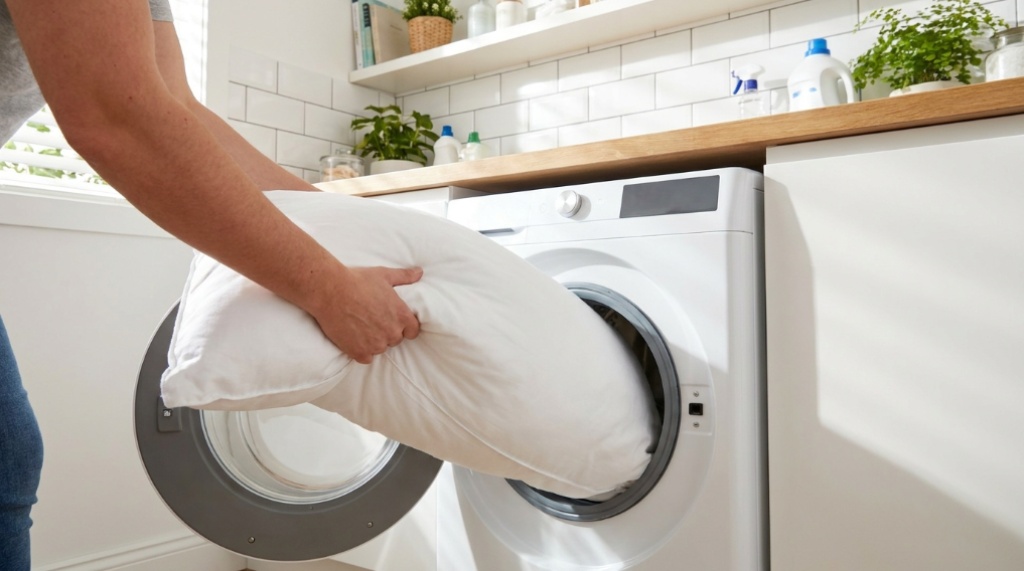
How to Wash Down-Alternative Pillows Without Killing the Loft
Technique matters as much as frequency. Follow these steps to wash safely:
- Check the care tag first. Some down-alternative pillows are spot-clean only, and machine washing will void their structure. Follow the manufacturer’s instructions if they conflict with general advice.
- Wash two pillows at once if possible. A single pillow in a large drum can become unbalanced. Two pillows balance the load and reduce strain on the fill.
- Use a gentle or delicate cycle with cool or warm water. Avoid hot water entirely.
- Use a small amount of mild liquid detergent. Skip fabric softener and bleach — both leave residue that flattens fill.
- Run an extra rinse cycle. This is one of the most overlooked steps and one of the most effective for preventing clumping.
- Dry on low heat with dryer balls or clean tennis balls. The balls break up clumps and redistribute fill as it dries.
- Expect multiple dry cycles. A pillow may need two to three passes. Pull it out and squeeze the center — if it feels cool or damp, keep drying.
- Fluff and let it rest for a few hours. Give the fill time to fully expand before judging the loft.
Drying Is Where Most Pillows Fail
If there’s one piece of advice worth remembering, it’s this: a down-alternative pillow that never fully dries will never fully loft. Moisture causes synthetic clusters to stick together, and once they dry in clumps, they stay clumped.
Signs a pillow isn’t fully dry:
- The center feels cooler than the edges.
- You can feel dense, hard lumps through the fabric.
- It smells faintly musty or damp, even hours after removal from the dryer.
If you hit any of these, put it back in on low heat. It’s better to over-dry slightly on low than to under-dry.
Pillow Protectors vs. More Frequent Washing
If your goal is preserving loft, a pillow protector is a better investment than a shorter wash cycle. A protector creates a physical barrier against sweat, oils, and allergens, which means the fill stays cleaner for longer and you can safely stretch your wash interval.
| Approach | Effect on Loft | Effect on Cleanliness | Effort |
|---|---|---|---|
| Wash every 2 months, no protector | Accelerated fiber breakdown | High | High |
| Wash every 6 months, with protector | Preserved longer | Comparable | Low |
| Wash every 4 months, no protector | Moderate breakdown | Good | Moderate |
The protector itself is what you wash monthly — it’s cheaper, dries faster, and takes far less abuse than the pillow inside.
Signs Your Pillow Is Done, Not Just Dirty
Washing can restore cleanliness and, in many cases, a bit of loft. But it can’t create loft that isn’t there. If your pillow shows these signs after a proper wash and full dry, replacing it is the honest answer:
- You fold it in half and it stays folded instead of springing back.
- It feels flat within a few days of washing, every time.
- The fill feels like dense, matted batting rather than individual clusters.
- It’s been in use beyond the typical lifespan of one to two years for synthetic fills.
No wash schedule will reverse worn-out fill. At that point, the question shifts from how often to wash to which pillow to buy next.
Frequently Asked Questions
Can I wash down-alternative pillows in a washing machine?
Most down-alternative pillows are machine washable, but always check the care tag first. Use a gentle cycle with cool or warm water, mild detergent, and two pillows per load to keep the drum balanced. Skip fabric softener and bleach.
How long do down-alternative pillows last?
Typically one to two years with regular use and proper care. Frequent over-washing, incomplete drying, and sleeping without a protector can shorten that significantly, while good protectors and consistent rotation can help them last longer.
Can I dry down-alternative pillows in the dryer?
Yes, but use low heat with dryer balls or tennis balls to break up clumps. Expect two to three cycles. A pillow that feels cool or damp in the center is not done and needs more time.
Is it bad to wash pillows too often?
Yes. Washing more often than every 2 months accelerates breakdown of synthetic fill fibers and can cause loft loss faster than normal use would. A pillow protector is a better solution for keeping pillows clean between washes.
How do I keep pillows fluffy between washes?
Fluff them daily, rotate which pillow you sleep on, air them out periodically, and use a removable pillow protector that you wash monthly. These habits preserve loft without stressing the fill.
Conclusion
For most people, washing down-alternative pillows every 4 to 6 months is the sweet spot — frequent enough to remove buildup, infrequent enough to preserve the fill. If you sweat heavily, have allergies, or sleep with pets, tighten that to every 2 to 3 months. Beyond timing, the details that protect loft most are gentle washing, thorough rinsing, and complete drying, ideally paired with a pillow protector you wash monthly. When a pillow stays flat even after correct washing, that’s your signal to replace rather than rewash.