

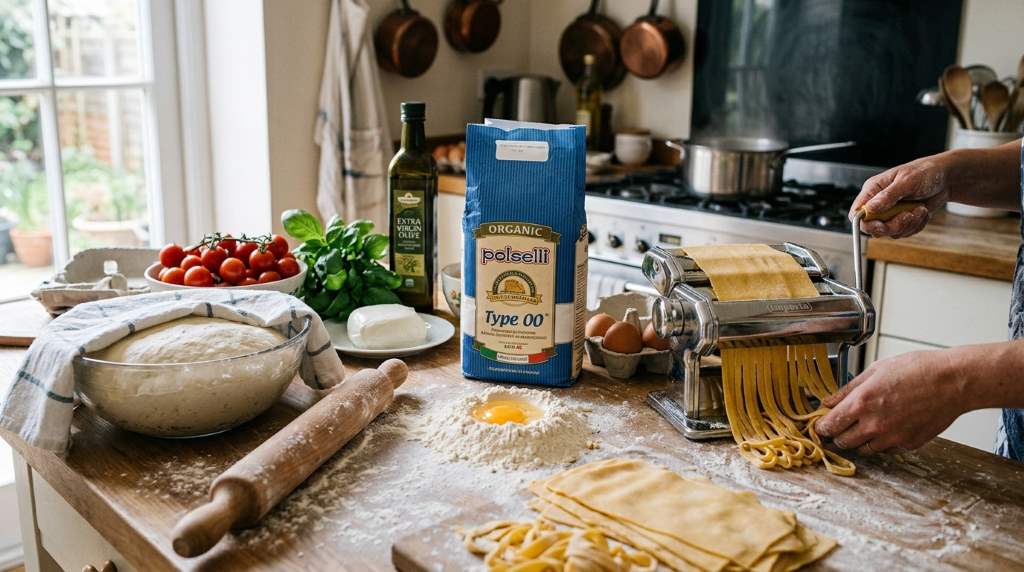
Yes, POLSELLI Type 00 Organic Flour is an excellent choice for homemade pizza and fresh pasta. Its fine grind creates smooth dough, while its reported 15.5% protein supports structure and elasticity. A reported 57% water absorption also makes it useful for hydrated pizza dough. The real advantage appears when you control fermentation, hydration, shaping, and cooking rather than simply choosing natural flour.
Key Takeaways From the POLSELLI Type 00 Test
POLSELLI Type 00 performs best when you treat flour strength as part of a complete dough system. Therefore, the following points summarize what matters most during home testing and cooking.
- Pizza: Expect a soft, elastic dough that stretches cleanly with proper hydration.
- Pasta: Expect a smooth dough that rolls easily and produces a refined bite.
- Hydration: Start conservatively, then add water gradually according to dough behavior.
- Fermentation: Longer fermentation can improve flavor, extensibility, and dough handling.
- Temperature: A thoroughly preheated baking surface makes a major difference in home ovens.
- Storage: Keep the flour dry, sealed, and protected from heat and humidity.

Why POLSELLI Type 00 Works So Well for Homemade Pizza
The first thing you notice with Type 00 flour is its exceptionally fine texture. That texture gives pizza dough a silky feel and makes stretching more predictable. For cooks who struggle with tearing, this can make shaping noticeably easier.
However, fine milling alone does not guarantee great pizza. The dough still needs enough gluten development to hold fermentation gases without becoming difficult to stretch.
POLSELLI’s Italian milling heritage also gives this flour a strong identity beyond its label. The company emphasizes careful wheat selection, milling expertise, and modern production methods alongside traditional practices. For more background on maintaining a clean kitchen workspace, these kitchen sponge alternatives offer useful household context.
What Type 00 Actually Means
Type 00 describes the flour’s Italian classification and very fine milling, not a universal quality grade. Therefore, two Type 00 flours can behave quite differently despite sharing the same designation.
Protein level, gluten quality, milling characteristics, and flour strength all influence dough performance. Consequently, experienced cooks judge flour by behavior rather than relying on the Type 00 label alone.
My Recommended Pizza Dough Starting Point
For a manageable home recipe, start with 500 grams of POLSELLI flour and approximately 285 grams of water. Add 15 grams of salt and a small amount of yeast according to your fermentation schedule.
Mix until the dough becomes cohesive, then knead until it feels smooth and elastic. Next, cover the dough and let fermentation develop gradually instead of rushing the process.
For an overnight dough, refrigeration can slow fermentation and build flavor. Before baking, bring the dough toward room temperature so it becomes easier to stretch without tearing.
How POLSELLI Type 00 Performs When Tested for Pizza
The most revealing test involves stretching the dough by hand rather than judging raw flour texture. Properly hydrated POLSELLI dough should stretch smoothly while retaining enough strength around the edges.
During shaping, avoid pressing the outer rim flat. Instead, preserve the gas around the perimeter because that trapped gas helps create a lighter cornicione.
Home ovens also change the result dramatically. Preheat a pizza stone or steel thoroughly, because the baking surface needs stored heat to transfer energy quickly.
What I Look For in the Finished Crust
A successful pizza should show a crisp underside without turning dry or brittle. Meanwhile, the center should remain flexible enough to fold without cracking.
The rim should develop visible air pockets and a pleasant chew. If the crust feels dense, examine fermentation and shaping before blaming the flour.
If the dough tears during stretching, reduce aggressive handling and allow additional resting time. Conversely, excessively slack dough may need less water or stronger gluten development.
Why Fermentation Matters More Than Most Beginners Expect
Fermentation changes the dough’s structure, aroma, extensibility, and final texture. Therefore, a premium flour can still produce disappointing pizza when fermentation receives too little attention.
For many home cooks, an overnight fermentation offers a practical balance between convenience and flavor. Longer schedules can work too, but they require better control over yeast quantity and temperature.
Using POLSELLI Type 00 for Fresh Homemade Pasta
POLSELLI Type 00 also makes sense when your goal shifts from pizza toward fresh pasta. Its fine texture produces a smooth dough that feels refined after proper kneading and resting.
For egg pasta, combine the flour with eggs gradually rather than adding everything simultaneously. This approach gives you better control because egg size and flour humidity can change dough consistency.
After mixing, knead until the dough becomes smooth and resilient. Then rest it before rolling, because relaxation makes the dough easier to flatten without constant spring-back.
For pasta-machine users, consistent dough thickness matters as much as flour quality. A reliable roller can turn POLSELLI dough into clean sheets for lasagna, ravioli, tagliatelle, and fettuccine. If you are considering an attachment, this KitchenAid pasta maker review provides useful equipment context.
Fresh Pasta Recipe Starting Formula
Try 200 grams of Type 00 flour with two large eggs for a straightforward starting ratio. Adjust with tiny amounts of flour or water until the dough feels firm but workable.
Wrap the dough and let it rest for roughly 30 minutes before rolling. Afterward, flatten it gradually through the widest roller setting before reducing the thickness.
Dust lightly during rolling, but avoid excessive flour because it can make the finished pasta feel dry. Finally, cook fresh noodles briefly and taste them before deciding whether they need additional time.
Where This Flour Shines Most
POLSELLI Type 00 makes particular sense for delicate fresh pasta shapes. Its fine texture supports smooth sheets, clean cuts, and a pleasant mouthfeel.
It also works well when you want pasta that carries sauces without feeling excessively heavy. However, semolina remains useful when you specifically want a firmer, more textured pasta character.
Pizza Versus Pasta: Which Use Gets More From POLSELLI?
Pizza and pasta demand different qualities from the same flour. Pizza needs extensibility, fermentation tolerance, and enough strength to trap expanding gases.
Pasta needs smoothness, manageable elasticity, and enough structure to survive rolling and cooking. Therefore, POLSELLI Type 00 can serve both purposes, but your preparation technique must change.
For pizza, prioritize hydration and fermentation. For pasta, prioritize dough firmness, resting, rolling technique, and final thickness.
That versatility makes the flour attractive for cooks who want one specialized Italian flour for multiple projects. If you also use countertop pasta equipment, this KitchenAid pasta press review can help with equipment decisions.
Quick Comparison
- Pizza dough: Use more water, longer fermentation, and gentle stretching.
- Egg pasta: Use eggs for richness, knead thoroughly, and rest before rolling.
- Ravioli: Roll thin sheets while maintaining enough strength around filling pockets.
- Fettuccine: Keep sheets even so every strand cooks at a similar rate.
- Neapolitan-style pizza: Use high heat and preserve the inflated outer rim.
How to Get Better Results From POLSELLI Type 00
Start by weighing ingredients instead of measuring flour by volume. A digital scale gives you repeatable ratios and makes hydration adjustments much easier.
Next, monitor dough temperature throughout the process. Warmer dough ferments faster, while cooler dough develops more slowly and gives you additional scheduling flexibility.
Also, resist the temptation to add flour whenever dough feels sticky. Instead, give the dough time to hydrate because gluten development often improves handling without additional flour.
For Better Pizza
Use a strong preheat and avoid loading the dough with excessive toppings. Heavy toppings release moisture and can prevent the center from baking properly.
Stretch the dough from the center outward while leaving the rim thicker. Then transfer it quickly to your heated baking surface before the dough loses its shape.
Watch the crust rather than following a rigid timer. Different ovens, stones, steels, and rack positions create substantially different baking conditions.
For Better Pasta
Keep the dough firmer than pizza dough because pasta requires clean rolling and cutting. If the dough feels sticky, add flour sparingly during handling.
Resting remains essential because gluten tension can cause pasta sheets to contract. A relaxed dough rolls more evenly and requires less force from your machine.
After cutting, separate the strands quickly to prevent unwanted clumping. Cook a small sample first, then adjust cooking time according to thickness.
Common Mistakes That Can Ruin a POLSELLI Dough
The most common mistake involves treating every flour exactly the same. Even within Type 00 products, differences in strength and absorption can change the ideal hydration.
Another mistake involves chasing a recipe’s exact water quantity. Instead, use the listed amount as a starting point and judge the dough’s actual consistency.
Over-kneading can also create unnecessary problems, especially with pasta. Stop when the dough becomes smooth, elastic, and cohesive rather than kneading indefinitely.
Finally, do not underestimate resting time. A short pause can transform a resistant dough into one that rolls or stretches comfortably.
Is POLSELLI Type 00 Organic Flour Worth Buying?
Yes, POLSELLI Type 00 deserves consideration if you regularly make Italian-style pizza or fresh pasta. Its strongest advantage comes from combining fine milling with versatile dough performance.
However, it will not compensate for poor fermentation, inaccurate measurements, weak oven heat, or careless shaping. Therefore, treat the flour as a high-quality ingredient rather than a shortcut.
For occasional cooks, a standard all-purpose flour may remain more economical. For enthusiasts who value Italian-style texture and repeatable dough handling, POLSELLI offers a compelling upgrade.
Who Should Choose It?
- Choose it if: You make pizza regularly and want smoother, more elastic dough.
- Choose it if: You make fresh pasta and prefer a refined, silky dough texture.
- Choose it if: You enjoy experimenting with fermentation and hydration.
- Skip it if: You mainly bake everyday sandwich bread or need one universal flour.
- Skip it if: You prefer the lowest possible ingredient cost for routine baking.
Final Verdict: A Strong Flour for Serious Home Italian Cooking
POLSELLI Type 00 Organic Flour passes the practical test for both homemade pizza and fresh pasta. It rewards careful hydration, controlled fermentation, proper resting, and gentle handling.
For pizza, expect smooth stretching and a capable foundation for airy, chewy crusts. For pasta, expect a refined dough that rolls cleanly and produces an elegant finished texture.
Ultimately, the flour works best when your technique matches its strengths. If authentic Italian-style cooking matters to you, add POLSELLI Type 00 to your next pizza or pasta session and test it yourself.
FAQs
Is POLSELLI Type 00 good for homemade pizza?
Yes, its fine texture and dough-forming qualities make it well suited to homemade pizza.
Can I use POLSELLI Type 00 for pasta?
Yes, it works particularly well for smooth egg pasta, ravioli, tagliatelle, and other fresh shapes.
Does Type 00 flour make better pizza automatically?
No, fermentation, hydration, oven temperature, shaping, and baking technique still determine the final result.
How long should POLSELLI pizza dough ferment?
An overnight fermentation provides a practical starting point, although timing should follow dough temperature and yeast quantity.
Should I refrigerate homemade pizza dough?
Yes, refrigeration can slow fermentation and help develop flavor when you use a longer preparation schedule.