

Key Takeaways
- A wedge pillow elevates parts of your body to reduce pressure on the lower back and improve spinal alignment.
- Using a wedge pillow can alleviate lower back pain by supporting the natural curve of your spine.
- The right angle, size, and placement depend on your specific pain and sleep position.
- Combining a wedge pillow with stretching and proper posture maximizes relief.
- Avoid common mistakes like using the wrong angle or placing the pillow incorrectly to prevent further discomfort.
Lower back pain affects millions of people worldwide, and if you’re one of them, you know how disruptive it can be. Whether it’s from sitting too long, an old injury, or poor posture, the discomfort can make it hard to sleep, work, or even relax. I experienced this firsthand after a herniated disc left me struggling with chronic pain. Simple tasks like bending down or sitting for long periods became agony. That’s when I discovered wedge pillows—and they changed everything.
A wedge pillow is a simple yet powerful tool designed to support your body in a way that reduces strain on your lower back. By elevating your upper body, hips, or legs, it helps maintain the natural curve of your spine, improving circulation and easing pressure. According to the American Chiropractic Association, maintaining proper spinal alignment is key to reducing back pain, and a wedge pillow can help achieve that, whether you’re sleeping, sitting, or resting.
This guide will walk you through how to use a wedge pillow effectively for lower back pain relief. You’ll learn how to choose the right one, position it correctly, and combine it with other strategies for maximum benefit. If you’ve been struggling with back pain, this could be the solution you’ve been searching for.
What Is a Wedge Pillow and How Does It Help Lower Back Pain?
A wedge pillow is a triangular-shaped cushion designed to elevate parts of your body at a gentle angle. Unlike regular pillows, it provides firm, stable support that helps keep your spine in a neutral position. This elevation can reduce pressure on your lower back, particularly on the lumbar spine, which bears much of the body’s weight. By supporting the natural curve of your spine, a wedge pillow helps prevent the slouching or sagging that often worsens back pain.
The science behind wedge pillows is rooted in ergonomics and spinal health. Research published in the Journal of Physical Therapy Science highlights that maintaining proper spinal alignment can significantly reduce discomfort in the lower back. When you lie flat, your lower back can flatten, straining muscles and ligaments. Elevating your upper body or legs with a wedge pillow helps distribute weight more evenly, reducing stress on the lumbar region.
There are different types of wedge pillows, each serving a unique purpose. Full-body wedge pillows provide support from head to knees, making them ideal for reading or watching TV in bed. Half-body wedge pillows elevate either your upper body or legs, depending on how you position them. Some wedge pillows are also adjustable, allowing you to change the angle to suit your comfort.
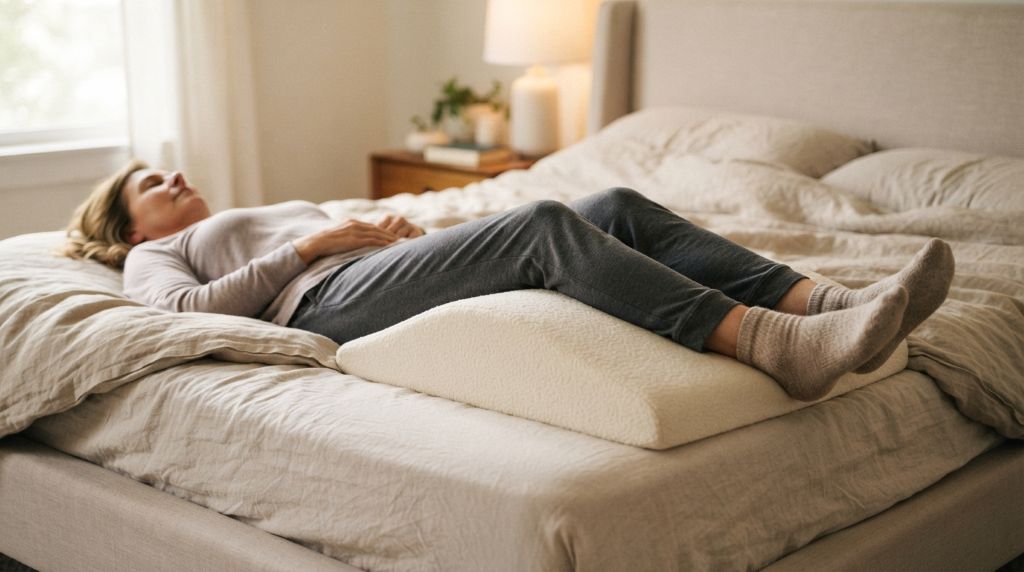
From personal experience, I found that using a wedge pillow under my knees while lying on my back provided immediate relief. The elevation took pressure off my lower spine, allowing my muscles to relax. Additionally, using it to elevate my upper body while sitting in bed helped me avoid the slouching that often triggered my pain. Therefore, a wedge pillow isn’t just for sleeping—it’s a versatile tool for managing back pain throughout the day.

Choosing the Right Wedge Pillow for Lower Back Pain
Not all wedge pillows are created equal, and choosing the right one can make a big difference in your comfort and pain relief. The first factor to consider is the angle. Wedge pillows typically come in angles ranging from 10 to 45 degrees. For lower back pain, a 30 to 45-degree wedge is often the most effective. This angle provides enough elevation to support your spine without causing strain. However, if you have severe pain or specific conditions like a herniated disc, a gentler 10 to 20-degree wedge might be more suitable.
Material is another important consideration. Memory foam wedge pillows are popular because they contour to your body, providing customized support. They also tend to retain their shape over time, making them a durable choice. Latex wedge pillows are another excellent option, as they are firm yet responsive and naturally hypoallergenic. Polyester-filled wedge pillows are more affordable but may not offer the same level of support or longevity.
Size matters too. A full-body wedge pillow is great if you want to elevate both your upper body and legs simultaneously. However, if you prefer versatility, a smaller wedge pillow that you can position under your knees or lower back may be more practical. Additionally, consider the height of the wedge. A taller wedge (around 10 to 12 inches) is ideal for elevating your upper body, while a shorter wedge (6 to 8 inches) works well for supporting your legs or hips.
I initially bought a 45-degree memory foam wedge pillow, thinking the steepest angle would provide the most relief. However, I found it too intense for my lower back, so I switched to a 30-degree latex wedge. The gentler slope was more comfortable and still provided the support I needed. Therefore, it’s worth experimenting with different angles and materials to find what works best for you.
Additionally, look for wedge pillows with removable, washable covers. This feature makes it easier to keep your pillow clean and fresh, which is especially important if you use it daily. Some wedge pillows also come with non-slip bottoms to prevent them from sliding around, adding to their stability and effectiveness.
Step-by-Step Guide: How to Use a Wedge Pillow for Lower Back Pain
Using a wedge pillow correctly is key to getting the most out of it. The way you position it depends on your specific needs and the type of relief you’re seeking. Here’s a step-by-step guide to help you use your wedge pillow effectively for lower back pain.
First, try placing the wedge pillow under your knees while lying on your back. This position elevates your legs, reducing pressure on your lower spine. Lie down on a flat surface, such as your bed or the floor, and position the wedge pillow so that your knees rest comfortably on it. Your legs should be slightly bent, and your feet can either hang off the edge of the pillow or rest flat on the surface. This position helps decompress your spine, relieving tension in your lower back. I found this to be one of the most effective ways to use my wedge pillow, especially after a long day of sitting or standing.
Second, use the wedge pillow to support your lower back while sitting. If you spend a lot of time sitting at a desk or in a chair, place the wedge pillow behind your lower back to maintain the natural curve of your spine. This helps prevent slouching, which can exacerbate lower back pain. Additionally, you can use the wedge pillow on a couch or recliner to provide lumbar support while watching TV or reading. This small adjustment can make a big difference in reducing discomfort.
Third, try elevating your upper body with the wedge pillow while lying down. Place the wide end of the wedge at your hips and lean back so that your upper body is elevated. This position is great for reading, watching TV, or simply relaxing in bed. It reduces pressure on your lower back by shifting some of your weight to your upper body. Additionally, this position can help with acid reflux or breathing difficulties, making it a versatile option for overall comfort.
Finally, experiment with side sleeping. If you’re a side sleeper, place the wedge pillow under your waist to support your lower back. This helps keep your spine aligned and prevents your lower back from sagging, which can cause pain. You can also place a smaller wedge pillow between your knees to further reduce strain on your lower back and hips.
Therefore, the key is to experiment with different positions to find what works best for you. Start with 15 to 20 minutes in each position and gradually increase the time as your body adjusts. Consistency is important, so try to use your wedge pillow daily for the best results.
Additional Tips to Maximize Relief with Your Wedge Pillow
While a wedge pillow can provide significant relief on its own, combining it with other strategies can enhance its effectiveness. One of the best ways to maximize relief is to incorporate gentle stretching into your daily routine. Stretching helps improve flexibility, reduce muscle tension, and promote better posture, all of which can complement the support provided by your wedge pillow.
Focus on stretches that target your lower back, hamstrings, and hip flexors. For example, the knee-to-chest stretch is a simple yet effective way to relieve tension in your lower back. Lie on your back, bring one knee to your chest, and hold for 20 to 30 seconds before switching sides. Additionally, the cat-cow stretch can help improve spinal mobility and reduce stiffness. These stretches, combined with using your wedge pillow, can provide long-lasting relief.
Another tip is to pay attention to your posture throughout the day. Poor posture, whether sitting, standing, or walking, can contribute to lower back pain. When sitting, make sure your feet are flat on the floor, your knees are at a 90-degree angle, and your lower back is supported. If your chair doesn’t provide enough lumbar support, use a small cushion or rolled-up towel to fill the gap. Standing up and moving around every 30 minutes can also help prevent stiffness and discomfort.
I also found that combining my wedge pillow with a heating pad provided additional relief. Applying heat to my lower back for 15 to 20 minutes before using the wedge pillow helped relax my muscles and enhance the pillow’s effectiveness. Additionally, staying hydrated and maintaining a healthy weight can reduce strain on your lower back, making it easier for your wedge pillow to do its job.
Therefore, think of your wedge pillow as one part of a broader strategy for managing lower back pain. By combining it with stretching, good posture, and other healthy habits, you can achieve better results and enjoy a more active, pain-free life.
Common Mistakes to Avoid When Using a Wedge Pillow
While wedge pillows can be incredibly effective, there are some common mistakes that can reduce their benefits or even make your pain worse. One of the most frequent errors is using the wrong angle. If the wedge is too steep, it can strain your neck or lower back instead of providing relief. Conversely, if the angle is too gentle, it may not provide enough support to make a difference. Start with a moderate angle, such as 30 degrees, and adjust as needed based on your comfort.
Another mistake is placing the wedge pillow in the wrong position. For example, using a wedge pillow under your head instead of your knees or lower back can misalign your spine and cause more discomfort. Always position the pillow to target the area where you need support, whether that’s your lower back, hips, or legs.
Overusing the wedge pillow can also be problematic. While it’s tempting to use it all day and night, your body needs variety in movement and positioning. Prolonged use in one position can lead to stiffness or muscle imbalances. Instead, use the wedge pillow for 20 to 30 minutes at a time, and take breaks to stretch or move around.
I made the mistake of using my wedge pillow for hours on end when I first got it. While it provided initial relief, I eventually developed stiffness in my hips from staying in one position too long. I quickly learned that moderation and movement are key to avoiding new discomfort.
Additionally, avoid using a wedge pillow that’s too soft or too firm. A pillow that’s too soft won’t provide enough support, while one that’s too firm can be uncomfortable and create pressure points. Memory foam and latex are generally good choices because they offer a balance of support and comfort.
Finally, don’t ignore other factors that contribute to lower back pain. A wedge pillow can help, but it’s not a cure-all. Make sure you’re also addressing issues like poor posture, weak core muscles, or an unsupportive mattress. Therefore, use your wedge pillow as part of a comprehensive approach to managing your pain.
Frequently Asked Questions
What angle is best for lower back pain?
A 30 to 45-degree wedge pillow is typically best for lower back pain. This angle provides enough elevation to support your spine without causing strain. However, if you have severe pain or specific conditions, a gentler 10 to 20-degree wedge may be more suitable. Experiment to find the angle that works best for you.
Can I use a wedge pillow if I’m a side sleeper?
Yes, you can use a wedge pillow as a side sleeper. Place it under your waist to support your lower back and keep your spine aligned. You can also place a smaller wedge pillow between your knees to reduce strain on your lower back and hips.
How long does it take to see results?
Many people experience immediate relief when using a wedge pillow correctly. However, for chronic pain, it may take a few days to a week of consistent use to notice significant improvement. Combine the pillow with stretching and good posture for the best results.
Are wedge pillows only for sleeping?
No, wedge pillows are versatile and can be used for sitting, reading, or watching TV. They’re great for providing lumbar support while sitting on a couch or chair, or for elevating your upper body while relaxing in bed.
Can I make my own wedge pillow?
While it’s possible to create a DIY wedge pillow using firm cushions or rolled-up towels, it’s not recommended for long-term use. Homemade versions often lack the stability and support of a purpose-built wedge pillow, which can reduce their effectiveness.
Conclusion
A wedge pillow can be a game-changer for managing lower back pain, but only if you use it correctly. By choosing the right angle, size, and material, and positioning it properly, you can reduce pressure on your lower back and improve spinal alignment. If you prefer a more adaptable option, learning how to choose shredded memory foam pillows for adjustable comfort can also help you find a pillow that suits your sleeping needs. Combining your wedge pillow with stretching, good posture, and other healthy habits will maximize its benefits.
From my own journey, I’ve learned that consistency is key. Using my wedge pillow daily, along with gentle stretching and posture adjustments, has significantly reduced my lower back pain and improved my quality of life. It’s a simple tool, but when used correctly, it can make a world of difference.
If you’ve been struggling with lower back pain, give a wedge pillow a try. Start with a moderate angle and experiment with different positions to find what works best for you. And remember, it’s just one part of a broader strategy for managing pain and staying active.
Have you tried using a wedge pillow for lower back pain? Share your experiences or tips in the comments below—we’d love to hear from you! If you found this guide helpful, don’t forget to share it with others who might benefit from a little extra support. Here’s to pain-free days and restful nights!