

Key Takeaways
- Choosing matching rod and reel sizes prevents casting problems.
- Threading line correctly through guides avoids frustrating tangles.
- Tying a strong knot connects your line to hooks and lures securely.
- Balancing your setup improves comfort during long fishing days.
- Practicing basic casts builds confidence before your first trip.
Setting up a fishing rod and reel feels overwhelming for many beginners. However, the gear specialists at CrazyFishingGear emphasize that the process becomes simple once broken into clear steps. This guide walks you through every stage of setup, helping you avoid the common mistakes that ruin a first outing so you can cast with confidence in no time.
Why Proper Setup Matters for Beginners
A correctly set up rod and reel changes your entire fishing experience. Poor setup leads to tangles, weak casts, and lost fish. Therefore, learning proper technique early prevents frustration later.
Beginners often skip steps or rush through setup quickly. As a result, they blame their gear for problems that setup caused. A twisted line or loose reel seat can ruin a promising trip. Taking time now saves headaches during your first outing.
Matching your rod and reel also affects casting accuracy. Mismatched gear feels awkward and unbalanced in your hands. Additionally, it can strain your wrist during long fishing sessions.
According to the Recreational Boating and Fishing Foundation, proper gear setup helps new anglers stay engaged and enjoy their first experiences. This engagement often determines whether beginners continue fishing long term. Therefore, a smooth start matters more than many realize.
Learning correct setup also builds skills for future upgrades. Once you understand the basics, adjusting to new gear becomes easy. This foundation serves you well as you grow into a more experienced angler.
Choosing a Rod and Reel Combo
Beginners benefit most from a simple, well-matched combo setup. Picking compatible gear prevents common frustration during early trips.
- Spinning rod and reel combos for easy casting and low tangles
- Medium power rods for general freshwater fishing situations
- Reel sizes between 2000 and 3000 for most beginners
- Pre-spooled combos that come with line already installed
- Rod lengths between six and seven feet for versatility
Spinning combos work best for most beginners learning to fish. They cast smoothly and rarely backlash like baitcasting reels do. Additionally, they handle a wide range of lures and techniques well.
Medium power rods suit general fishing needs across many species. They flex enough for smaller fish while handling larger ones too. This versatility makes them ideal for a first rod purchase.
Reel size matters just as much as rod choice for beginners. A 2000 to 3000 size reel suits most freshwater situations. Larger reels add unnecessary weight and bulk for smaller target species.
Pre-spooled combos offer real convenience for brand-new anglers. Line comes already installed, ready for immediate use. This feature removes one extra step during your first setup process.
Attaching the Reel to the Rod
Connecting your reel to the rod comes first in the setup process. Follow these steps for a secure, comfortable connection.
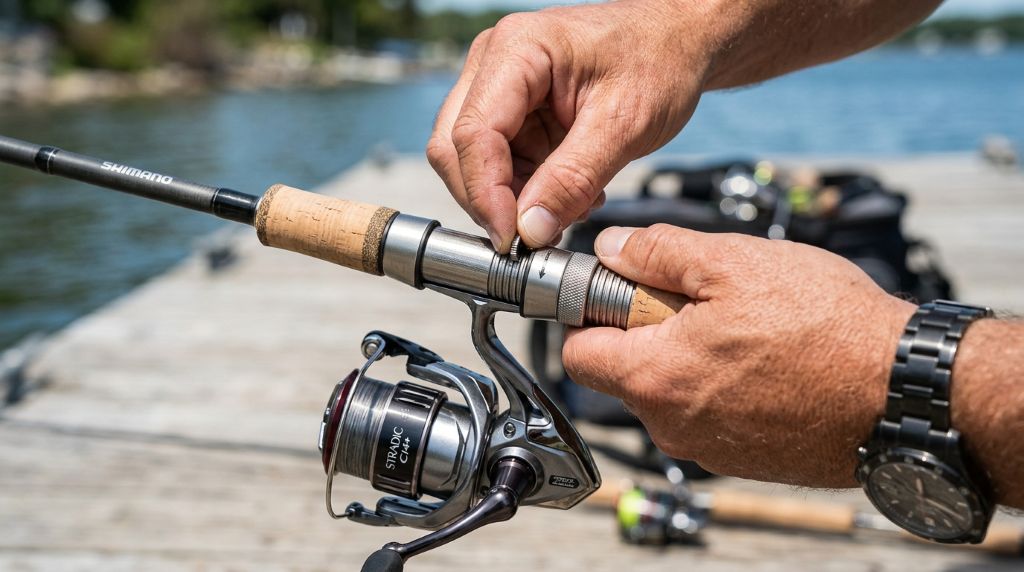
- Locate the reel seat near the bottom of the rod handle.
- Slide the reel’s foot into the reel seat opening.
- Tighten the locking rings until the reel feels snug.
- Check that the reel does not wiggle or shift at all.
- Position the reel so the handle suits your dominant hand.
- Adjust the drag knob to a light setting for now.
Step three requires careful attention during your first setup. A loose reel can shift during a cast or fight. Therefore, tighten the locking rings firmly but avoid overtightening them.
Handle position also affects your comfort throughout the day. Right-handed anglers often prefer reeling with their left hand. However, this preference varies, so choose what feels natural to you.
Take a moment to test the reel’s spin after attaching it. The handle should turn smoothly without grinding or sticking. A stiff reel may need lubrication before your first use.
Spooling and Threading the Line
Once your reel sits securely on the rod, add and thread your line. This step connects your reel to the rod tip properly.
- Open the bail arm on your spinning reel fully.
- Tie your line to the spool using an arbor knot.
- Reel the line on with steady, even tension.
- Fill the spool until line sits near the rim edge.
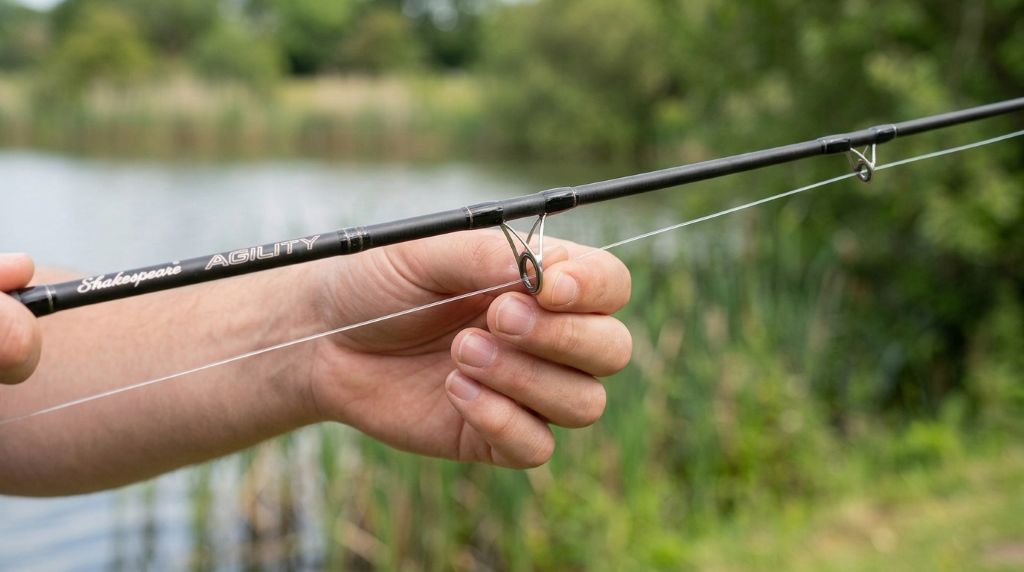
- Thread the line through each guide, starting closest to the reel.
- Pull several feet of line through the rod tip guide.
Skipping a guide during threading causes major casting problems. Therefore, double-check that line passes through every single guide. Missing even one guide reduces casting distance significantly.
Keep steady tension while spooling to avoid a loose, baggy reel. Loose winding creates tangles and weak, wobbly casts. A firm, even wind produces the smoothest casting performance.
Check the line’s direction coming off the spool before winding. Backward spooling causes twist that leads to constant tangles. Flip the line spool if you notice curling or looping.
Tying Your Line to a Hook or Lure
With line threaded through the guides, connect it to your terminal tackle. A strong knot prevents lost fish and frustrating break-offs.
- Use an improved clinch knot for hooks and lures
- Wet the line before tightening any knot fully
- Trim the tag end close to the finished knot
- Test the knot’s strength with a firm, steady pull
- Re-tie immediately if the knot slips or looks uneven
The improved clinch knot suits beginners due to its simplicity and strength. It works well with monofilament and fluorocarbon line types. Practice this knot several times before your first fishing trip.
Wetting the line reduces friction and heat during tightening. Excessive heat can weaken certain line types significantly. This small step protects your knot’s strength under pressure.
Always test your finished knot before casting it out. A firm pull reveals weak spots or slipping immediately. Re-tying takes seconds but prevents losing fish later on.
Practicing Your First Casts
Before heading to the water, practice casting in an open area. This step builds muscle memory and reduces frustration later.
- Hold the rod with your dominant hand near the reel.
- Press the bail trigger and hold the line with one finger.
- Bring the rod back smoothly to about shoulder height.
- Snap the rod forward while releasing the line with your finger.
- Watch the lure travel and let the line flow freely.
- Close the bail manually or reel once the cast lands.
Practice in a yard or park before your first real trip. This practice builds confidence without the pressure of live fishing. Additionally, it helps you identify casting mistakes early.
Start with short, controlled casts rather than powerful, long ones. Accuracy matters more than distance for beginners starting out. Once your form feels natural, gradually increase your casting power.
Watch your line closely during each practice cast. Loops or tangles signal a spooling or bail issue. Address these problems before you rely on the setup for real fishing.
Conclusion
Setting up a fishing rod and reel becomes simple once you break it into steps. Choose a matched combo, attach your reel securely, and spool your line correctly. When preparing for saltwater trips, be sure to choose the right reel size for surf fishing based on your target species and casting conditions. Then, tie a strong knot and practice your casting technique. These steps prepare you for a successful first trip.
Every experienced angler started exactly where you are now. Take your time with each step, and do not rush the process. Grab your new gear, practice a few casts, and head out to enjoy your first day of fishing.
Frequently Asked Questions
What size reel is best for a beginner?
A 2000 to 3000 size reel suits most beginner freshwater situations. This size balances line capacity with manageable weight.
Do I need to buy line separately from my reel?
Not always, since many combos come pre-spooled with line. However, check the line’s condition before your first trip.
What is the easiest knot for beginners to learn?
The improved clinch knot works well for beginners. It is strong, simple, and suits most hooks and lures.
How do I know if my reel is attached correctly?
The reel should feel snug with no wiggling in the seat. Locking rings should be tight but not overtightened.
Where should I practice casting before fishing?
Practice in a yard, park, or open field first. This practice builds confidence before your first real fishing trip.