

Key Takeaways
- Most car batteries last between three and five years under normal conditions.
- Heat, short trips, and long storage time shorten battery life the most.
- Slow engine cranking is the classic early warning of a tired battery.
- A simple voltage test shows battery health in under five minutes.
- Many auto parts stores test and even install new batteries for free.
Dead batteries have perfect timing. They never fail in your driveway. They wait for grocery store lots, airport garages, and rainy highway shoulders. Mine failed outside a pharmacy on a freezing January morning. The engine clicked twice and went silent. A stranger gave me a jump, however, the battery died again three days later. That second morning cost me a tow, a rental car day, and a valuable lesson—one the automotive experts at https://tradecarhub.com/ constantly warn drivers about: a jump-start only masks a dying battery; it never cures it.
Here is the honest part. The battery had been whispering warnings for weeks. The engine cranked slowly at startup, and the headlights dimmed when I turned the key. I ignored both signs because the car still started. Therefore, I paid the price of ignorance, roughly $220 all in.
You do not have to repeat my mistake. This guide answers the question, how long should a car battery last, with real numbers. You will learn what shortens battery life, which warning signs matter, and how to test your battery before it strands you. Additionally, you will find simple habits that stretch those years to their maximum.
How Long Should a Car Battery Last?
The honest answer depends on where you live and how you drive. However, most experts agree on a general range. A typical car battery lasts between three and five years. Firestone Complete Auto Care and most battery makers cite the same window.
Why does the range vary so much? Because batteries live hard lives. They endure heat, vibration, deep discharges, and constant charging cycles. Each stress removes a little capacity. Eventually, one cold morning finishes the job.
Climate plays the biggest role in the math. According to AAA research, heat is the true battery killer, not cold. High temperatures cause the fluid inside to evaporate and speed up internal corrosion. Therefore, drivers in Arizona and Texas often replace batteries every three years. Meanwhile, drivers in cooler states regularly reach five years.
Cold weather plays a different trick. It does not damage the battery directly. Instead, it exposes the weakness. According to the Battery Council International, a battery at zero degrees delivers only about half of its normal cranking power. A weak battery that starts fine in October suddenly fails in December.
So, when should you start watching the clock? Mark your calendar from the purchase date. At year three, begin testing every six months. At year four, plan a replacement on your schedule. Otherwise, your battery will choose the schedule for you, and it always picks the worst moment.
What Shortens Battery Life the Most?
Batteries rarely die of old age alone. Daily habits and conditions cut their years quietly. Watch out for these common killers:
- Extreme heat: evaporates fluid and corrodes internal plates
- Short trips: the alternator never fully recharges the battery
- Long idle periods: parasitic drain slowly empties the charge
- Corroded terminals: block charging current and starting power
- Parasitic drains: trunk lights, dash cams, and faulty modules pull power constantly
- Vibration: loose hold-down clamps shake the internal plates apart
Short trips deserve a closer look, because most drivers create this problem without knowing. Every start uses significant charge. The alternator then needs roughly 20 to 30 minutes of driving to replace it. A five-minute commute never finishes the job. Therefore, the battery lives in a state of partial charge, which builds damaging crystal deposits on the plates. Experts call this sulfation, and it permanently reduces capacity.
Additionally, modern cars drain batteries even when parked. Computers, keyless entry systems, and memory settings all sip power around the clock. A car that sits for two weeks can lose enough charge to matter. My January failure followed exactly this pattern. Two short trips a day, plus a week parked during a work trip, quietly drained the battery below recovery.
Therefore, drive longer at least once a week, or use a simple trickle charger during storage. Small habits add real years to the battery’s life.
Warning Signs of a Dying Battery
Batteries almost always send warnings before they fail completely. Learn these signals, and you will never experience my pharmacy morning:
- Slow, labored engine cranking at startup
- Dim headlights that brighten when you rev the engine
- The battery warning light glowing on the dash
- A swollen or bulging battery case
- Corrosion buildup on the terminals
- A rotten egg or sulfur smell near the battery
- Electronics that flicker or reset randomly
Slow cranking is the most reliable sign, so treat it seriously. When the engine turns over slower than usual, the battery is losing its punch. Additionally, watch the dashboard battery light. It usually points to the charging system, not the battery itself. Therefore, a glowing light means you should test both the battery and the alternator.
Age itself is a warning. Most batteries carry a date code stamped on the label, often a letter and number. The letter marks the month, and the number marks the year. A code of D7, for example, means April 2017. If your battery passes year four, replace it on your terms.
Finally, trust the calendar over your feelings. A battery can seem fine until the day it is not. According to AAA, dead batteries consistently rank among the top reasons for roadside assistance calls, and the club responds to millions of calls each year. Therefore, act on the signs early, and stay off that call list.
How to Test Your Battery at Home
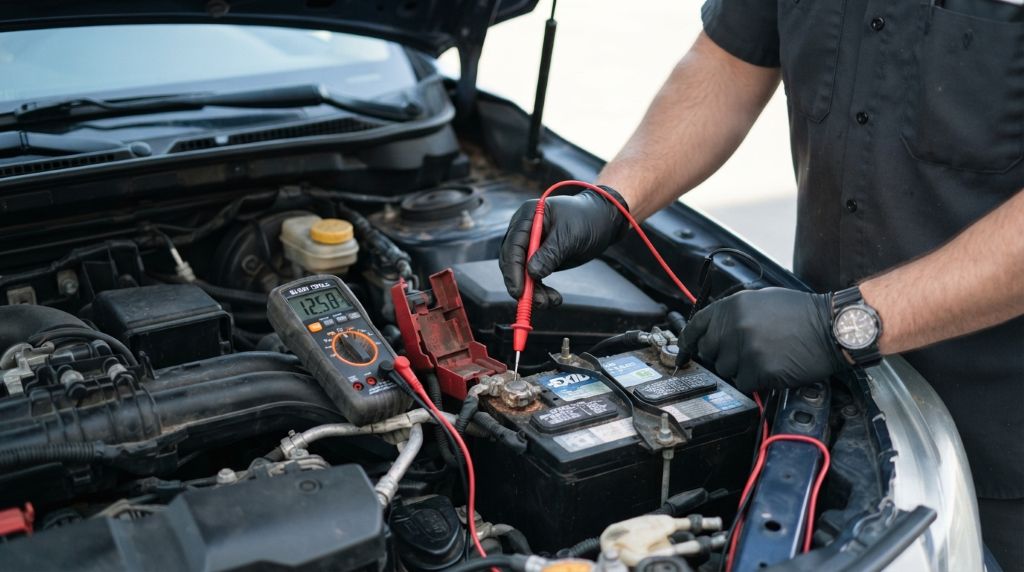
Testing a battery takes five minutes and needs one cheap tool. Buy a digital multimeter for about $20, or borrow one from a friend. Then follow these steps:
- Open the hood and locate the battery.
- Set the multimeter to DC voltage, around 20 volts.
- Touch the red probe to the positive terminal.
- Touch the black probe to the negative terminal.
- Read the number on the display.
Now interpret the results. A healthy, fully charged battery reads 12.6 volts or higher. A reading of 12.4 volts means roughly 75 percent charge. Anything below 12.0 volts means the battery is deeply discharged. Therefore, charge it fully, then test again before judging its health.
One warning applies here. Voltage alone does not reveal everything. A battery can show 12.6 volts, yet still fail under the heavy load of a starter. That is why professional testing matters. Most auto parts stores, including AutoZone and O’Reilly, run free load tests. The test simulates starting conditions and reveals true capacity.
My advice is simple. Test at home once a year for peace of mind. After year three, get a free professional load test every six months. Additionally, ask the shop to check the charging system at the same time. A weak alternator can destroy a brand-new battery within months. Therefore, always test the pair together, not the battery alone.
How to Make Your Battery Last Longer
Good habits can push a battery toward the five-year mark. None of them cost much money or time. Start with these proven tips:
- Park in shade or a garage whenever possible.
- Take one longer drive each week to fully recharge.
- Turn off lights, fans, and accessories before you shut the engine off.
- Clean terminal corrosion with a wire brush and baking soda paste.
- Check that the hold-down clamp keeps the battery tight.
- Unplug or remove dash cams and chargers during long parking periods.
- Use a trickle charger when the car sits for weeks.
Terminal cleaning deserves special attention, because corrosion works quietly. White or green crust on the terminals blocks charging current. Therefore, the battery slowly starves even while the car runs perfectly. A ten-minute cleaning every few months prevents this hidden drain.
Additionally, protect the battery from vibration. A loose battery shakes constantly, and that motion breaks the internal connections. If you hear clunks or notice a tilted battery, tighten the clamp immediately.
Finally, remember the summer rule. Heat does most of the damage, so shade matters more than you think. Drivers in hot states should also test earlier and more often. As a result, a little seasonal attention pays back with an extra year of service.
When and How to Replace Your Battery
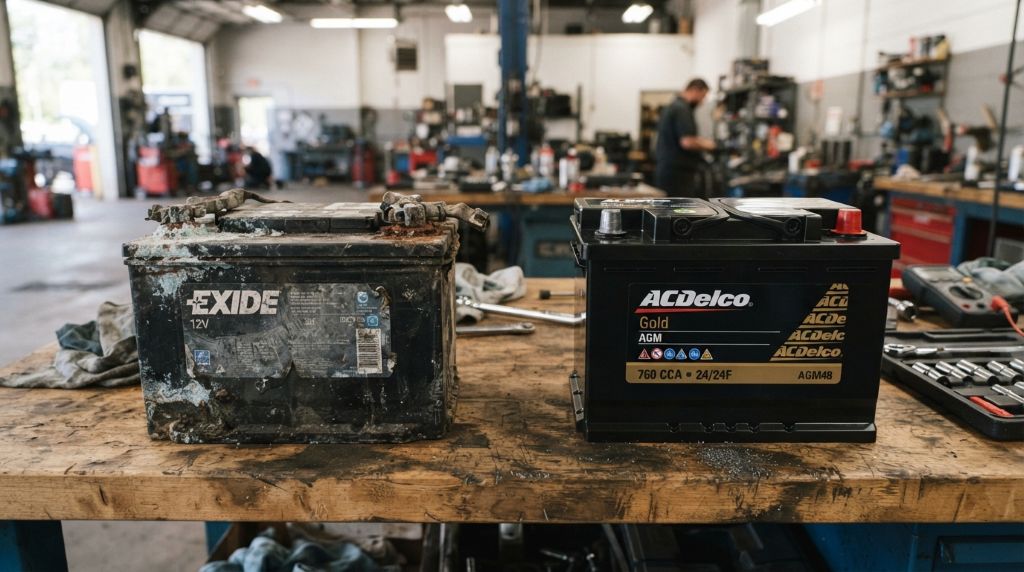
Replacement is easier and cheaper than most drivers expect. A standard battery costs between $80 and $200 installed. Premium and AGM batteries run higher, often up to $300 for luxury and start-stop vehicles.
Before you buy, match three numbers. First, find the correct group size, which controls the fit. Second, match the cold cranking amps, called CCA, to your owner’s manual. Third, confirm the terminal positions face the right direction. Therefore, photograph your old battery label before shopping, or simply look it up by your vehicle model.
Installation is often free. Many parts stores test, sell, and install batteries in the parking lot. Additionally, most locations accept old batteries for recycling. This matters more than people realize. According to the Battery Council International, roughly 99 percent of lead-acid batteries get recycled in the United States. The lead, plastic, and acid all return to new products.
One caution applies to modern cars. Some vehicles need battery registration after replacement, so the computer learns the new part. Therefore, check your manual or ask a shop before installing it yourself. My pharmacy morning ended with a $165 battery, installed free in ten minutes. The mechanic also tested my alternator, which read perfectly. Since then, I test every spring and fall, and I have never been stranded again.
Final Thoughts
So, how long should a car battery last? Plan on three to five years, and treat year four as replacement season. Heat, short trips, and neglect shorten that window. However, longer drives, clean terminals, and yearly tests stretch it comfortably. If fuel economy is also a priority, learning more about the lightest cars for best fuel economy can help you understand how vehicle weight affects efficiency.
Remember the signs that whisper before the failure. Slow cranking, dim lights, and visible corrosion all demand action. Therefore, test your battery this weekend with a simple multimeter, or grab a free load test at a parts store.
Have you ever been stranded by a dead battery at the worst moment? Share your story in the comments below. Additionally, share this guide with a friend who has never once thought about their battery. That friend needs it most.
Frequently Asked Questions
How long should a car battery last on average?
Most last three to five years. Hot climates often shorten that to around three years.
What are the first signs of a failing battery?
Slow engine cranking comes first. Dim headlights and a glowing battery light follow soon after.
Can a car battery die suddenly with no warning?
Sometimes. However, most batteries show slow cranking or dim lights for weeks beforehand.
How much does a new car battery cost?
Standard batteries cost $80 to $200 installed. AGM and premium batteries can reach $300.
Does short driving really hurt my battery?
Yes. Short trips never fully recharge the battery. One longer weekly drive prevents this drain.