

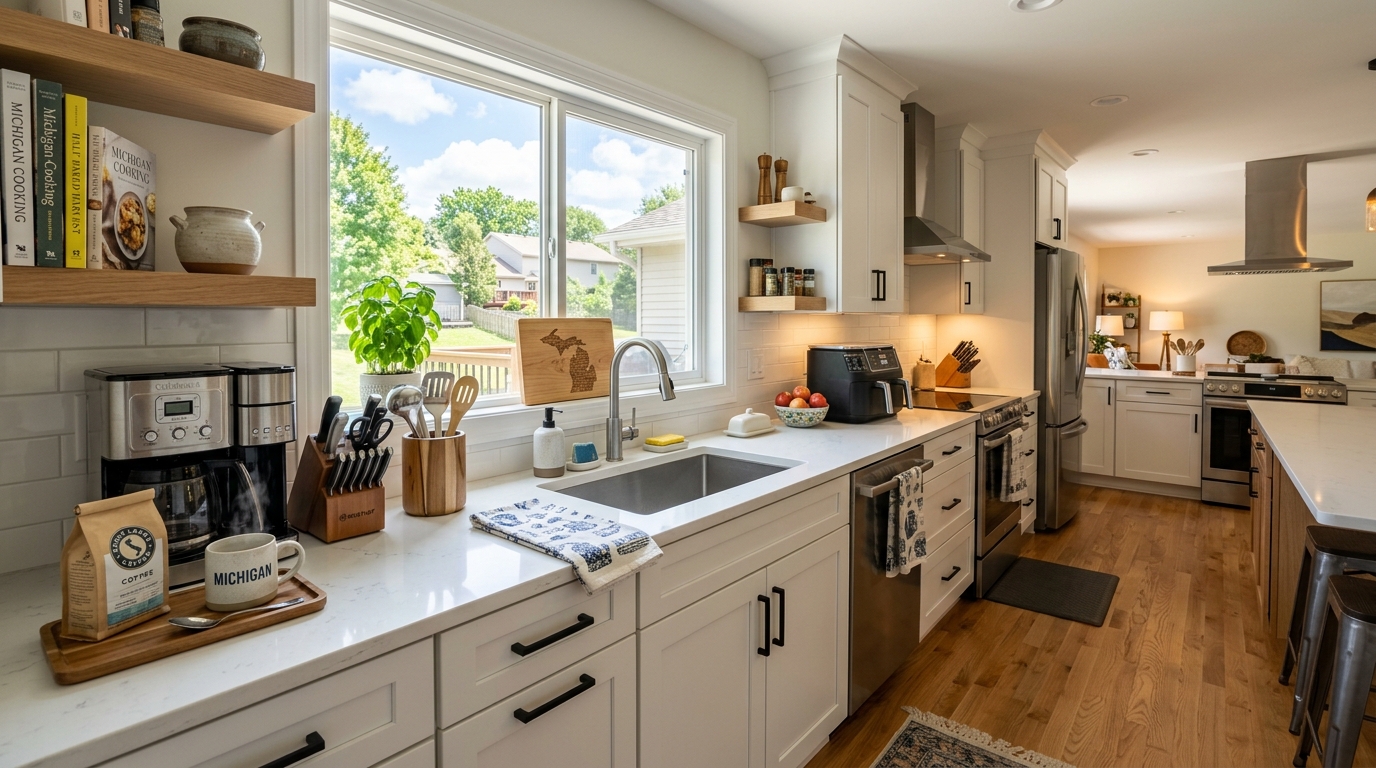
Michigan kitchens deal with a genuinely wide range of conditions—humid summers near the Great Lakes, dry forced-air winters, and wildly variable counter space depending on whether you live in a century-old Ann Arbor bungalow or a newer subdivision home outside Grand Rapids. That variety makes appliance selection more consequential than a generic buying guide suggests. Take something as simple as breakfast: if you want a reliable affordable 2-slice toaster for everyday use, you’re not just picking a color—you’re choosing a device that has to survive years of daily use in a kitchen where humidity and temperature swing seasonally. This guide walks through the practical factors that actually matter when choosing countertop appliances for a Michigan home.
Quick Answer
Choose countertop appliances by matching them to your actual counter footprint, your cooking habits, and Michigan’s seasonal conditions. Prioritize models with stable, non-slip bases, moisture-resistant housings, and simple mechanical or analog controls that hold up better in humid summers. Avoid overloading outlets on older kitchen circuits, and buy appliances sized to how you cook—not to how you imagine you might cook.
Key Takeaways
- Measure your usable counter depth and height clearance before buying anything; Michigan kitchens range from tiny galley layouts to open-concept islands, and appliance dimensions vary more than most shoppers expect.
- Humidity matters. Appliances with sealed housings and corrosion-resistant parts last longer in Michigan’s lake-effect summer climate than open-frame budget models.
- Older Michigan homes often have limited kitchen circuits. Check your outlet load and avoid running a toaster, kettle, and microwave on the same circuit simultaneously.
- Simple controls beat complex electronics for daily-use appliances. Fewer failure points mean a longer service life.
- Match appliance size to your household. A two-person household rarely needs the same capacity as a family of five.
Start With Your Actual Counter Space, Not the Showroom
Counter space is the single most common constraint in Michigan kitchens, and it’s the factor most shoppers underestimate. A standard depth counter is roughly 24 inches, but usable depth—the space left after your backsplash, sink, and any permanent items—is often closer to 14 to 18 inches. Appliances that look compact online can dominate that space once unboxed.
Before you buy anything, measure three things:
- Usable depth from the wall to the front edge of your counter, minus anything permanently occupying that space.
- Height clearance if you plan to store the appliance under upper cabinets. Standard upper cabinets sit about 18 inches above the counter, but older Michigan homes sometimes have less.
- Outlet proximity, including whether the outlet is GFCI-protected. Michigan code requires GFCI protection in kitchens, but older homes may have been updated inconsistently.
A frequent mistake is buying an appliance that technically fits but leaves no room to actually use it. A toaster that needs two inches of clearance behind it for venting, for example, can render a 16-inch counter depth unusable for anything else,if you love making homemade meals with multi-purpose kitchen tools, check out this kitchenaid pasta press review – is it worth the investment?
How Michigan’s Climate Affects Appliance Longevity
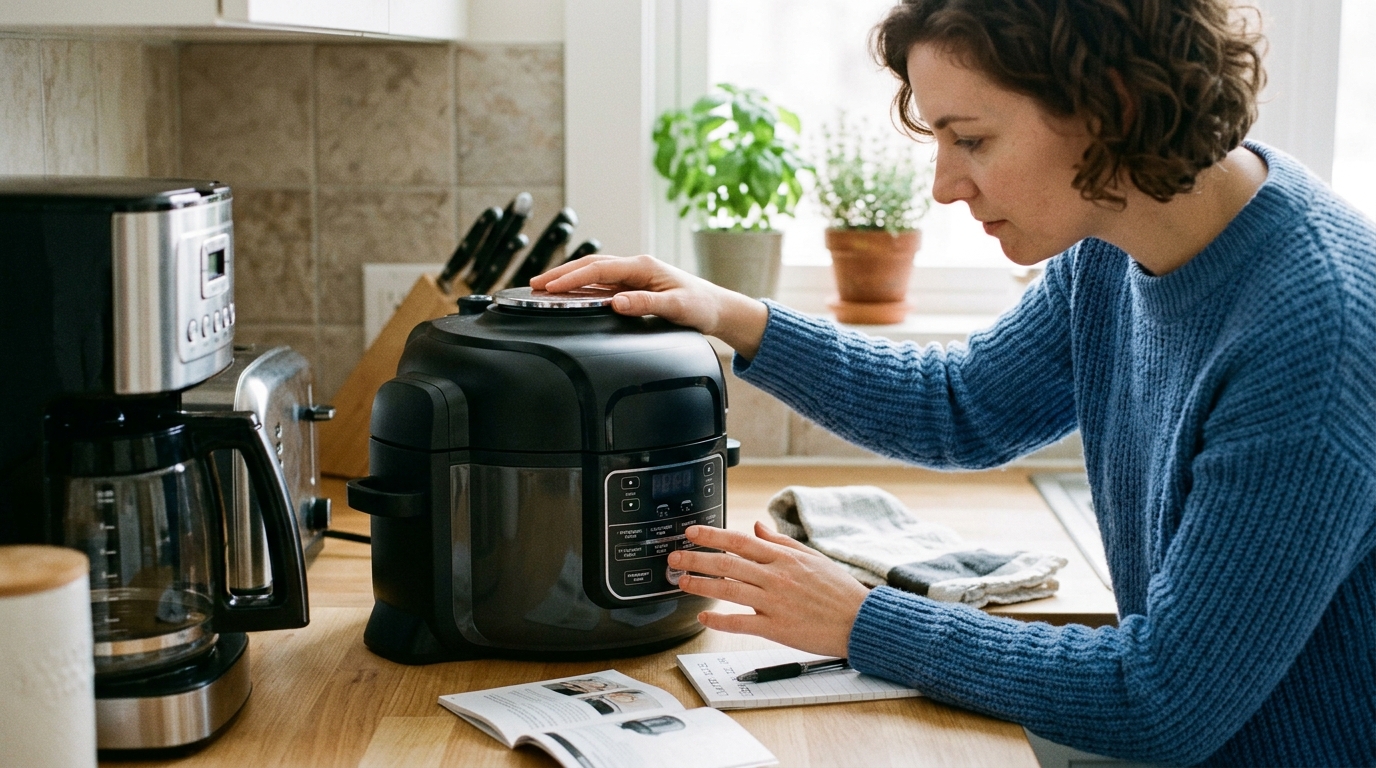
Michigan’s climate is harder on small appliances than many buyers realize. Summers along Lake Michigan and Lake Huron bring sustained humidity, and winter indoor heating drops relative humidity dramatically, causing repeated expansion and contraction of materials. This cycle stresses plastic housings, rubber seals, and electronic components.
Practical implications for appliance selection:
- Prefer sealed or enclosed housings. Open-frame designs let humid air reach internal wiring and heating elements, accelerating corrosion.
- Look for stainless steel or coated metal surfaces in areas that contact food or heat. Uncoated steel is more prone to rust in humid conditions.
- Avoid appliances with exposed circuit boards near vents. Condensation plus electronics is a common failure pattern.
- Consider storage. If you store small appliances in a basement or garage that isn’t climate-controlled, that environment will shorten their lifespan regardless of build quality.
None of this means you need to spend more. It means you should read the physical construction details—housing material, vent placement, seal quality—rather than only comparing wattage and price.
Match the Appliance to How You Actually Cook
Countertop appliances earn their space when they’re used at least a few times per week. A panini press that gets used twice a year is occupying real estate that could hold something you’d use daily.
Ask yourself honestly:
- How many people am I typically cooking for?
- Do I have 10 minutes in the morning, or 30?
- Am I reheating, or cooking from scratch?
- Do I have a dishwasher, or will I hand-wash everything?
A household of two that eats toast and coffee every morning has very different needs than a family of five that batch-cooks on weekends. The two-person household benefits from compact, fast-heating appliances with simple controls. The larger household benefits from capacity and durability, even at the cost of counter space.
Cleanup is an underrated factor. Appliances with removable, dishwasher-safe parts save meaningful time over models where crumbs and residue collect in fixed crevices. If your Michigan kitchen lacks a dishwasher—common in older homes—prioritize appliances that wipe clean easily.
Electrical Load: The Constraint Nobody Warns You About
Many Michigan homes, particularly those built before the 1980s, have kitchen circuits that were sized for a refrigerator, a few lights, and perhaps one countertop appliance. Running a toaster, electric kettle, and microwave simultaneously on a shared 15-amp circuit will trip the breaker. Repeated tripping isn’t just annoying; it stresses the circuit over time.
Before adding appliances, know:
- How many kitchen circuits you have and which outlets they serve.
- The amperage—15-amp circuits are common in older homes, 20-amp in newer builds.
- Which appliances run simultaneously. High-draw appliances include toasters, kettles, microwaves, and air fryers.
A practical habit is to stagger use of high-draw appliances rather than operate them all at once. If you’re adding several countertop appliances, consider whether your kitchen would benefit from an electrician adding a dedicated circuit—this is a real cost, but it prevents ongoing frustration.
Simple Controls vs. Digital Features
For daily-use appliances, mechanical controls—dials, levers, physical switches—generally outlast touchscreens and complex digital interfaces. This isn’t nostalgia; it’s a matter of failure points. Every additional electronic component is something that can fail from moisture, power surges, or simple wear.
Digital features make sense when they add real value: precise temperature control on a sous vide circulator, for example, or programmable timing on a slow cooker. They add less value on a toaster, where the difference between setting 3 and setting 4 is something you’ll calibrate by eye anyway.
A reasonable rule: if a feature saves you a meaningful step or improves consistency in a way you’d notice, it’s worth having. If it’s there mainly for the spec sheet, it’s a liability in a climate that stresses electronics.
Where to Compromise and Where Not To
Not every appliance deserves the same level of investment. Some categories reward spending; others don’t.
| Appliance Type | Where to Spend | Where to Save |
|---|---|---|
| Toaster | Stable base, even browning, durable housing | Extra wide slots, digital displays |
| Electric Kettle | Stainless interior, auto shutoff | Variable temperature presets for tea |
| Microwave | Wattage, door hinge quality, interior coating | Sensor cooking, preset menus |
| Coffee Maker | Heating element quality, brew temperature stability | Built-in grinders unless you’ll use them daily |
| Air Fryer | Basket coating, wattage, circulation design | App connectivity, presets |
Toasters and kettles are good places to save, because the core function is straightforward and the technology is mature. Microwaves and coffee makers reward spending, because the failure modes—door hinges, heating elements—are where cheap models break first.
Practical Buying Checklist
- Measure usable counter depth, height clearance, and outlet distance.
- Confirm the appliance’s actual dimensions including any rear clearance requirement.
- Check the housing material and whether electronics are exposed to vent air.
- Confirm your kitchen circuit amperage and avoid simultaneous high-draw use.
- Choose controls that match your patience level and reliability expectations.
- Verify that removable parts are dishwasher-safe if that matters to you.
- Read the warranty terms, especially what’s excluded.
- Consider whether the appliance will be stored in a climate-controlled space.
Frequently Asked Questions
Do I need different appliances for a Michigan kitchen than elsewhere?
Not fundamentally, but climate-related durability matters more here. Humidity in summer and dry indoor air in winter stress materials, so sealed housings and corrosion-resistant parts are worth prioritizing.
How much counter space should I leave free?
Aim to keep at least a third of your usable counter depth clear for prep work. If an appliance consumes more than that, consider whether it’s used often enough to justify the permanent loss of workspace.
Is it worth buying a toaster with wide slots?
Only if you regularly toast bagels, thick artisan bread, or English muffins. For standard sandwich bread, regular slots work fine and cost less.
What causes small appliances to fail fastest?
Moisture exposure, power surges, and mechanical wear on hinges, levers, and switches. Simple controls and protected electronics reduce all three failure modes.
Should I worry about my kitchen outlet tripping?
Yes, if you run multiple high-draw appliances at once on an older 15-amp circuit. Stagger their use, or have an electrician assess whether a dedicated circuit makes sense.
How long should a countertop appliance last?
With regular use and proper storage, a well-made simple appliance can last many years; complex electronic models often have shorter service lives. Warranty length is a reasonable indicator of manufacturer confidence.
Conclusion
Choosing countertop appliances for a Michigan kitchen comes down to three things: fitting your real counter space, respecting the state’s seasonal stress on materials, and matching complexity to how often you’ll actually use the device. Prioritize solid construction, simple controls, and honest sizing over feature lists. If you start with measurements and circuit capacity before browsing, you’ll avoid the most common and most expensive mistake—buying something that fits the showroom but not your home.