

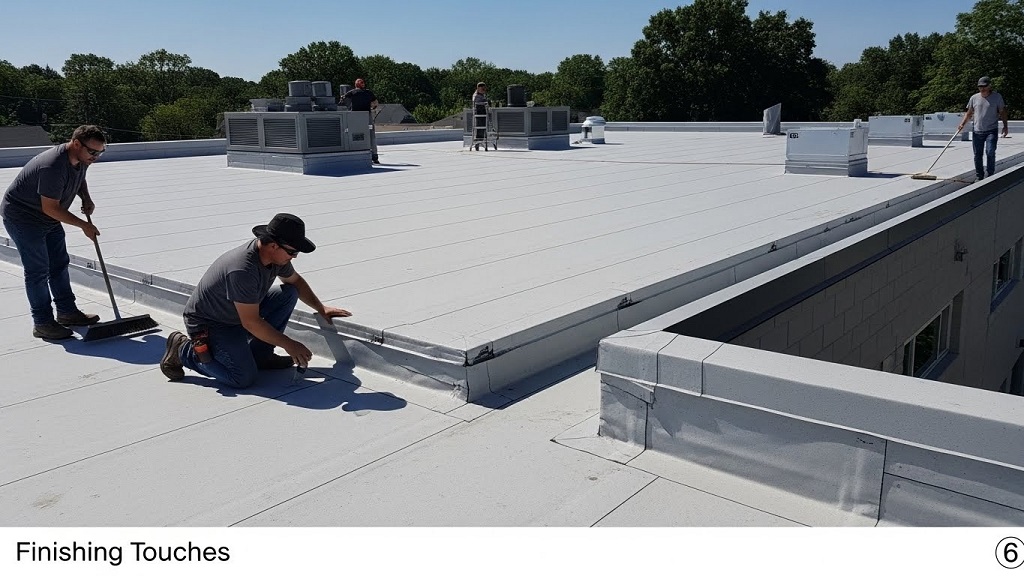
What is flat roof replacement and why does it matter?
Flat roof replacement is the complete removal of an old or failing flat roofing system and the installation of a new one designed to restore waterproofing, insulation, and structural performance.
If a flat roof fails, the damage is rarely small. Leaks spread fast. Insulation gets soaked. Energy bills rise. Interior finishes suffer. Many property owners delay replacement, hoping repairs will last. In reality, postponing a full flat roof replacement often increases total costs.
Commercial buildings, apartment blocks, and modern homes rely on flat roofs for usable space, drainage efficiency, and clean design. But flat roofs also demand precision. Poor installation or aging materials lead to ponding water, membrane cracks, and hidden moisture.
This guide explains the flat roof replacement process step by step. The goal is clarity. No sales talk. Just facts, examples, and practical guidance so you can make informed decisions.
When should a flat roof be replaced instead of repaired?
Most flat roofs last between 15 and 30 years, depending on material and maintenance. Repairs work when damage is isolated. Replacement becomes necessary when issues are widespread.
- Multiple leaks appearing in different areas
- Blistering or bubbling across large sections
- Persistent ponding water after 48 hours
- Saturated insulation under the membrane
- Cracks or splits at seams and flashings
Case studies from facility managers show that buildings with repeated patch repairs often spend 30–40% more over five years compared to those that replaced the roof once and ended the cycle. Replacement resets the system. Repairs only delay failure.
How does the flat roof replacement process start?
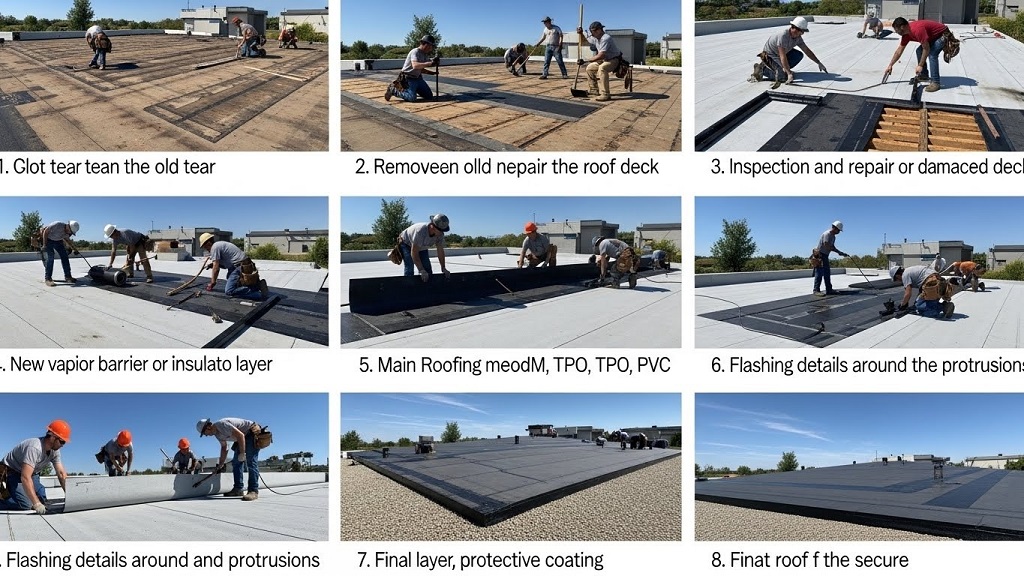
The flat roof replacement process starts with a professional inspection and core sampling.
Contractors inspect the membrane, drainage points, edges, and penetrations.
Accurate assessment matters. Replacing a flat roof without addressing trapped moisture can cut the new roof’s lifespan in half. Experienced contractors use infrared scans or moisture meters to locate wet insulation.
At this stage, you also receive a scope of work. It outlines materials, insulation thickness, drainage upgrades, and safety plans. This document protects both parties and keeps the project on track.
What preparation is required before flat roof replacement begins?
Preparation includes permits, material staging, safety planning, and building protection.
Before work starts, contractors secure local permits and schedule inspections. Clear communication prevents disruption.
Well-managed preparation reduces delays. According to commercial roofing project data, projects with pre-planned logistics finish 20–25% faster than those without defined staging plans.
How is the old flat roof removed?
The old flat roof is removed through a controlled tear-off process.
Crews cut the membrane into sections and remove it layer by layer.
This step exposes the roof deck. Contractors inspect it for rust, rot, or structural damage.
Skipping full removal to save time often leads to trapped moisture. Studies from roofing warranty providers show that moisture-related failures are the top reason warranties are denied.
What happens during deck inspection and repair?
Deck inspection ensures the structure can support the new flat roof system.
This step is non-negotiable. A strong deck ensures fastener hold, proper adhesion, and long-term performance.
In real-world cases, buildings that skipped deck repairs experienced membrane movement within two years, leading to seam failures.
How is insulation installed in a flat roof replacement?
Insulation is installed to improve energy efficiency and support drainage.
Energy studies show that upgrading insulation during flat roof replacement can reduce heating and cooling costs by 10–20% annually.
Which materials are used in flat roof replacement?
Common flat roof materials include TPO, EPDM, PVC, and modified bitumen.
| Material | Typical Lifespan | Best Use Case |
|---|---|---|
| TPO | 20–25 years | Energy-efficient commercial roofs |
| EPDM | 25–30 years | Large low-slope roofs |
| PVC | 20–30 years | Roofs with grease exposure |
| Modified Bitumen | 15–20 years | High-traffic roofs |
The right choice depends on climate, building use, and budget. Material selection is a key decision in the flat roof replacement process.
How is the new flat roof membrane installed?
Edges and penetrations receive reinforced flashing.
Quality control matters here. Poor seam work is responsible for most early roof failures. Reputable contractors perform seam testing during installation.
This step defines the roof’s performance for decades.
What inspections and quality checks are done?
Final inspections verify watertightness and code compliance.
Contractors inspect seams, drains, flashings, and terminations. Some projects include flood testing or infrared scans.
Building inspectors review the work before approval.
Data from warranty providers shows that roofs with documented inspections last 30% longer on average.
How long does flat roof replacement take?
Most flat roof replacements take 3 to 10 days.
Small residential roofs may finish in a few days. Large commercial projects can take weeks.
Weather, roof size, and deck condition affect timelines. Clear planning keeps delays minimal.
What are common mistakes to avoid during flat roof replacement?
- Choosing the lowest bid without checking experience
- Skipping insulation upgrades
- Ignoring drainage improvements
- Not reviewing warranty terms
These mistakes shorten roof life and increase long-term costs.
Conclusion: Is flat roof replacement worth the investment?
Flat roof replacement is a long-term investment in protection, efficiency, and peace of mind.
A properly executed flat roof replacement process eliminates chronic leaks, improves energy performance, and reduces maintenance stress. While the upfront cost may seem high, data consistently shows that replacement costs less than years of reactive repairs.
Property owners who understand the process make better decisions. They choose better materials. They ask better questions. And they avoid costly mistakes.
Call to Action: If your flat roof shows signs of failure, schedule a professional inspection now. Understanding your options today can prevent major damage tomorrow.
FAQs about flat roof replacement
How much does flat roof replacement cost?
Flat roof replacement typically costs based on size, material, and insulation. Prices vary widely by region.
Can a new flat roof be installed over an old one?
Yes, but only if the existing roof is dry and structurally sound.
Is flat roof replacement disruptive?
Most projects cause minimal disruption when properly planned.
How long will a new flat roof last?
Most modern systems last 20–30 years with maintenance.
Does flat roof replacement improve energy efficiency?
Yes. New insulation and reflective membranes reduce energy use.
What maintenance is required after replacement?
Annual inspections and drain cleaning are recommended.
Is warranty included with flat roof replacement?
Most systems include manufacturer and workmanship warranties.
Related Topics: Building a High-Converting Instagram Marketing Funnel