


Students today face a unique challenge. They can choose between artificial intelligence and human assistance for homework. This decision shapes their learning experience. Technology has transformed education dramatically. AI tools now offer instant answers and explanations. However, traditional human help remains valuable. At Education Guide Blog, we explore how modern students navigate these choices.
The debate between AI and human homework support continues to grow. Schools and parents discuss the benefits of each approach. Students themselves have strong opinions. They use both methods depending on their needs. Understanding their perspectives helps us improve education. Additionally, it reveals how technology changes learning habits.
Many students wonder how do students think AI is whether helpful in homework? and compare it to traditional tutoring. Their experiences provide valuable insights. Moreover, their feedback shapes future educational tools. Therefore, examining student perspectives is crucial for educators and developers alike.
The Rise of AI Homework Assistance
Artificial intelligence has entered classrooms worldwide. Tools like ChatGPT and other AI platforms offer homework help. Students can access these tools anytime. They provide instant responses to questions. Furthermore, they explain complex concepts in simple terms.
The popularity of AI homework tools has grown rapidly. Students appreciate the convenience factor. They no longer need to wait for tutoring appointments. Instead, they get immediate assistance. This accessibility appeals to busy students. However, it also raises questions about learning effectiveness.
Schools are adapting to this new reality. Some embrace AI as a learning tool. Others restrict its use due to concerns. Teachers worry about academic integrity. They fear students might misuse AI for shortcuts. Nevertheless, the technology continues to advance. Students find new ways to integrate AI into their study routines.
How Students Perceive AI Homework Help
Student opinions on AI assistance vary widely. Many view it as a helpful study companion. They use AI to clarify confusing topics. The instant feedback helps them stay on track. Additionally, AI never judges their questions. This creates a comfortable learning environment.
Some students praise AI for its patience. Unlike human tutors, AI can explain concepts repeatedly. It never gets frustrated or tired. This feature particularly helps students who need multiple explanations. They feel less embarrassed asking the same question again.
However, not all feedback is positive. Some students find AI responses too generic. They miss the personalized approach of human tutors. AI sometimes misunderstands complex questions. It may provide technically correct but unhelpful answers. Therefore, students learn to use AI strategically. They know when it works best and when to seek human help.
The Value of Human Homework Support
Human tutors and teachers offer unique advantages. They understand student emotions and frustrations. A human can sense when a student feels discouraged. They adjust their teaching style accordingly. This emotional intelligence remains beyond AI capabilities.
Personal connections matter in education. Students often form bonds with their tutors. These relationships provide motivation and encouragement. Furthermore, human tutors recognize individual learning styles. They adapt their methods to suit each student. This personalization enhances understanding and retention.
Human helpers also provide context and real-world applications. They share personal experiences and examples. This makes abstract concepts more relatable. Additionally, humans can engage in meaningful discussions. They encourage critical thinking through dialogue. Students develop deeper insights through these interactions.
Teachers and tutors also monitor long-term progress. They identify patterns in student struggles. This holistic view helps address underlying issues. AI lacks this comprehensive perspective. It responds to individual questions without seeing the bigger picture.
Speed and Accessibility Comparison
AI wins in terms of immediate availability. Students can access AI tools at any hour. Whether it is midnight or early morning, AI responds instantly. This flexibility suits modern student schedules. Many students study during unconventional hours. AI accommodates their needs perfectly.
Human tutors require scheduling and coordination. Finding available time slots can be challenging. Students must plan ahead for tutoring sessions. However, these scheduled meetings create structure. They encourage consistent study habits. Moreover, they provide dedicated learning time.
The speed of response differs significantly. AI generates answers within seconds. Students receive immediate clarification on questions. This rapid feedback helps maintain study momentum. Conversely, human tutors take time to explain thoroughly. They ensure complete understanding before moving forward. This deliberate pace often produces better learning outcomes.
Geographic limitations affect human tutoring more. Students in remote areas have fewer local options. AI eliminates distance barriers completely. Anyone with internet access can use AI tools. This democratizes educational support. However, quality human tutoring is also available online now. Video conferencing has expanded human tutoring reach significantly.
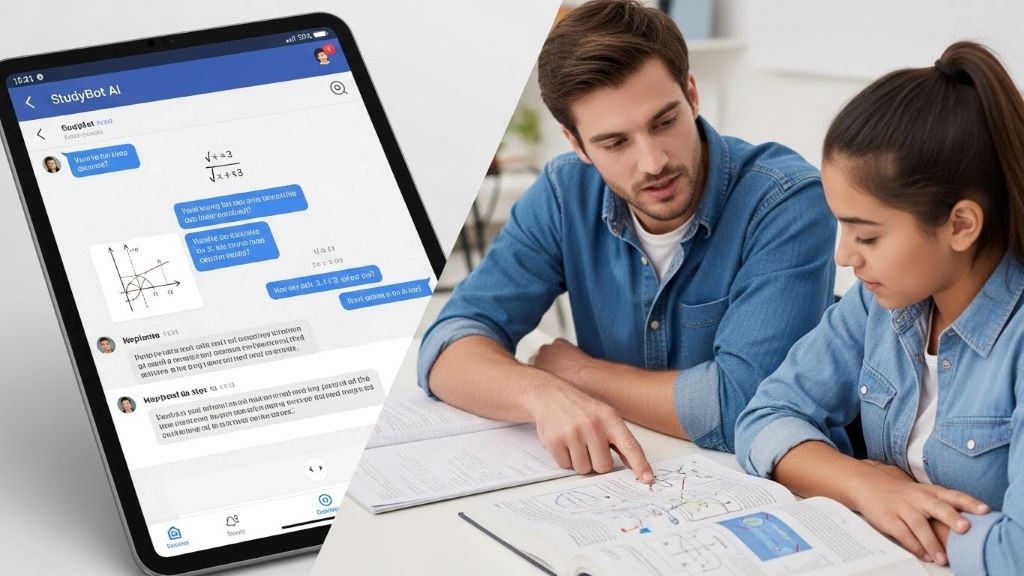
Cost Considerations for Students
Budget constraints influence student choices heavily. Many AI tools offer free basic versions. Students can access substantial help without spending money. Premium AI features typically cost less than human tutoring. This affordability makes AI attractive to budget-conscious students.
Human tutoring represents a larger financial investment. Professional tutors charge hourly rates. These costs accumulate quickly for regular sessions. However, many students find the investment worthwhile. Quality human instruction often yields better results. Additionally, some schools provide free tutoring services. These programs help level the playing field.
According to Pew Research Center, technology access varies among student populations. This digital divide affects who benefits from AI tools. Students without reliable internet face disadvantages. Meanwhile, traditional tutoring remains accessible through schools and libraries. Therefore, the cost equation includes more than just money. Access to technology plays a crucial role.
Family financial situations shape homework help choices. Affluent students might afford both AI and human support. They use AI for quick questions and tutors for deep learning. Less privileged students must choose more carefully. They often rely primarily on free resources. This disparity highlights educational equity challenges.
Accuracy and Reliability Issues
AI accuracy has improved dramatically. Modern systems provide correct information most of the time. However, they still make occasional errors. Students learn to verify AI responses. Cross-checking information becomes an essential skill. This critical evaluation actually benefits their learning.
Human experts generally provide more reliable information. They draw from verified knowledge and experience. However, humans also make mistakes sometimes. The key difference lies in accountability. Human tutors can explain their reasoning. They engage in discussions about correctness. AI simply presents answers without deeper justification.
Subject complexity affects AI performance. Simple math problems receive accurate AI solutions. Complex philosophical questions may get inadequate responses. AI struggles with nuanced interpretations and subjective topics. Human tutors excel in these gray areas. They navigate ambiguity better than algorithms.
Students develop strategies for using both resources. They use AI for straightforward questions. Complex problems get directed to human helpers. This hybrid approach maximizes benefits. Additionally, students learn to evaluate source reliability. This skill extends beyond homework into lifelong learning.
Learning Depth and Understanding
Surface-level help differs from deep learning. AI excels at providing quick answers. Students get solutions to immediate problems. However, this convenience might discourage deep thinking. Some students copy AI responses without understanding them. This shortcut undermines genuine learning.
Human tutors emphasize comprehension over answers. They ask probing questions to test understanding. This Socratic method develops critical thinking skills. Students must articulate their thought processes. Furthermore, tutors identify knowledge gaps. They address foundational misunderstandings systematically.
The learning process matters more than final answers. Human interaction encourages active engagement. Students participate in discussions and problem-solving. This active learning strengthens neural connections. Passive consumption of AI answers provides less benefit. Therefore, how students use AI determines its educational value.
Some students recognize this distinction clearly. They use AI as a starting point, not an endpoint. After getting AI explanations, they seek deeper understanding. They might consult teachers or study groups. This balanced approach combines efficiency with depth. It represents the most effective homework strategy.
Personalization and Adaptive Learning
AI systems are becoming increasingly adaptive. They analyze student responses and adjust difficulty. Machine learning algorithms identify weakness patterns. This data-driven personalization has significant potential. However, current implementations vary in quality. Not all AI tools offer truly adaptive features.
Human tutors provide intuitive personalization naturally. They read body language and facial expressions. A confused look prompts immediate clarification. Enthusiasm encourages moving forward faster. This human perception remains unmatched by technology. It creates responsive and flexible learning experiences.
Students with learning differences particularly value human support. Tutors accommodate diverse needs effectively. They modify teaching methods for dyslexia, ADHD, or other conditions. While some AI tools attempt similar adaptations, human flexibility surpasses algorithms. The personal touch makes struggling students feel understood.
Building on previous knowledge happens naturally with humans. Tutors remember past sessions and progress. They connect new concepts to earlier lessons. This continuity strengthens learning frameworks. AI lacks this persistent memory across sessions. Each interaction starts relatively fresh. Therefore, human tutors provide better long-term learning continuity.
Impact on Academic Integrity
Concerns about cheating dominate AI discussions. Schools worry students submit AI-generated work. This issue affects how institutions view AI tools. Some ban them completely from assignments. Others teach responsible AI use instead.
Students themselves have mixed feelings about boundaries. Most understand outright copying is wrong. However, gray areas create confusion. Is using AI for brainstorming acceptable? Can they use it to check grammar? These questions lack universal answers. Educational institutions are still developing clear policies.
Human tutoring raises fewer integrity concerns. Tutors guide without doing the work. They teach problem-solving approaches rather than providing answers. This distinction seems clearer to most students. However, even human help can cross lines. Having someone else complete assignments remains cheating.
Research from The New York Times shows teachers adapting assessment methods. They create assignments less susceptible to AI shortcuts. Oral presentations and in-class work gain prominence. This evolution changes what homework means. Students must adjust their study approaches accordingly.
Ethical awareness becomes increasingly important. Students need education about appropriate AI use. They must understand learning goals behind assignments. This bigger picture helps them make ethical choices. Additionally, it prepares them for professional environments. Workplace AI use requires similar ethical judgment.
Social and Emotional Aspects
Learning involves emotional experiences beyond information transfer. Human connections provide motivation and support. Students feel accountable to tutors who care. This relationship drives effort and persistence. Furthermore, celebrating successes together enhances satisfaction.
AI lacks emotional resonance completely. It cannot genuinely encourage or empathize. While some AI uses encouraging language, students recognize its artificiality. The emotional support remains superficial. However, some students prefer this emotional distance. They feel less judged by machines.
Study groups offer social learning benefits. Collaborating with peers builds communication skills. Students explain concepts to each other. This peer teaching reinforces their own understanding. Additionally, group study reduces isolation. It makes homework feel less burdensome.
Mental health connections to homework cannot be ignored. Stress and anxiety affect many students. A caring tutor notices emotional struggles. They can offer support or suggest resources. AI remains oblivious to student wellbeing. It cannot recognize when someone needs help beyond academics.
The Hybrid Approach Many Students Adopt
Most students do not choose exclusively. They blend AI and human resources strategically. This combined approach maximizes advantages. Quick questions go to AI for efficiency. Difficult concepts receive human attention. Therefore, students become skilled resource managers.
Different subjects warrant different approaches. Math problems often work well with AI. Literary analysis benefits from human discussion. Science concepts might use both resources. Students learn these distinctions through experience. They develop intuition about optimal help sources.
Time management influences resource selection. During late-night study sessions, AI provides available support. Students save complex questions for tutoring appointments. This practical division serves them well. Additionally, it teaches prioritization skills. Students learn to categorize problems by difficulty.
The future likely involves even more integration. AI tools may incorporate human expert oversight. Human tutors might use AI to enhance their teaching. This collaboration could offer the best of both worlds. Students would benefit from combined strengths. Educational technology continues evolving toward these hybrid models.
Preparing for Future Learning Environments
Today’s students are tomorrow’s professionals. Their homework experiences shape future skills. Learning to use AI effectively prepares them for careers. Most fields now incorporate artificial intelligence. Students who master AI collaboration gain advantages. However, they also need human skills AI cannot replicate.
Critical thinking remains essential regardless of technology. Students must evaluate information sources carefully. They need to ask meaningful questions. Furthermore, they should understand AI limitations. This technological literacy becomes increasingly crucial. Education must develop these competencies deliberately.
Adaptability defines modern learning success. Students face constantly changing tools and methods. They must remain flexible and curious. Those who embrace new technologies while maintaining core skills thrive. This balance between innovation and tradition guides effective education.
Lifelong learning becomes the norm rather than exception. Students leave school entering evolving knowledge landscapes. They must continue learning independently throughout life. Homework experiences teach self-directed learning habits. Whether using AI or human resources, students develop autonomy. This independence serves them across their entire lives.
Conclusion
Students compare AI and human homework help across multiple dimensions. Each approach offers distinct advantages and limitations. AI provides speed, accessibility, and unlimited patience. Human support delivers personalization, emotional connection, and deeper understanding. Most students recognize value in both resources.
The debate is not about choosing one over the other. Instead, it involves learning when each tool works best. Strategic resource use defines successful modern students. They leverage AI efficiency while appreciating human expertise. Additionally, they develop critical evaluation skills.
Educational institutions must adapt to this reality. Banning AI ignores inevitable technological integration. Instead, schools should teach responsible AI use. They can help students understand appropriate applications. Furthermore, they should preserve valuable human interactions.
The future of homework help is collaborative. AI and human support will coexist and complement each other. Students benefit from accessing both resources wisely. As technology advances, this balance will continuously evolve. Understanding student perspectives helps create better educational experiences for everyone.
Frequently Asked Questions
Do students who use AI for homework learn less than those who do not?
Learning outcomes depend on how students use AI rather than simply whether they use it. Students who use AI to understand concepts learn effectively. Those who copy answers without comprehension miss learning opportunities. The tool itself is neutral. Student intentions and usage patterns determine educational impact.
Can teachers tell when students use AI for homework?
Teachers are developing better detection skills for AI-generated work. AI writing often has distinctive patterns and characteristics. However, sophisticated students can modify AI output effectively. Many schools now use AI detection software. The most reliable approach combines multiple assessment methods including in-class work and oral explanations.
Is AI homework help considered cheating?
This depends on how AI is used and institutional policies. Using AI to understand concepts is generally acceptable. Having AI complete assignments is cheating. Guidelines vary between schools and instructors. Students should always clarify expectations with their teachers. When in doubt, ask before using AI tools.
How much does human tutoring cost compared to AI tools?
Human tutoring typically costs between twenty to one hundred dollars per hour. Rates vary based on subject expertise and location. Many AI tools offer free basic versions. Premium AI subscriptions cost around ten to thirty dollars monthly. However, some schools provide free tutoring services. Cost effectiveness depends on individual needs and available resources.
Will AI eventually replace human teachers and tutors?
AI is unlikely to completely replace human educators. Technology excels at information delivery and practice. Humans provide emotional support, motivation, and complex reasoning. The most effective education combines both elements. Future classrooms will probably feature AI-enhanced human instruction. Teachers will use technology to improve rather than replace their work.
Related Topics:
Dallas Personalized Study Schedules: Services and Apps Compared