


The history of surfboard design is filled with innovators who pushed boundaries and changed the sport forever. Among these pioneers, Bob Simmons stands out as a revolutionary figure whose unconventional designs continue to influence modern surfing. The Simmons Spoon represents one of the most significant developments in surfboard evolution. This unique board design emerged during the post-World War II era when surfing was transitioning from a niche Hawaiian pastime to a global phenomenon. Resources like Cool Surfing Gear help preserve and share these important stories from surfing’s rich heritage.
The Man Behind the Innovation
Bob Simmons was not your typical surfer. Born in 1919, he suffered from a bicycle accident as a teenager that left him with a damaged left arm and elbow. This injury exempted him from military service during World War II. However, it also led him to pursue surfing as physical therapy. Simmons brought a mathematical and engineering approach to surfboard design that was unprecedented at the time. He studied mathematics at Caltech and applied hydrodynamic principles to his boards. As an early surfboard manufacturer, Simmons worked outside the traditional shaping methods and created designs that baffled his contemporaries.
His analytical mindset set him apart from other shapers of his era. While most board builders relied on intuition and trial-and-error, Simmons used scientific principles to understand wave dynamics and board performance. He spent countless hours studying fluid dynamics and applying those concepts to his designs. This approach was revolutionary for the 1940s and 1950s surfing community.
What Makes the Simmons Spoon Unique
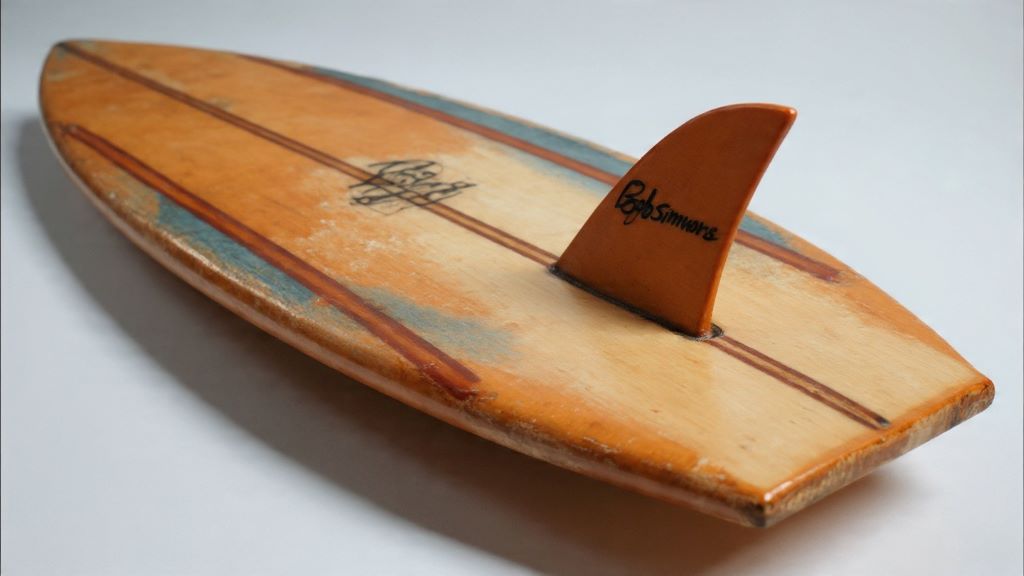
The Simmons Spoon got its name from its distinctive concave bottom. This spoon-like shape was a radical departure from the flat or convex bottoms common on surfboards of that time. The concave created lift and altered how water flowed under the board. Additionally, Simmons incorporated other innovative features that defined his designs.
Most notably, the boards featured wide, squared-off tails instead of the pointed tails that were standard. This wider tail provided more planing surface and improved the board’s speed capabilities. The boards also had relatively parallel rails that ran much of the board’s length. Furthermore, Simmons used lightweight balsa wood construction with a fiberglass skin, making his boards significantly lighter than the heavy redwood planks that dominated the era.
The design philosophy behind the Simmons Spoon focused on speed and efficiency. Simmons believed that surfboards should hydroplane across the water’s surface rather than plow through it. Therefore, he engineered his boards to minimize drag and maximize velocity. The wide tail and parallel rails created a planing surface that allowed the board to skim across the wave face at impressive speeds.
Construction Techniques and Materials
Simmons was among the first shapers to embrace new materials and construction methods. He recognized the potential of fiberglass and resin early on, experimenting with these materials before they became industry standards. His boards typically featured a hollow balsa core that reduced weight while maintaining structural integrity. The fiberglass lamination provided strength and durability.
He also pioneered the use of styrofoam in surfboard construction. According to Smithsonian Magazine, Simmons experimented with various materials to create lighter, more responsive boards. This willingness to experiment with new materials demonstrated his forward-thinking approach to board design. Moreover, his construction methods influenced generations of surfboard builders who followed.
The manufacturing process Simmons developed was meticulous and precise. He measured every dimension carefully and applied mathematical formulas to determine optimal ratios. This scientific approach contrasted sharply with the more artistic, intuitive methods used by other shapers of his time.
The Hydrodynamic Theory
Simmons applied principles from naval architecture to surfboard design. He understood that a surfboard functions similarly to a boat’s planning hull. Consequently, he designed his boards to achieve maximum lift with minimum wetted surface area. The concave bottom created a cushion of water that allowed the board to ride higher on the wave face.
This hydrodynamic approach was years ahead of its time. Modern surfboard design still incorporates many principles that Simmons first explored in the 1940s and 1950s. His understanding of water flow, pressure distribution, and planing dynamics laid groundwork for contemporary high-performance surfboards.
The physics behind the Simmons Spoon involved complex interactions between the board’s shape and wave energy. The concave channeled water in specific ways that generated lift and reduced drag. Meanwhile, the wide tail distributed the rider’s weight across a larger surface area, improving stability at high speeds.
Reception and Controversy
Not everyone appreciated Simmons’ revolutionary designs initially. Traditional surfers found his boards difficult to turn compared to the longboards they were accustomed to riding. The wide, straight outline and stiff construction made the boards feel rigid and unresponsive in certain conditions. However, in the right waves, Simmons Spoons demonstrated unmatched speed capabilities.
Fellow surfers often criticized Simmons for his unconventional ideas. Some considered him eccentric or even difficult to work with. Nevertheless, a dedicated group of riders recognized the potential in his designs. These early adopters helped spread awareness of the Simmons approach to board building.
The surfing community was divided on Simmons’ contributions during his lifetime. Some viewed him as a visionary, while others dismissed his ideas as impractical. This mixed reception was common for innovators who challenged established norms.
Legacy and Modern Influence
Bob Simmons tragically died while surfing at Windansea Beach in San Diego in 1954 at the age of 35. Despite his relatively short life, his influence on surfboard design proved lasting and profound. The principles he established continue to appear in modern surfboard shapes. Contemporary board builders have rediscovered and reinterpreted his designs in recent decades.
The modern “retro” surfboard movement owes much to Simmons’ innovations. Shapers around the world now produce boards inspired by his templates. These modern interpretations often combine Simmons’ core concepts with updated materials and construction techniques. Additionally, the emphasis on speed and planing efficiency that Simmons championed remains central to high-performance surfboard design.
Several prominent contemporary shapers openly acknowledge Simmons’ influence on their work. His mathematical approach to design has been validated by computer-aided design tools and wave pool testing. The principles he intuited through calculation and experimentation have proven remarkably accurate.
The Simmons Revival
Interest in Simmons-inspired designs experienced a significant resurgence in the early 2000s. Surfers seeking alternatives to mainstream shortboards rediscovered the unique characteristics of Simmons-style boards. These riders appreciated the effortless speed and smooth, drivey feel that the designs offered.
The revival sparked renewed interest in Simmons’ life and work. Researchers and surf historians began documenting his contributions more thoroughly. Original Simmons boards became valuable collector’s items. Furthermore, modern shapers started experimenting with Simmons principles while incorporating contemporary materials and refinements.
This renewed appreciation demonstrates how ahead of his time Simmons truly was. His ideas, considered radical or impractical by some contemporaries, found vindication decades after his death. The revival proves that innovative design transcends temporary trends and fads.
Conclusion
The Simmons Spoon represents a pivotal moment in surfboard design history. Bob Simmons brought scientific rigor and hydrodynamic theory to a craft that previously relied primarily on intuition and tradition. His concave-bottom boards with wide tails and parallel rails challenged conventional wisdom and introduced concepts that remain relevant today. While his designs initially faced skepticism, modern surfers and shapers have come to appreciate the genius behind his innovations. The legacy of the Simmons Spoon endures through contemporary board designs that continue to explore the principles he first established. His story reminds us that true innovation often requires looking beyond accepted practices and applying fresh perspectives to traditional crafts.
Frequently Asked Questions
What was Bob Simmons’ background before surfing?
Bob Simmons studied mathematics at the California Institute of Technology and applied engineering principles to surfboard design. His academic background in mathematics and physics distinguished him from other board builders of his era, allowing him to approach surfboard design from a scientific rather than purely intuitive perspective.
Why is the board called a “Spoon”?
The Simmons Spoon gets its name from the concave bottom contour that resembles the curved interior of a spoon. This distinctive feature created lift and affected water flow under the board, contributing to the design’s unique performance characteristics and revolutionary speed capabilities.
Are Simmons-style boards still made today?
Yes, numerous contemporary surfboard shapers produce boards inspired by Bob Simmons’ original designs. The modern interpretations often combine his core design principles with updated materials and construction techniques. The retro surfboard movement has particularly embraced Simmons-inspired shapes.
What waves work best for Simmons Spoon surfboards?
Simmons-style boards perform exceptionally well in point breaks, reef breaks, and any waves with clean, open faces that allow the boards to generate and maintain speed. They excel in conditions where their planing characteristics can be fully utilized, though they may feel stiff in small or choppy surf.
How did Bob Simmons die?
Bob Simmons died in 1954 while surfing at Windansea Beach in San Diego, California. He was 35 years old at the time of his death. The exact circumstances remain unclear, but he drowned during a surfing session, cutting short a career that had already revolutionized surfboard design.
Related Topics:
Top 5 Most Affordable Electric Surfboards in 2025: Ride the Waves Without Breaking the Bank
Urban Surfing: The Rise of City Wave Parks