

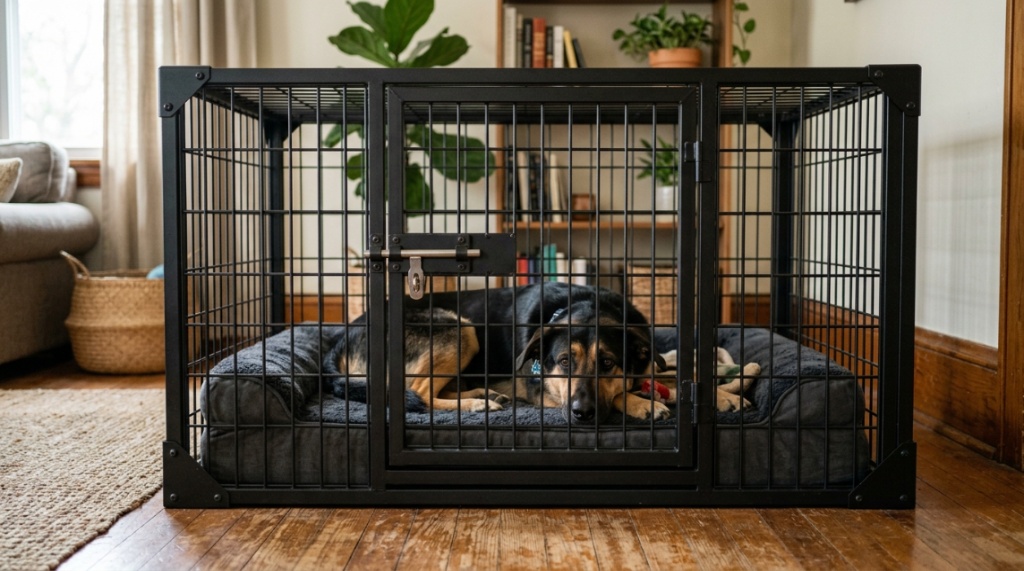
An anxious dog escaping its crate is rarely a sign of stubbornness—it’s usually a panic response. When left alone, dogs with separation anxiety may scratch, chew, or push against crate doors until they break free. This behavior is dangerous; escaping can lead to broken teeth, damaged paws, or even serious injury from getting stuck. Understanding the root cause is the first step toward finding a safe, secure solution.
Anxious dogs often perceive the crate as a trap rather than a den. Their flight response kicks in, overriding any previous training. Therefore, the crate you choose must be physically impossible to manipulate from the inside. Standard wire crates with weak latches simply won’t cut it for a determined escape artist. You need a robust system that addresses both the physical escape route and the underlying anxiety triggers.
The Link Between Anxiety and Escape Behavior
When a dog’s cortisol levels spike, their problem-solving brain shuts down and primal instincts take over. This is why punishment or repeated training rarely stops escape attempts. The dog isn’t being “bad”; they are in survival mode. A truly escape-proof crate acts as a safety pod that buffers external stressors while keeping the dog physically contained.
Common Weak Points in Standard Crates
- Plastic zippers: Easily chewed through in seconds.
- Single-door latch mechanisms: Can be manipulated by a paw or nose.
- Flexible wire panels: Allow bending and warping under pressure.
- Pinch points: Where panels meet, often the first failure point.
What Features Define a Truly Escape-Proof Crate?
The definition goes beyond just “heavy duty.” An escape-proof crate for an anxious dog must have reinforced welds, a secure locking system that requires human dexterity, and zero sharp edges or gaps. Look for models rated for “severe chewers” or “extreme escape artists.” The material should be either 10-gauge or 11-gauge steel wire, as lower numbers mean thicker metal.
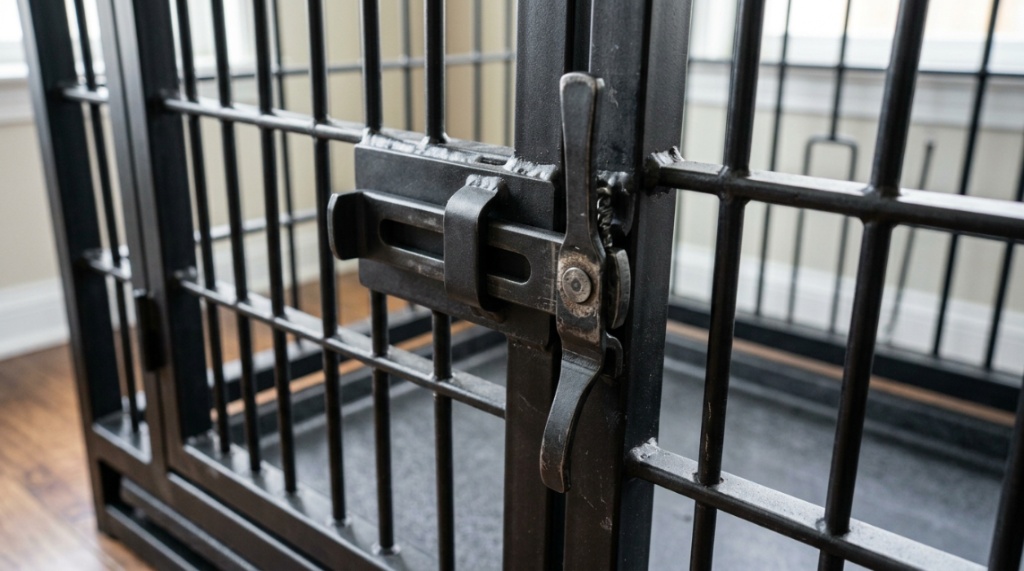
Additionally, the door should be recessed or spring-loaded with multiple locking points. Many top-tier crates use a “drop-pin” system where the latch must be lifted and slid simultaneously—impossible for a dog’s mouth or paw. The hinges must be welded, not screwed, to prevent popping out under force.
Materials: Wire vs. Aluminum vs. Impact-Resistant Plastic
Heavy-gauge wire offers ventilation and visibility but can be noisy. Aluminum is lightweight yet strong, ideal for travel, but can dent. High-impact polymer crates (like those used for airline shipping) are chew-resistant but can feel more enclosed, which helps some anxious dogs. Weigh the pros: Wire is best for airflow, aluminum for portability, and polymer for total darkness and silence.
Locking Mechanisms That Actually Work
Look for “locking tabs” that double-fold over the main latch. Avoid simple slide-bolts—they are the first thing a smart dog learns to flip. The best systems use a combination of a spring-loaded pin and a secondary safety clip. Test the latch yourself: if you can open it with a simple tug, a dog can too.
Size and Space Considerations for Safety
Your dog should be able to stand, turn around, and lie down comfortably—but no extra room to launch a running attack on the door. An oversized crate actually increases escape attempts because the dog has room to build momentum. Measure your dog’s nose-to-tail length and add 4–6 inches for the correct interior height and width.
Which Crate Type Is Best for Severe Separation Anxiety?
For severe cases, a fully enclosed heavy-duty metal crate with a secondary reinforcement bar across the door is the most reliable option. The enclosed design reduces visual stimuli, which can prevent anxiety triggers like seeing other animals pass by. In contrast, collapsible wire crates rattle and flex, which can escalate panic.
Consider a “double-door” crate. Even if your dog somehow opens one latch, the second door remains locked. However, always ensure both doors are fully secured, as dogs quickly learn to focus on the weaker point. Some owners retrofit crates with carbine carabiners—simply clip them through the existing latch holes for an extra, human-only security layer.
Pros and Cons of Heavy-Duty Wire Crates
Pros: Easy to clean, high visibility for the dog, folds flat for storage, and offers excellent airflow. Cons: Can be noisy, and determined chewers may still damage the tray or bend corners over time.
Are Impact-Proof Plastic Crates Suitable?
Yes, certain models designed for military or police dogs are virtually indestructible. They require assembly with provided metal bolts—which is actually a security feature. The lack of exposed latches on the inside makes manipulation impossible. The trade-off is limited airflow, so use them in a cool, well-ventilated area.
DIY Reinforcement Kits—Do They Help?
Reinforcement kits commonly include metal washers and stronger bolts to replace factory screws. They are a cost-effective temporary fix, promoting a stronger frame. However, they do not address weak door latches. Use them only in addition to a clearly heavy-duty crate, not as the only solution.
How to Test a Crate’s Escape-Proof Strength Before Buying
Perform a “push-tug-pry” test in the store. Push on the door, pull on the corners, and pry at the seams with your fingers. If there is any flex or give, walk away. Also, check the gauge of the wire. A thicker wire (lower gauge number) will be noticeably heavier and harder to bend.
Look for the brand’s “test weight” rating. Reputable manufacturers publish data based on the force required to break or bend the crate. For anxious dogs, aim for a crate rated for at least 100 pounds of pressure, even if your dog weighs only 30 pounds. The margin of error is your safety net.
Step-by-Step Latch Inspection Process
- Close the door and listen for a solid “click” – not a flimsy snap.
- Try to lift the door while it is locked—it should not shift at all.
- Try to slide the latch sideways with a flat object. If it moves, it’s too easy.
- Check the hinge pins: are they flush or exposed? They should be welded flush.
Reading Customer Reviews for “Escape Artist” Feedback
Search for the phrase “escaped” in customer reviews. Careful to differentiate between a dog that chewed through thin plastic vs. a dog that popped a weld. Look for reviews from owners of German Shepherds, Huskies, or other known escape artists. Their success is your best indicator.
Can Training Make a Crate More Escape-Proof?
No, training cannot make a physical crate stronger. However, training can reduce the motivation to escape. Crate games, positive association, and short absences help lower anxiety levels, meaning the dog is less likely to panic and test the locks. But you must pair the training with a physically secure crate.
The most effective approach is “crate desensitization.” Feed meals inside with the door open for a week. Then, close the door for 30 seconds while you stay in the room. Gradually increase alone time. This builds a new neutral emotional response. Yet, if the dog regresses, the physical security of your crate remains the last line of defense.
Calming Aids to Pair with a Secure Crate
Use pheromone sprays (like Adaptil), calming treats with L-theanine, or a weighted blanket made for dogs. These reduce overall stress levels, making the dog less determined to work on the latch. Pair these aids with a safe, quiet location away from front windows.
Addressing Environmental Triggers Around the Crate
Cover the crate with a lightweight sheet if the dog is visual-sensitive, but leave a gap for airflow. Play white noise or a “dog TV” playlist to mask outside sounds. Move the crate to a low-traffic room. Sometimes, the easiest “escape” prevention is making the surrounding area less stimulating.
How Much Should You Spend on a Secure Crate?
Budgets for truly escape-proof crates typically start around $150 and quickly exceed $600 for high-end aluminum models. The price reflects thicker steel, better welds, and a more complex locking system. Consider this an investment in your dog’s safety—a broken leg from an escape is far more expensive than a quality crate.
Mid-range options ($200–$300) usually offer 11-gauge wire and better latches. The premium tier ($400+) offers 10-gauge wire, stainless steel trays, and tamper-proof locks. Avoid cheap “heavy-duty” crates under $100; they are often just standard crates with extra paint.
Cost vs. Durability: What’s the Sweet Spot?
The sweet spot for most anxious dog owners is the $250–$350 range. In this bracket, you get double-door configurations, drop-pin locks, and reinforced seams. You are paying for the engineering, not just the brand name,When managing an anxious dog, ensuring their overall health and physical comfort is paramount. Beyond keeping them secure, addressing health annoyances like pests is vital—which is why many professionals emphasize preventative care, similar to why vets recommend Seresto flea collar for small dogs to keep them itch-free and relaxed.
Warranty and Replacement Parts
Always check if manufacturers sell replacement trays or replacement doors. A crate that can be repaired is better than one that must be entirely replaced. A 1-year warranty is standard, but look for 2-year warranties that cover manufacturing defects—not dog damage.
Is a Heavy-Duty Crate the Same as an Escape-Proof One?
Not always. “Heavy-duty” usually refers to the material thickness, while “escape-proof” refers to the entire construction methodology, including edges, doors, and connections. A heavy-duty crate can still have a weak door. Look specifically for phrases like “escape-proof locks” or “anti-escape latch.”
Think of it this way: a heavy-duty crate is necessary but not sufficient. You need the combination of thick material and smart design. For example, a common failure point is the wire overlap on the side panel. Escape-proof models have these seams welded flat to prevent paw holds.
Key Differences Between “Chew-Proof” and “Escape-Proof”
Chew-proof means the dog can’t bite through it. Escape-proof means the dog can’t open it. A dog might not chew on the wire but will still try to paw the latch. Conversely, a chewer might not try to open the door but will bite the wires. Many top crates claim both, but you should verify based on your dog’s specific modus operandi.
Where to Buy These Specialized Crates Safely
Buy directly from the manufacturer or well-known pet supply retailers to ensure authenticity. Counterfeit or older “stock” models may have outdated latches. Check the manufacturing date. Also, avoid second-hand crates unless you can personally verify the locking mechanism. For detailed regional options and availability, see this highly regarded resource on escape-proof crates for anxious dogs.
When ordering online, read the dimensions carefully. A crate that is supposed to be “large” can vary by brand. Double check that the closed door doesn’t squeak—a squeaky hinge can become a trigger for a noise-sensitive dog. Practice opening and closing the crate multiple times to ensure the mechanism is smooth and quiet.
Top Brands That Prioritize Security
Brands like “ProSelect,” “Impact Dog Crates,” and “Petmate’s Ultra Vari” (with added metal screws) are often recommended by veterinary behaviorists. “Frisco’s Heavy Duty” is a budget alternative but has had mixed reports on latches. Always cross-reference your chosen breed with user reviews to see if particular dogs have outsmarted the crate.
Measuring Your Dog Correctly for the Final Choice
Measure at the shoulder for height, and from the nose to the base of the tail for length. Add 2-3 inches to shoulder height so the dog’s head doesn’t rub the top. If your dog is between sizes, always go up for comfort but down for security—to prevent them from using the extra space to get leverage against the door.
Frequently Asked Questions
Will a plastic crate last longer than a metal one for a chewer?
For a dedicated chewer, heavy-gauge metal is usually superior. Plastic can be cracked or scratched. However, the metal must be thick enough that teeth cannot bend it. The weakest point on any crate, regardless of material, is the door mechanism.
Can I leave my anxious dog in a crate for 8 hours while at work?
Ideally, no. Anxious dogs should not be crated for more than 4-5 hours at a time. The stress of confinement combined with a full bladder can trigger escape behavior. Consult a trainer to work up to longer durations gradually, or consider a dog walker for midday breaks.
How do I stop my dog from barking in the crate at night?
First, rule out pain or discomfort. Then try covering the crate with a blackout sheet to create a den-like space. In the early days, place the crate beside your bed, with your hand dangling down to reassure them. Never open the crate while they are barking, as this teaches them to demand noise.
What is the best metal gauge number to look for?
Look for 10-gauge or 11-gauge steel. A lower number means thicker, stronger wire. Standard crates are often 16-gauge or 18-gauge, which is way too thin for an escape artist. If the product description doesn’t list a gauge, assume it is weak.
Is it okay to put a blanket inside the crate for comfort?
Yes, but ensure it is tightly fitted or doesn’t bunch up. Loose fabric can be pulled and chewed. Use a thick, chew-resistant crate mat specifically designed for dogs that scratch. Avoid towels with loose loops that can catch claws.
Can anxiety medication eliminate the need for an escape-proof crate?
Medication can reduce anxiety levels significantly, making escape less likely, but it does not make a flimsy crate stronger. It should be used alongside a physically secure crate, not instead of one. Always work with a veterinarian for medication choices.
Why does my dog only try to escape when I’m gone?
This is a classic sign of separation anxiety. The dog’s panic is triggered by your absence. Because you cannot be there to supervise, the crate must be 100% safe. Even a trained dog may have a “bad day” where anxiety spikes and they regress.
Final Thoughts on Choosing the Right Secure Crate
Finding the perfect escape-proof crate is a two-part solution: the right gear and the right training. You cannot fix a physical insecurity with puzzle toys alone, and you cannot train a dog to ignore a poorly made box. Prioritize a crate with no plastic parts, multiple locks, and thick steel.
Take the time to measure your dog, test the latches, and read user reviews from owners of similar breeds. The initial cost is your insurance against a broken tooth, a torn nail, or the heartbreak of a dog harming itself during a panic attack. Your anxious dog needs you to be their safety officer—and the crate is your most vital tool.