


A baby safe room heater is a heating device designed to maintain stable room temperature while minimizing burn risk, fire hazards, and air quality issues.
Newborns cannot regulate body temperature effectively. According to the American Academy of Pediatrics (AAP), the recommended nursery temperature is between 68–72°F (20–22°C). If the room is too cold, babies may struggle to sleep. If too warm, the risk of overheating increases.
This creates a problem. Many standard space heaters get hot to the touch. Some use exposed coils. Others dry out the air or create noise that disturbs sleep. Parents often feel stuck between keeping the room warm and keeping their baby safe.
The solution is choosing the right heater built specifically for nursery heater safety. This guide will help you understand what matters, what to avoid, and how to choose a heater for newborn room environments without unnecessary risk.
Why Is Nursery Heater Safety So Important?
Nursery heater safety matters because infants are vulnerable to burns, overheating, and indoor air pollution.
Data from the U.S. Consumer Product Safety Commission shows that portable heaters contribute to thousands of residential fires annually. Many incidents are linked to improper placement or unsafe models.
Babies face three key risks:
- Burn injury: Surface temperatures of some heaters exceed 150°F.
- Fire hazard: Tipping heaters can ignite bedding or curtains.
- Dry air: Forced-air heaters reduce humidity, irritating a newborn’s airway.
That is why choosing a certified child-safe heater is not optional. It is a safety decision.
What Type of Heater Is Safest for a Nursery?
Oil-filled radiators and low-surface-temperature panel heaters are generally considered safest for baby rooms.
Here is a quick comparison:
| Heater Type | Surface Temperature | Noise Level | Air Quality Impact | Best For |
|---|---|---|---|---|
| Oil-filled radiator | Moderate (sealed surface) | Silent | No air drying | Newborn rooms |
| Ceramic heater | Hot front grill | Low fan noise | Slight drying | Supervised use |
| Infrared heater | Warm surface | Silent | No air movement | Small nurseries |
| Fan heater | Hot coils | Audible | Dries air | Not ideal for newborns |
Oil-filled models are popular because they provide steady heat without exposed elements. They are often described as a child-safe heater option due to their enclosed design and tip-over protection.
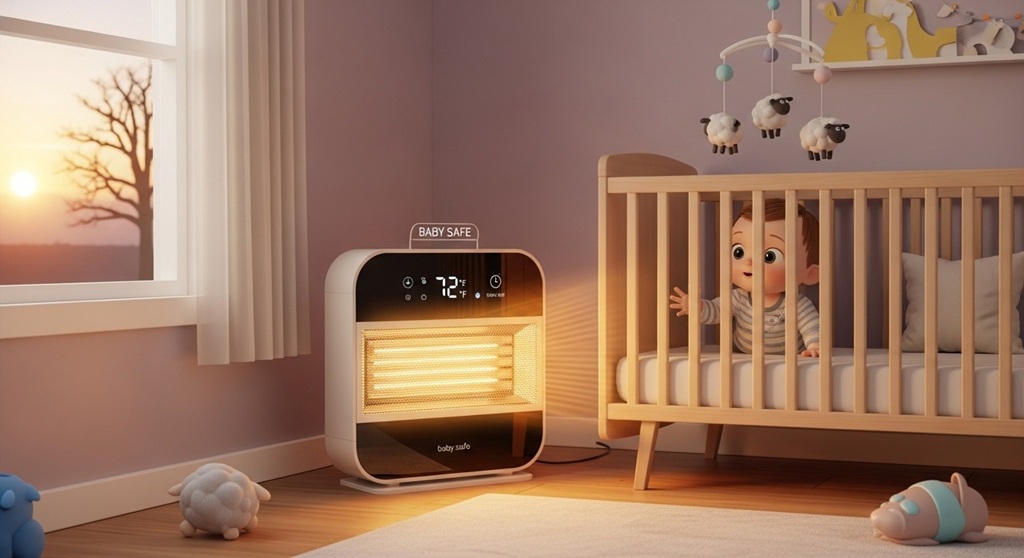
Are Oil-Filled Heaters Safe for a Baby Room?
Yes, oil-filled heaters are generally safe for a nursery when used correctly and equipped with modern safety features.
They work by heating sealed oil inside metal columns. There is no open flame. No exposed heating coil. And no fan blowing dust around.
Benefits include:
- Stable radiant heat
- Silent operation
- No reduction in oxygen levels
- Lower surface temperature than coil heaters
In a 2022 consumer appliance safety study, oil-filled radiators showed fewer overheating incidents compared to coil-based portable heaters.
However, placement matters. Keep at least 3 feet of clearance from cribs and curtains. Never use extension cords. Always plug directly into a wall outlet.
If you are researching safe models, you can explore this guide on heater for newborn room setups that meet modern safety standards.
What Features Should a Child-Safe Heater Include?
The safest nursery heaters include tip-over shutoff, overheat protection, thermostat control, and cool-touch housing.
1. Tip-Over Protection
If the heater falls, it shuts off automatically. This prevents fire risk.
2. Overheat Protection
Internal sensors turn off the unit if it exceeds safe temperature limits.
3. Adjustable Thermostat
Maintains consistent nursery temperature without overheating.
4. Cool-Touch Exterior
Reduces burn risk if touched accidentally.
5. Timer Function
Allows automatic shut-off during naps or nighttime.
When evaluating nursery heater safety, prioritize certified models tested under UL or ETL safety standards.
How Warm Should a Newborn’s Room Be?
The ideal temperature for a newborn room is between 68–72°F (20–22°C).
Overheating increases the risk of sleep-related issues. According to pediatric research, maintaining moderate temperature reduces discomfort and promotes safer sleep.
Signs the room may be too warm:
- Baby sweating
- Flushed cheeks
- Rapid breathing
Signs it may be too cold:
- Cold chest or neck
- Restlessness
- Difficulty sleeping
A heater for newborn room use should maintain stable heat without constant temperature swings.
Where Should You Place a Nursery Heater?
Place the heater at least three feet away from the crib, curtains, and furniture.
- Never place under a crib
- Keep cords out of reach
- Avoid high-traffic areas
- Use flat, stable flooring
Do not run heaters overnight without built-in thermostat control. Modern child-safe heater models regulate temperature automatically.
Does a Nursery Heater Affect Air Quality?
Some heaters reduce humidity, but oil-filled and infrared models have minimal impact on air moisture.
Dry air can cause:
- Dry nasal passages
- Coughing
- Irritated skin
If humidity drops below 30%, consider adding a humidifier. The ideal nursery humidity range is 40–60%.
What Heater Size Is Right for a Nursery?
Choose a heater rated for the square footage of your baby’s room.
General guideline:
- Small room (100–150 sq ft): 750–1000 watts
- Medium room (150–250 sq ft): 1000–1500 watts
Oversized heaters can overheat quickly. Undersized heaters may run continuously, increasing energy use.
Are Space Heaters Energy Efficient for Nurseries?
Yes, when used for zone heating instead of central heating.
Zone heating warms only the nursery instead of the entire home. This can reduce energy consumption in colder months.
Oil-filled radiators maintain heat longer even after turning off. This improves efficiency.
How Do You Maintain a Child-Safe Heater?
Regular maintenance reduces fire risk and extends heater lifespan.
- Clean dust monthly
- Inspect power cord
- Check tip-over function
- Store properly after winter
Never repair internal components yourself. Use manufacturer-approved servicing.
Conclusion: How Do You Choose the Best Baby Safe Room Heater?
Choosing the right nursery heater is not about brand names. It is about safety features, stable temperature control, and safe placement.
A newborn cannot tell you if the room feels too hot. You must rely on accurate temperature monitoring and a reliable child-safe heater.
Prioritize oil-filled or panel heaters. Look for tip-over protection and thermostat control. Avoid exposed coils. Maintain proper humidity.
If you want a researched breakdown of tested models designed for nursery heater safety, explore this complete guide on nursery heater safety.
Make the decision today. A safe sleeping environment supports better rest — for your baby and for you.
Frequently Asked Questions
Is it safe to leave a heater on all night in a nursery?
Yes, if the heater has thermostat control, tip-over shutoff, and overheat protection. Avoid older models without safety certification.
Can a heater cause SIDS?
Overheating is associated with increased sleep risk. Maintain recommended room temperature and avoid overdressing your baby.
Are ceramic heaters safe for babies?
They can be safe with supervision and safety features, but oil-filled heaters are generally preferred due to lower surface temperature.
Should I use a humidifier with a nursery heater?
If indoor humidity drops below 40%, a humidifier can help maintain comfort and airway health.
What is the safest heater type for a newborn room?
Oil-filled radiators and low-surface panel heaters are widely considered safer options for consistent, silent heat.
How far should a heater be from a crib?
At least three feet away from the crib and any flammable materials.
Related Topic: How to Find a Non-Toxic Room Heater Safe for Babies and Toddlers
Read Next: How Heavy-Duty Office Shredders Handle High Paper Volume