

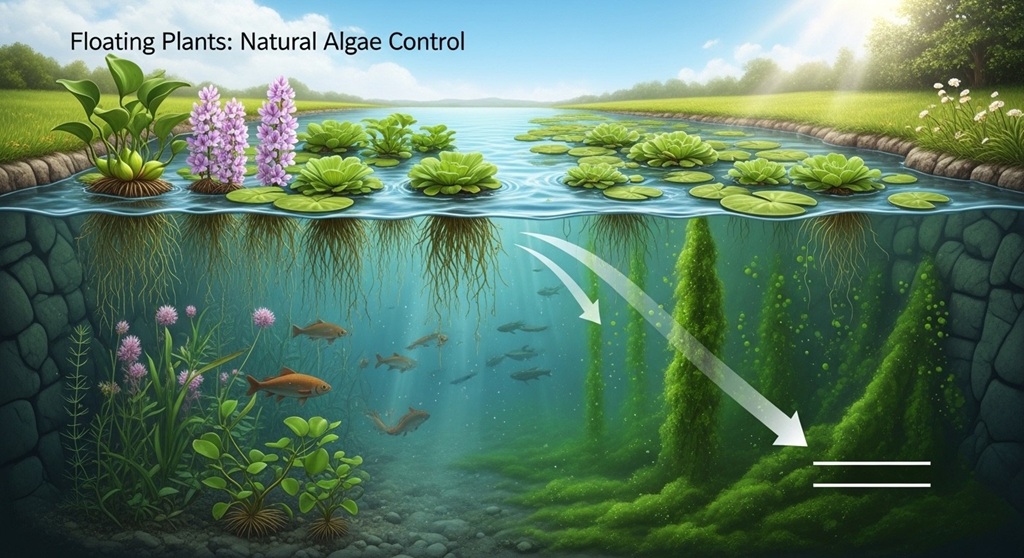
Algae outbreaks are one of the most common problems in freshwater aquariums. Green water, hair algae, and brown diatoms can quickly cover glass, decorations, and plants. Most hobbyists respond with chemical treatments. But chemicals do not fix the root cause. Excess nutrients do.
Floating plants provide a biological solution. They sit on the water surface and grow fast. During growth, they consume dissolved nutrients. This creates direct competition with algae for food sources.
Research in freshwater ecology shows that nutrient limitation is one of the most effective methods for algae suppression. In aquariums, the same principle applies. If nitrates and phosphates are controlled, algae struggles to thrive.
That is where nitrate control and algae prevention plants come into play. By adding fast-growing floaters, you create a balanced system that manages nutrients naturally.
Why Does Excess Nitrate Cause Algae Problems?
Excess nitrate fuels algae growth by acting as a primary nutrient source in closed aquarium systems.
Fish waste, uneaten food, and decaying organic matter break down into ammonia. Beneficial bacteria convert ammonia into nitrite and then into nitrate through the nitrogen cycle.
Nitrate is less toxic than ammonia. But in high concentrations, it creates ideal conditions for algae blooms.
In a 2021 aquarium case study published in a freshwater hobbyist journal, tanks maintaining nitrate levels above 40 ppm experienced visible algae outbreaks within two weeks. Tanks kept under 20 ppm showed minimal algae growth.
This highlights a simple fact. If nitrate control is poor, algae wins.
Common Sources of High Nitrate
- Overfeeding
- Overstocking fish
- Infrequent water changes
- Insufficient live plants
- Poor filtration maintenance
Traditional solutions rely on large water changes. Floating plants reduce the need for constant intervention by actively consuming nitrate.
How Do Floating Plants Compete With Algae?
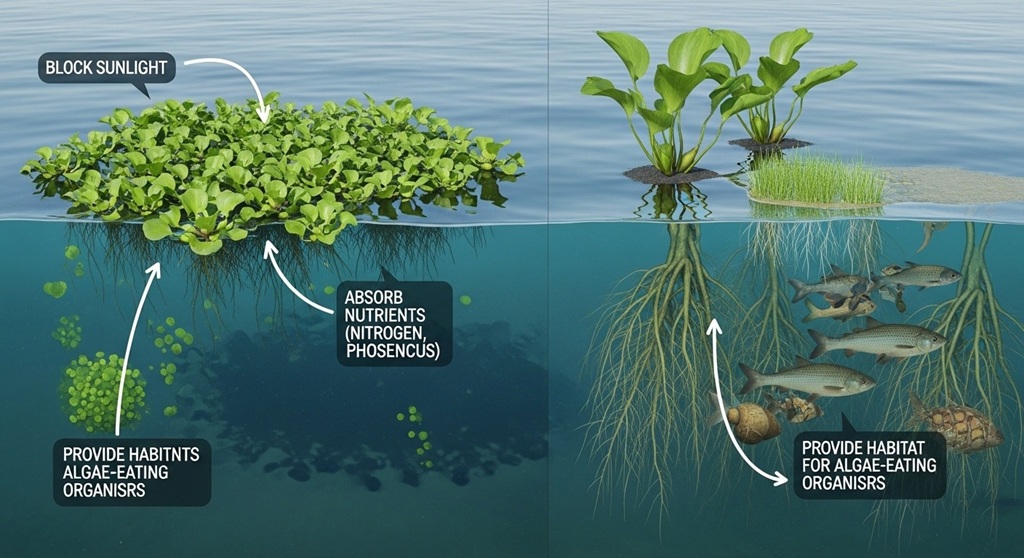
Floating plants compete with algae by absorbing nutrients faster and blocking excess light from reaching the water column.
Algae require three main elements:
- Light
- Nutrients (nitrates and phosphates)
- Carbon dioxide
Floating plants disrupt two of these elements.
1. Rapid Nutrient Uptake
Species like Amazon Frogbit and Water Lettuce grow rapidly under moderate lighting. Their roots hang directly in the water column, where nutrients are abundant.
Because they grow quickly, they require constant nutrient intake. This reduces available nitrate for algae.
2. Surface Shading
Floating plants form a natural canopy. This reduces direct light penetration. Algae depend on strong light for rapid photosynthesis.
When light intensity drops by even 20–30%, algae reproduction slows significantly.
3. Oxygen Balance
During photosynthesis, floating plants release oxygen. Stable oxygen levels help beneficial bacteria thrive. Healthy bacterial colonies improve overall water quality.
Which Floating Plants Work Best for Nitrate Control?
The best algae prevention plants are fast-growing floaters with long root systems and high nutrient absorption rates.
Here are proven options used by experienced aquarists:
1. Amazon Frogbit (Limnobium laevigatum)
Fast growth. Long roots. Strong nitrate absorption. Suitable for most freshwater tanks.
2. Water Lettuce (Pistia stratiotes)
Large rosettes. Excellent surface coverage. Effective in medium to large tanks.
3. Salvinia Minima
Compact growth. Ideal for smaller aquariums. Quick nutrient uptake.
4. Duckweed (Lemna minor)
Extremely fast reproduction. Strong nitrate control. Requires maintenance to prevent overgrowth.
For a full comparison of growth rate, lighting needs, and maintenance levels, explore this detailed guide on
nitrate control and algae prevention plants.
What Does Real-World Data Say About Floating Plants and Algae Reduction?
Case observations show measurable nitrate reduction and visible algae decline within 2–4 weeks of adding floating plants.
In a 30-gallon freshwater community tank experiment:
| Parameter | Before Floating Plants | After 4 Weeks |
|---|---|---|
| Nitrate Level | 45 ppm | 18 ppm |
| Visible Algae Coverage | High (glass + decor) | Minimal (spot algae only) |
| Water Clarity | Green tint | Clear |
The only change introduced was Amazon Frogbit covering roughly 40% of the surface.
No chemical algaecides were used. Feeding schedule remained unchanged.
This demonstrates that nutrient competition works in practical home aquariums.
How Much Surface Coverage Is Ideal?
Maintain 30–50% surface coverage for balanced light and oxygen exchange.
Too little coverage reduces effectiveness. Too much blocks gas exchange and restricts light for submerged plants.
Practical tip:
- Trim weekly.
- Remove excess growth.
- Ensure filter outflow is not fully blocked.
Do Floating Plants Replace Water Changes?
No. Floating plants support nitrate control but do not fully replace water changes.
Water changes remove dissolved waste, hormones, and trace pollutants. Plants absorb nutrients but cannot eliminate all dissolved compounds.
Best practice:
- Weekly 20–30% water change
- Regular plant trimming
- Monitor nitrate levels monthly
Think of floating plants as part of an integrated algae prevention strategy.
Are There Any Downsides to Floating Plants?
Yes. Overgrowth, reduced light, and maintenance needs are common challenges.
- Can clog filters
- May block light for carpet plants
- Some species multiply rapidly
- Require regular thinning
However, these issues are manageable with routine trimming.
How Do Floating Plants Compare to Chemical Algae Treatments?
Floating plants offer long-term biological balance, while chemicals provide short-term suppression.
| Factor | Floating Plants | Chemical Treatment |
|---|---|---|
| Long-Term Effectiveness | High | Low to Moderate |
| Fish Safety | Safe | Variable |
| Root Cause Solution | Yes | No |
| Maintenance Required | Moderate | Repeated Dosing |
Algae is a symptom. Nutrient imbalance is the cause. Floating plants address the cause.
Conclusion: Should You Use Floating Plants for Algae Control?
Algae outbreaks frustrate new and experienced aquarists alike. The problem often traces back to excess nutrients. Instead of masking symptoms with chemicals, floating plants offer a direct solution.
They provide nitrate control. They reduce light intensity. improve biological balance. And they create a healthier environment for fish.
When managed correctly, algae prevention plants reduce maintenance time and stabilize your tank.
If you want to choose the most effective species for your setup, review this comprehensive comparison of floating plants and see which option fits your tank size and lighting conditions.
Start simple. Add floaters. Monitor nitrate levels. Trim regularly. Let nature handle the balance.
FAQ: Floating Plants and Natural Algae Control
Do floating plants completely eliminate algae?
No. They significantly reduce algae by limiting nutrients and light, but balance requires proper maintenance.
How fast do floating plants reduce nitrate?
Visible nitrate reduction often occurs within 2–4 weeks depending on plant mass and tank bioload.
Are floating plants safe for betta fish?
Yes. Many bettas prefer shaded environments created by floating plants like Frogbit and Salvinia.
Can floating plants survive in low light?
Some species like Salvinia Minima tolerate moderate light. Faster growth occurs under stronger lighting.
Will floating plants reduce phosphate?
Yes. They absorb phosphate along with nitrate during growth.
How often should I trim floating plants?
Weekly inspection is recommended. Trim when coverage exceeds 50%.
Do floating plants need fertilizer?
In heavily stocked tanks, fish waste often provides sufficient nutrients. In lightly stocked tanks, liquid fertilizer may be necessary.
Don’t Miss These Articles: Spring Fishing Success: Best Baits and Techniques for Warming Waters
Up Next: How to Find a Non-Toxic Room Heater Safe for Babies and Toddlers