

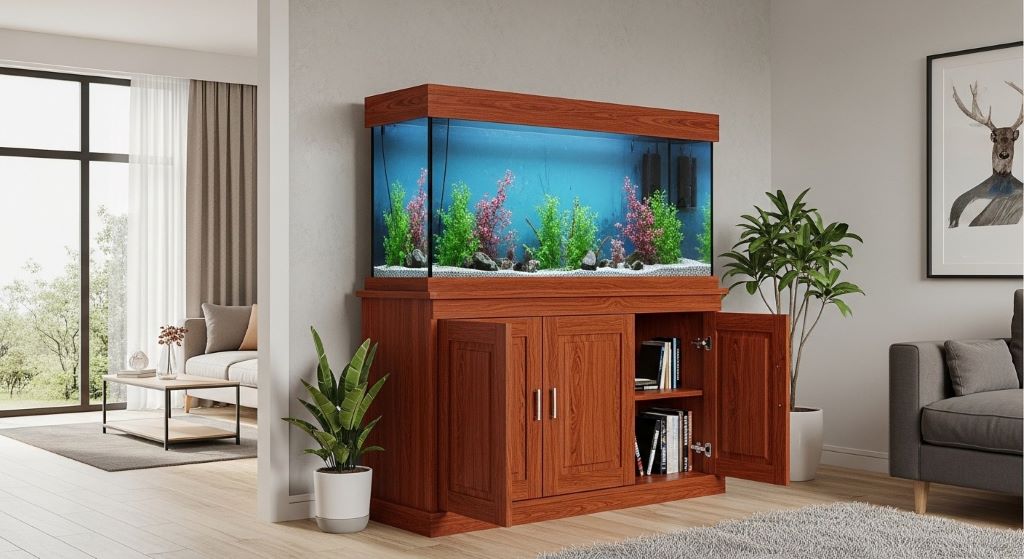
An aquarium brings life and tranquility to any room, but the stand supporting it plays an equally important role in your home’s aesthetics. The right stand doesn’t just hold your tank safely. It transforms your aquarium into a stunning focal point that seamlessly integrates with your existing decor.
Choosing a wood fish tank cabinet requires balancing practical concerns with style preferences. You need something strong enough to support hundreds of pounds of water, yet beautiful enough to enhance your living space. Additionally, the stand should provide storage for equipment while complementing your home’s design aesthetic.
This comprehensive guide will walk you through everything you need to know about selecting the perfect aquarium stand. From understanding weight requirements to matching wood finishes with your furniture, you’ll learn how to make a choice that’s both functional and visually appealing. By the end, you’ll have the knowledge to select a stand that elevates your aquarium from a simple fish tank to an elegant piece of home decor.
Understanding Your Aquarium’s Weight Requirements
Before considering aesthetics, you must ensure your stand can safely support your aquarium’s weight. Water is surprisingly heavy, and underestimating this weight can lead to catastrophic failures that damage your home and harm your fish.
A gallon of water weighs approximately 8.3 pounds. Therefore, a 55-gallon tank holds about 460 pounds of water alone. Add the weight of the glass tank, substrate, rocks, decorations, and equipment, and you’re easily exceeding 600 pounds. Larger tanks weigh considerably more.
Your stand must distribute this weight evenly across its footprint. Weak points or uneven weight distribution can cause the stand to bow, crack, or collapse over time. Quality stands feature reinforced construction with multiple support points that prevent sagging.
Check the manufacturer’s specifications for maximum weight capacity. Never assume a stand can hold more than its rated capacity. If you’re unsure about your tank’s total weight, calculate it carefully before selecting a stand. This safety consideration should always take priority over style preferences.
Floor structure also plays a role. Upper floor apartments may have weight restrictions, and you’ll want to position heavy aquariums perpendicular to floor joists for maximum support. Consult a structural engineer if you have concerns about your floor’s load-bearing capacity.
Matching Wood Types and Finishes to Your Decor
Once you’ve ensured structural safety, you can focus on selecting a wood type and finish that complements your home. Different woods offer distinct colors, grain patterns, and characteristics that work better with certain design styles.
Oak provides a classic look with prominent grain patterns. Its durability makes it excellent for aquarium stands, and it’s available in both red and white varieties. Oak accepts stains well, allowing you to customize the color while maintaining the natural grain’s beauty. This wood works particularly well in traditional and rustic interiors.
Cherry wood offers rich, warm tones that deepen with age. Its smooth grain and natural luster create an elegant appearance perfect for formal living spaces. However, cherry can be more expensive than other options. It pairs beautifully with traditional and transitional design styles.
Maple features a light, consistent color with subtle grain patterns. Its clean appearance suits modern and contemporary spaces exceptionally well. Maple is extremely hard and durable, providing excellent long-term performance. Additionally, it takes paint beautifully if you prefer a colored finish over natural wood.
Walnut delivers deep, chocolate-brown tones with dramatic grain patterns. This premium wood makes a bold statement and works wonderfully as a centerpiece in mid-century modern or contemporary spaces. The cost reflects its status as a luxury material, but the visual impact justifies the investment.
Pine offers an affordable option with a lighter color and knotty character. While softer than hardwoods, quality pine stands with proper construction provide adequate support. Pine suits cottage, farmhouse, and casual coastal styles particularly well.
Finish options range from natural oils that preserve the wood’s authentic appearance to painted surfaces that integrate with specific color schemes. Stained finishes offer middle ground, enhancing the wood’s natural beauty while adjusting the color to match your existing furniture.
Design Styles That Transform Aquarium Furniture
The overall design style of your stand dramatically affects how it integrates with your home. Understanding different style categories helps you narrow down options that will work in your space.
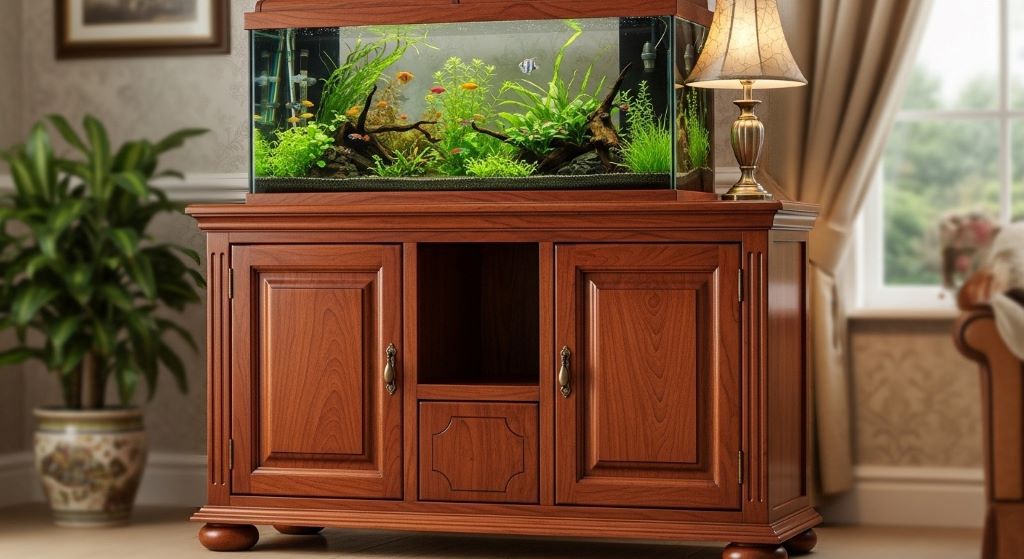
Traditional stands feature ornate details like crown molding, raised panel doors, and turned legs. These decorative elements create a furniture-like appearance that fits seamlessly into classic interiors. Traditional designs often include substantial cabinet space with shelving for equipment and supplies.
Modern stands emphasize clean lines, minimal ornamentation, and sleek hardware. They often feature flat-panel doors, straight legs, and geometric forms. Modern aquarium furniture works beautifully in contemporary homes and creates a sophisticated, uncluttered look.
Rustic stands incorporate natural wood characteristics like visible knots, distressed finishes, and weathered appearances. They might feature metal accents, barn door hardware, or reclaimed wood construction. These stands suit farmhouse, lodge, and casual cottage aesthetics.
Industrial designs combine wood with metal elements like steel frames or pipe legs. They often showcase the wood’s raw edges and incorporate functional hardware as design features. Industrial stands complement loft apartments and urban contemporary spaces.
Transitional stands blend traditional and contemporary elements for versatile appeal. They might feature simple shaker-style doors with modern hardware or streamlined shapes with subtle decorative touches. This flexibility makes transitional designs work in various home styles.
Asian-inspired stands incorporate elements like bamboo, dark finishes, and minimalist forms. They often feature open shelving and clean horizontal lines that create a zen-like aesthetic perfectly suited to aquariums.
Cabinet Configuration and Storage Solutions
Beyond supporting your tank, a decorative aquarium stand provides valuable storage for equipment and supplies. The internal configuration affects both functionality and the stand’s external appearance.
Enclosed cabinets with doors hide equipment completely, creating a cleaner look. This design works well in living rooms and formal spaces where visible equipment would detract from the aesthetic. Doors can be solid panels, glass inserts, or combinations that allow some visibility while maintaining organization.
Open shelving provides easy access to equipment and can display decorative items alongside functional gear. This configuration suits casual spaces and makes maintenance more convenient. However, the exposed interior requires neat organization to maintain a polished appearance.
Drawers add versatility for storing smaller items like fish food, test kits, and maintenance tools. Stands with drawer combinations offer the most flexible storage, keeping frequently used items accessible while hiding larger equipment behind doors.
Adjustable shelving accommodates equipment of varying sizes and allows you to reconfigure storage as your needs change. Look for stands with multiple shelf positions or removable shelves that adapt to your specific equipment.
Cable management features prevent unsightly cord tangles and make the stand’s exterior cleaner. Built-in cable ports, channels, or clips keep wires organized and hidden from view. This attention to detail separates quality aquarium furniture from basic utilitarian stands.
Proportions and Scale for Visual Balance
The relationship between your aquarium’s size and its stand’s dimensions affects the overall visual impact. Proper proportions create a balanced, intentional look rather than an awkward arrangement.
Your stand should match or slightly exceed your tank’s footprint. A stand that’s too small creates an unstable appearance and safety concerns. Conversely, an excessively large stand makes the tank look undersized and wastes valuable floor space.
Height considerations depend on viewing preferences and room layout. Standard heights place the tank at comfortable viewing levels when seated. Taller stands create dramatic presentations and work well in rooms with high ceilings. Shorter stands suit children’s rooms or spaces where you’ll primarily view the tank while standing.
The stand’s visual weight should balance the tank’s presence. Delicate legs supporting a massive tank look precarious and uncomfortable. Similarly, an overly bulky stand can overwhelm a smaller tank. The materials, design details, and proportions should feel harmonious.
Consider the stand in relation to surrounding furniture. A stand that’s drastically different in height or style from nearby pieces can disrupt the room’s flow. While the aquarium should be a focal point, it shouldn’t clash with the overall design scheme.
Negative space around the aquarium affects its impact. Leaving adequate clearance from walls and adjacent furniture prevents a cramped appearance. This breathing room also provides practical access for maintenance while enhancing the display’s visual appeal.
Color Coordination and Room Integration
Selecting the right color for your stand helps it integrate naturally with your existing color palette. This consideration extends beyond simply matching wood tones to encompass the entire room’s aesthetic.
Matching wood tones to existing furniture creates a cohesive look that feels intentional. However, exact matches aren’t always necessary or desirable. Coordinating finishes within the same color family while varying the tone adds depth and interest.
Contrasting finishes can make your aquarium stand out as a deliberate focal point. A dark walnut stand in a room with lighter oak furniture draws attention while maintaining sophistication. This approach works particularly well when you want the aquarium to be the room’s centerpiece.
Consider the room’s wall colors when selecting your stand. Light-colored stands brighten spaces with dark walls, while dark stands provide grounding contrast in light rooms. The stand should complement rather than compete with wall colors.
Hardware and accent colors tie the stand to other room elements. Brushed nickel hardware might echo light fixtures or door handles. Painted accents could pick up colors from artwork or textiles. These subtle connections create design continuity throughout the space.
Natural wood finishes bring warmth to rooms with cool color schemes and can balance spaces heavy with manufactured materials. Conversely, painted finishes in neutral tones work beautifully in spaces with abundant natural materials and textures.
Quality Construction Features to Look For
Understanding quality indicators helps you invest in a stand that performs well and lasts for years. Several construction details separate premium stands from budget options.
Solid wood construction provides superior strength and longevity compared to particle board or MDF. While engineered woods can work in well-constructed stands, solid wood handles moisture better and resists warping over time. Check whether exposed surfaces are solid wood or veneer over engineered cores.
Joinery methods reveal construction quality. Dovetail joints, mortise and tenon connections, and dowel construction indicate skilled craftsmanship. These traditional methods create stronger, longer-lasting furniture than simple butt joints held with screws or nails.
Reinforcement features like cross bracing, corner blocks, and support beams prevent sagging and wobbling. Lift the stand slightly if possible to check for rigidity. Quality stands feel solid and don’t flex or creak under pressure.
Moisture-resistant finishes protect wood from water damage. Aquarium stands face inevitable exposure to splashing and humidity. Sealed finishes with water-resistant properties prevent warping, swelling, and finish deterioration over time.
Leveling adjustments compensate for uneven floors. Adjustable feet or leveling legs ensure the tank sits perfectly level, preventing stress on the glass and uneven water distribution. This feature becomes especially important for larger tanks where even slight angles create significant pressure differences.
Customization and Personal Touches
While ready-made stands offer convenience, customization options let you create something uniquely suited to your space and preferences. Several approaches allow personalization without requiring complete custom construction.
Semi-custom stands from manufacturers often offer choices in finish colors, hardware styles, and door configurations. This approach provides some personalization while maintaining reasonable costs and delivery times. You select from available options to create a combination that works for your needs.
Refinishing existing stands transforms their appearance to match new decor. Sanding and restaining changes wood tones, while painting opens endless color possibilities. This approach works particularly well with structurally sound stands that don’t match your current style preferences.
Hardware upgrades make dramatic impacts with minimal effort. Replacing basic knobs with designer handles, vintage pulls, or contemporary bars completely changes the stand’s character. This simple update can align a generic stand with your specific design aesthetic.
Decorative additions like trim, molding, or appliques add character to plain stands. These enhancements create custom looks without the expense of fully bespoke furniture. Applied moldings can transform a simple stand into a traditional showpiece.
Built-in lighting showcases your aquarium while adding ambiance to the room. LED strips along the top edge or beneath the stand create dramatic effects. Integrated lighting transforms your aquarium into evening focal point that enhances your home’s atmosphere.
Budget Considerations and Value Assessment
Aquarium stands span a wide price range, from basic utility stands to high-end custom furniture pieces. Understanding what drives costs helps you make informed decisions that balance budget and quality.
Entry-level stands typically use engineered woods, simple construction methods, and basic finishes. They provide adequate support for smaller tanks and work well when budget is the primary concern. However, they may lack the durability and aesthetic refinement of higher-quality options.
Mid-range stands offer better materials, improved construction, and more design options. They often feature solid wood frames with veneer panels, quality hardware, and water-resistant finishes. This category provides the best value for most aquarium owners who want both function and style.
Premium stands use superior materials, expert craftsmanship, and sophisticated designs. They’re built to last decades and often feature hand-applied finishes and custom details. The higher price reflects quality that justifies the investment for serious aquarium enthusiasts.
Custom-built stands command the highest prices but deliver exactly what you envision. Working with a furniture maker or carpenter creates a one-of-a-kind piece perfectly sized and styled for your space. This option suits unique installations or when nothing ready-made meets your requirements.
Consider long-term value rather than just initial cost. A well-built stand lasts many years and potentially moves with you to different homes. Cheap stands may need replacement within a few years, making them more expensive over time despite lower upfront costs.
Safety Features and Practical Considerations
While aesthetics matter, practical safety features ensure your investment protects both your aquarium and your home. Several considerations affect the stand’s real-world performance.
Water resistance throughout the construction prevents damage from spills and splashes. Sealed interiors, waterproof finishes, and drainage considerations protect the stand’s structural integrity. Some stands include drip trays or waterproof liners that contain accidental spills.
Ventilation prevents moisture buildup inside cabinets that can promote mold growth and damage equipment. Louvered doors, vent holes, or partial open shelving ensure air circulation. This becomes particularly important in humid environments or with equipment that generates heat.
Stability features prevent tipping, which becomes crucial in homes with children or pets. Wide footprints, anti-tip brackets, and proper weight distribution all contribute to stability. Never compromise on these safety elements, regardless of aesthetic preferences.
Accessibility for maintenance affects your long-term satisfaction. Stands that make water changes, filter cleaning, and equipment adjustments difficult become frustrating over time. Ensure the design allows comfortable access for routine care tasks.
Electrical considerations include safe routing for power cords and potential GFCI outlet placement. Some stands incorporate electrical strips or cord management systems that improve safety while maintaining clean aesthetics.
Conclusion
Selecting a stylish wooden aquarium stand that matches your home requires careful consideration of both practical requirements and aesthetic preferences. Start by ensuring the stand can safely support your aquarium’s weight, then explore wood types, finishes, and designs that complement your existing decor.
The wood fish tank cabinet you choose should balance storage needs with visual appeal, providing both functionality and beauty. Consider how the decorative aquarium stand integrates with your room’s color scheme, furniture style, and overall design aesthetic. Quality construction ensures your investment lasts while protecting your aquarium and home.
Remember that aquarium furniture serves as more than simple tank support. It’s a significant piece of home furnishing that affects your space’s entire character. Whether you prefer traditional elegance, modern simplicity, or rustic charm, the right stand transforms your aquarium into a stunning focal point.
Take time to evaluate your options carefully, considering factors like proportions, storage configuration, and construction quality. Don’t rush this decision, as the right stand will serve you well for many years. By following the guidance in this article, you’ll select a stand that enhances both your aquarium’s presentation and your home’s overall aesthetic appeal.
Frequently Asked Questions
Can I use regular furniture as an aquarium stand?
Regular furniture typically isn’t designed to support the concentrated weight and moisture exposure of an aquarium. Most household furniture uses construction methods and materials inadequate for safely holding hundreds of pounds in a small footprint. Additionally, aquariums require completely level surfaces that regular furniture may not provide. Unless specifically verified by a structural engineer, use only stands designed and rated for aquarium use to avoid catastrophic failures.
How do I maintain the wood finish on my aquarium stand?
Clean spills immediately using a soft cloth dampened with water, then dry thoroughly. Use furniture polish or wood conditioner appropriate for your finish type every few months to maintain luster and protection. Avoid harsh chemicals that can damage finishes or harm fish if they contact tank water. Check regularly for water damage around the base and address any swelling or finish deterioration promptly to prevent structural issues.
What’s the difference between aquarium stands and regular cabinets?
Aquarium stands feature reinforced construction specifically engineered to support concentrated weight loads that would damage regular cabinets. They include moisture-resistant materials and finishes that withstand the humid, splash-prone aquarium environment. Additionally, proper stands distribute weight evenly across their entire footprint and provide perfectly level surfaces essential for aquarium safety. The internal configuration also considers equipment ventilation and cable management needs unique to aquariums.
Should my stand match my other furniture exactly?
Exact matching isn’t necessary and can actually limit your options unnecessarily. Coordinating finishes within the same general color family while varying tones creates visual interest and depth. Many beautifully decorated rooms incorporate furniture pieces in complementary rather than identical finishes. Focus on overall style consistency and ensure the stand doesn’t clash dramatically with existing pieces rather than seeking perfect matches.
How much should I expect to spend on a quality aquarium stand?
Quality stands for smaller tanks (under 30 gallons) typically range from 150 to 400 dollars. Medium tanks (30 to 75 gallons) require stands costing 300 to 700 dollars for good quality. Large tank stands (75 gallons and up) generally start around 500 dollars and can exceed 1,500 dollars for premium options. Custom-built stands cost significantly more but provide exact specifications. Remember that proper support protects expensive aquariums and prevents costly water damage, making quality stands worthwhile investments.
Related Topics:
Top 5 Low-Maintenance Fish for First Reef Aquarium
Top Low-Maintenance Aquarium Plants for Busy Hobbyists