

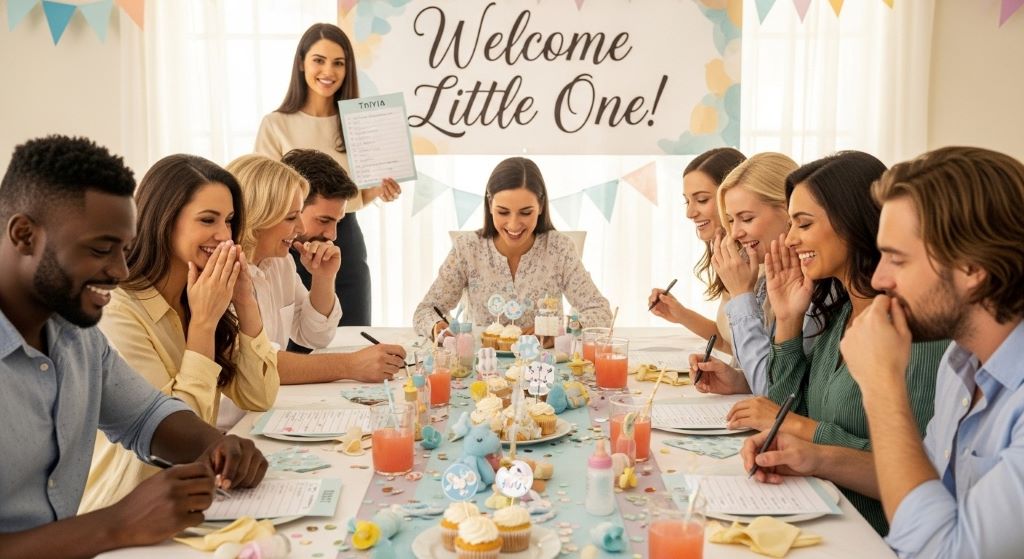
Planning a baby shower involves countless decisions, from choosing decorations to selecting the perfect menu. However, one element can truly make or break the celebration: entertainment. Trivia games have become increasingly popular at baby showers because they engage guests, spark conversations, and create memorable moments. This comprehensive guide will show you how to organize trivia games that your guests will genuinely enjoy.
Why Trivia Games Work at Baby Showers
Baby showers bring together diverse groups of people. You might have the mom-to-be’s childhood friends, work colleagues, family members, and neighbors all in one room. Many guests may not know each other well. Therefore, icebreaker activities become essential for creating a warm atmosphere.
Trivia games serve multiple purposes at these gatherings. They encourage interaction between guests who might otherwise stay in their comfort zones. Additionally, they provide entertainment without requiring physical activity, which suits guests of all ages and abilities. Unlike some party games that can feel forced or awkward, well-designed trivia feels natural and fun.
Furthermore, trivia games give everyone a chance to participate. Shy guests can contribute answers without being put on the spot. Meanwhile, more outgoing attendees can share stories related to the questions. This balance makes trivia an ideal choice for baby shower entertainment.
Choosing the Right Trivia Format
The format you select will significantly impact how much your guests enjoy the game. Several options work well for baby showers, each with distinct advantages.
Team-based trivia encourages collaboration and conversation. Divide guests into groups of three to five people. This approach works particularly well when guests don’t know each other. Teams can discuss answers together, which naturally breaks the ice. Moreover, this format reduces pressure on individuals who might feel anxious about being wrong.
Individual competition appeals to guests who enjoy a personal challenge. Each person answers questions independently, and you tally scores at the end. This format moves more quickly than team-based games. However, it can feel more intense and may not encourage as much social interaction.
A baby facts quiz offers a fun educational angle. Include questions about infant development, parenting milestones, and interesting statistics. This format teaches guests while entertaining them. New parents often appreciate learning practical information in a lighthearted setting.
Mixed formats combine different question types throughout the game. Start with easier icebreaker questions, move to more challenging content, then finish with lighthearted topics. This variety keeps energy levels high and maintains interest.
Creating Engaging Question Categories
The questions you ask will determine whether guests stay engaged or lose interest. Variety is crucial. Mix different types of questions to appeal to various knowledge bases and interests.
Questions about the parents-to-be personalize the experience. Ask about how the couple met, their pregnancy journey, or their parenting plans. Guests who know the parents well can shine here. Meanwhile, others learn interesting details about the expecting family. Just ensure questions remain appropriate and respectful of privacy.
General parenting knowledge questions level the playing field. These might cover topics like recommended sleep schedules, feeding guidelines, or safety tips. Parents in attendance can draw on their experience, while others can make educated guesses. This category naturally leads to sharing advice and stories.
Pop culture questions about famous parents or fictional families add humor. Reference popular movies, television shows, or celebrity baby names. These questions feel lighter and give everyone a chance to participate, regardless of parenting experience.
Historical and cultural questions broaden perspectives. Include pregnancy trivia questions about traditions from different cultures, historical practices, or how parenting advice has evolved over decades. This category sparks fascinating conversations and educates guests about diverse perspectives.
Preparing Your Trivia Materials
Proper preparation ensures smooth gameplay and prevents awkward pauses. Start by creating a master list of questions with verified answers. Research thoroughly to ensure accuracy. Nothing deflates energy faster than disputed answers or incorrect information.
Write clear, concise questions. Avoid ambiguous wording that could confuse participants. Each question should have one obvious correct answer. Test your questions on someone who wasn’t involved in creating them to identify potential confusion.
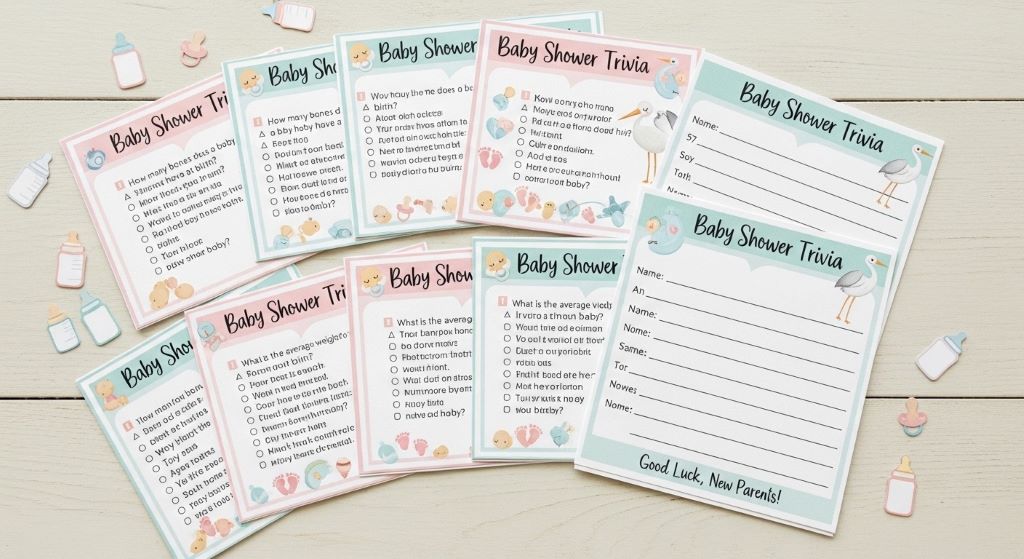
Prepare answer sheets if using written responses. Make them simple and easy to complete. Include spaces for team names or participant names, question numbers, and answers. Consider providing small pencils or pens as party favors.
Create a visually appealing presentation if displaying questions. Use readable fonts and appropriate font sizes. If hosting the shower in a large venue, ensure everyone can see the questions clearly. Alternatively, print question sheets for each team or individual.
Organize prizes that match your shower theme. Winners appreciate thoughtful rewards, but prizes don’t need to be expensive. Consider baby-themed items, gift cards, or homemade treats. Having multiple prize levels encourages participation even from those who don’t win first place.
Setting the Right Difficulty Level
Balancing question difficulty keeps all guests engaged. Too easy feels boring, while too hard becomes frustrating. Therefore, aim for a mix that challenges guests without overwhelming them.
Include approximately 60 percent easy to moderate questions. These should be answerable by most guests, either through common knowledge or reasonable guessing. Such questions build confidence and maintain positive energy.
Add about 30 percent moderately challenging questions. These require more specific knowledge or careful thinking. They separate strong performers from others without being impossible. Moreover, they create satisfying “aha” moments when guests get them right.
Reserve roughly 10 percent for difficult questions. These serve as tiebreakers and give trivia enthusiasts something to sink their teeth into. However, don’t make these questions so obscure that nobody could reasonably know the answer.
Consider your specific guest list when calibrating difficulty. A shower with many parents might handle more challenging parenting questions. Conversely, a younger crowd might excel at pop culture references. Adjust accordingly.
Managing Game Flow and Timing
How you run the game matters as much as the questions themselves. Good pacing keeps energy high and prevents guests from losing interest.
Start with a clear explanation of the rules. Tell guests how many questions you’ll ask, how much time they have per question, and how scoring works. Clarify whether conferring is allowed. Clear expectations prevent confusion and potential conflicts.
Allow appropriate time for each question. Generally, 30 to 45 seconds works well for most questions. More difficult questions might warrant a full minute. However, avoid letting any single question drag on too long. If teams seem stuck, provide a hint or move forward.
Read questions clearly and at a reasonable pace. Speak loudly enough for everyone to hear, especially in larger venues. Repeat questions if requested, but avoid giving inadvertent hints through emphasis or tone.
Keep score visibly if competition matters. A whiteboard or flip chart works well for tracking points. However, some hosts prefer to tally scores privately to reduce pressure and maintain a relaxed atmosphere.
Plan for approximately 20 to 30 minutes of total trivia time. This duration maintains interest without overwhelming the schedule. Remember, trivia is just one element of the shower. Leave plenty of time for other activities, gift opening, and socializing.
Making Trivia Interactive and Fun
Engagement increases when trivia feels interactive rather than like a test. Several techniques can boost participation and enjoyment.
Encourage discussion between questions. After revealing answers, invite guests to share relevant stories or experiences. These organic conversations often become the most memorable parts of the shower. Moreover, they give the mom-to-be insight into others’ parenting experiences.
Use props or visual aids when appropriate. Show baby items and ask guests to identify them or guess their purpose. Display photos and ask questions about them. Physical elements make trivia more dynamic and memorable.
Incorporate music during transitions. Play upbeat songs while teams confer or during scoring breaks. Music fills potentially awkward silences and maintains positive energy.
Add surprise elements to maintain interest. Occasionally offer bonus points for creative answers or funny responses. This flexibility makes the game feel less rigid and more playful.
Celebrate all participants, not just winners. Acknowledge creative answers, close scores, or impressive comebacks. Creating an inclusive atmosphere ensures everyone feels valued regardless of their trivia performance.
Adapting for Virtual or Hybrid Showers
Many showers now include remote guests. Fortunately, trivia adapts well to virtual formats with some modifications.
Use video conferencing platforms with breakout room features. These allow virtual team formation and private discussion. Assign a mix of in-person and remote guests to each team when possible. This integration helps everyone feel included.
Share questions through screen sharing or chat functions. Ensure remote participants can see or read questions as clearly as in-person guests. Consider sending materials in advance to prevent technical difficulties.
Build in extra time for virtual participation. Internet delays and technical issues can slow responses. Patience and flexibility become even more important in hybrid settings.
Designate someone to monitor virtual participants specifically. This person can address technical issues, answer questions, and ensure remote guests stay engaged. Their focused attention prevents virtual attendees from feeling forgotten.
Common Pitfalls to Avoid
Even well-planned trivia can stumble. Awareness of common mistakes helps you sidestep them.
Avoid questions that might embarrass the parents-to-be. Steer clear of sensitive topics like pregnancy complications, weight gain, or relationship issues. Keep content celebratory and positive.
Don’t make the game too competitive. While friendly competition adds excitement, excessive emphasis on winning can create tension. Remember, the goal is entertainment and connection, not determining the ultimate baby knowledge champion.
Skip questions with debatable answers. Stick to verifiable facts rather than opinions. Controversial topics about parenting choices can create uncomfortable situations.
Resist the urge to include too many questions. Quality matters more than quantity. A focused set of engaging questions works better than an exhausting marathon.
Avoid neglecting non-parents in your question selection. While pregnancy trivia questions work well, ensure enough variety that guests without children can participate meaningfully.
Conclusion
Organizing baby shower trivia games that guests love requires thoughtful planning and execution. Choose an appropriate format that encourages participation and suits your specific group. Create diverse question categories that appeal to different knowledge bases and interests. Prepare materials thoroughly, balance difficulty levels carefully, and manage game flow to maintain energy and engagement.
Remember that successful trivia prioritizes fun and connection over competition. The best games spark conversations, create laughter, and help guests bond with each other and the parents-to-be. By following these guidelines and adapting them to your unique situation, you can create a trivia experience that guests will remember long after the shower ends.
The key lies in preparation, flexibility, and maintaining focus on what matters most: celebrating the upcoming arrival and bringing people together. With these principles in mind, your baby shower trivia will be a highlight of the celebration.
Frequently Asked Questions
How many trivia questions should I include in a baby shower game?
Plan for 15 to 20 questions for a complete game that lasts about 20 to 30 minutes. This amount provides enough variety without overwhelming guests or taking too much time from other shower activities. You can adjust based on your timeline and guest engagement levels.
Should I offer prizes for trivia winners?
Yes, small prizes add excitement without making the game overly competitive. Consider baby-themed items, gift cards between five and fifteen dollars, or homemade treats. Having second and third place prizes encourages broader participation and keeps more guests engaged throughout the game.
Can I mix different types of trivia questions in one game?
Absolutely. Mixing question types keeps the game interesting and allows different guests to shine. Combine personal questions about the parents-to-be, general parenting knowledge, pop culture references, and fun facts. This variety prevents the game from feeling monotonous and appeals to diverse interests.
How do I handle disputes about trivia answers?
Prepare reliable sources for your answers in advance and have them available during the game. If disputes arise, quickly reference your source and move forward. Consider having a neutral party verify controversial answers. Keep the tone light and remind guests that fun matters more than perfect accuracy.
What if some guests don’t want to participate in trivia?
Never force participation. Some guests prefer observing or socializing quietly. You can offer optional roles like scorekeeper or question reader for those who want involvement without competing. Ensure your shower includes other activities and free time so non-participants don’t feel excluded or uncomfortable.
Related Topics:
Best Indoor Baby Cameras for Monitoring Your Nursery
Best Breastfeeding Pillows of 2026: What’s New and Worth Buying?