

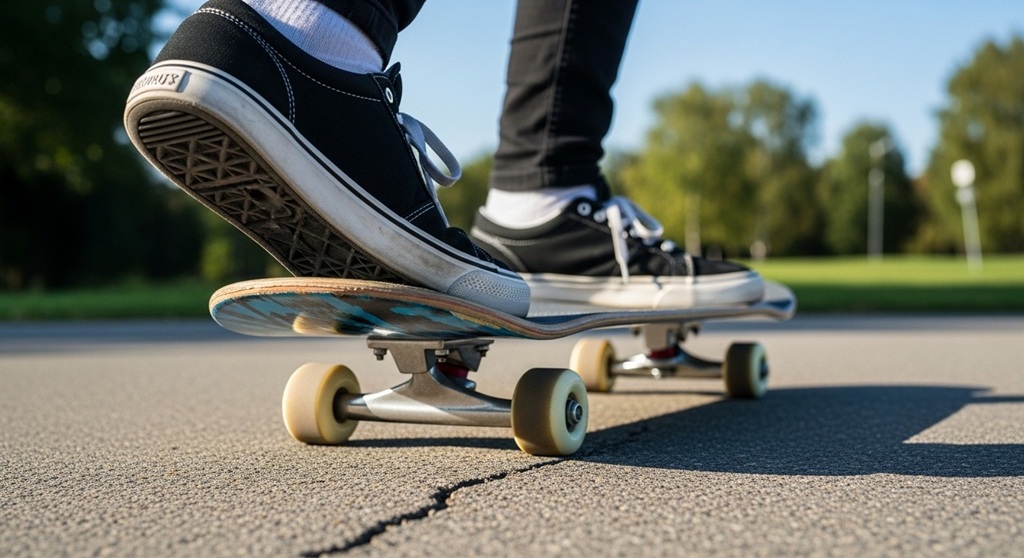
Can you skateboard in everyday sneakers? Yes. But you must understand the limits of casual footwear before stepping on a deck. Everyday sneakers are not built like skate shoes. They lack reinforced uppers, durable suede panels, and flat vulcanized soles designed for grip. That does not mean you cannot skate in them. It means you must adapt your approach.
Many beginners start with casual sneakers for skateboarding because they already own them. Some want one pair for both daily wear and skate sessions. That’s practical. But safety comes first. Poor grip, thin soles, and weak stitching can increase injury risk.
This guide explains how to use skate lifestyle shoes safely, what mistakes to avoid, and when to upgrade. You will learn practical adjustments, data-backed risks, and step-by-step techniques that reduce damage to both your shoes and your ankles.
If you are currently wearing casual sneakers and thinking about skating today, read this first.
Why Are Everyday Sneakers Risky for Skateboarding?
Short answer: Everyday sneakers are not engineered for repetitive board friction, impact absorption, or lateral stability.
Problem: They Are Built for Walking, Not Board Control
Most lifestyle sneakers focus on comfort and aesthetics. Running shoes emphasize forward motion. Skateboarding requires side pressure, grip against griptape, and repeated impact during ollies.
According to sports injury research published in orthopedic studies, ankle sprains account for nearly 40% of skateboarding-related injuries. Footwear stability is a major factor. Shoes without flat soles reduce surface contact with the deck, affecting control.
Agitation: What Happens When You Ignore This?
- Reduced grip leads to foot slippage.
- Foam-heavy soles compress unevenly.
- Mesh uppers tear within days.
- Heel cushioning destabilizes landing.
Skateboarding creates vertical and lateral force. Casual sneakers are not reinforced to handle that stress.
Solution: Understand the Weak Points
If you plan to skate in everyday sneakers, inspect three things:
- Flat sole surface area
- Upper material durability
- Ankle support structure
Not all skate lifestyle shoes are equal. Some hybrid designs perform better than others.
Which Casual Sneakers Work Best for Skateboarding?
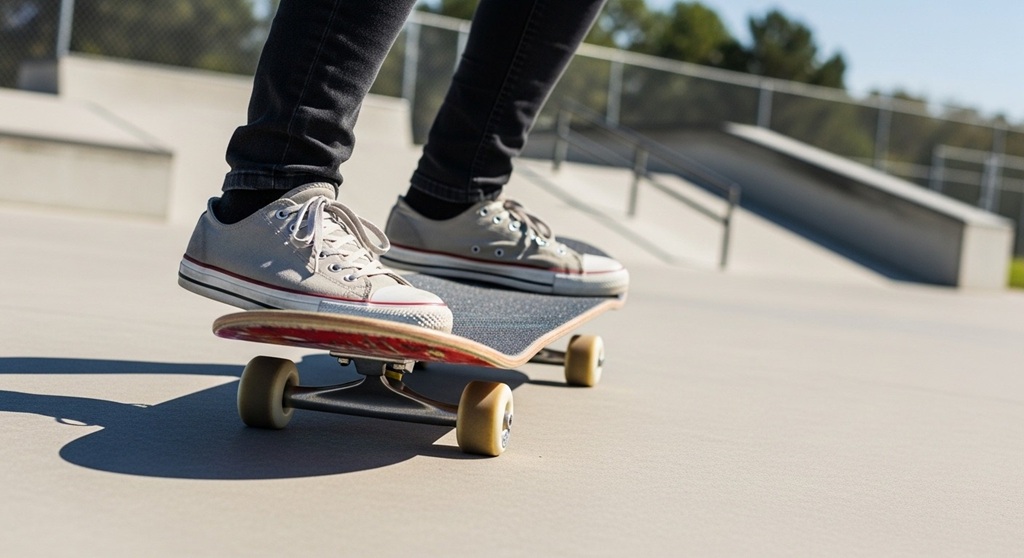
Short answer: Choose flat rubber soles, suede or leather uppers, and minimal heel elevation.
Not every casual sneaker fails at skateboarding. Certain models blend lifestyle and skate functionality.
What to Look For
- Flat, grippy rubber outsole
- Minimal air cushioning
- Reinforced toe cap
- Low heel drop
- Durable stitching
A study analyzing footwear traction in board sports showed that flat vulcanized rubber outsoles provide higher friction against abrasive surfaces compared to segmented running soles.
If you are looking for models that balance daily wear and skating, check this guide on
casual sneakers for skateboarding. It compares durability, price, and real-world wear performance.
How Should Beginners Adjust Their Skating Style When Wearing Everyday Sneakers?
Short answer: Avoid advanced tricks. Focus on balance, cruising, and controlled ollies.
Problem: Aggressive Tricks Destroy Casual Shoes
Kickflips, heelflips, and stair jumps create friction that tears non-reinforced materials. Thin canvas rips quickly.
Agitation: Injury Risk Increases
Without ankle support, landing impact shifts inward. That increases strain on ligaments.
Solution: Modify Your Approach
- Start with cruising and pushing drills.
- Practice stationary ollies before rolling.
- Avoid stair gaps and rails.
- Skate smooth surfaces only.
Control matters more than trick difficulty when using skate lifestyle shoes.
How Can You Improve Grip When Using Everyday Sneakers?
Short answer: Maintain clean soles and use fresh griptape.
Why Grip Fails
Dust reduces friction between rubber soles and griptape. Running-style tread patterns also limit full surface contact.
Practical Fixes
- Wipe soles with a damp cloth before skating.
- Replace worn griptape.
- Avoid shoes with deep grooves.
- Use grip gum to restore traction.
Board control depends on friction consistency. Even proper skate shoes lose grip when dirty.
How Do You Protect Everyday Sneakers from Rapid Damage?
Short answer: Reinforce high-friction areas before skating.
Problem: Toe Blowouts
Ollies grind the front shoe against griptape. Casual materials break down quickly.
Solution: Preventive Measures
- Apply shoe goo on ollie areas.
- Add suede patches internally.
- Rotate shoes between sessions.
- Avoid wet surfaces.
Case example: A beginner skating three times per week reported that untreated canvas sneakers tore within two weeks. After applying shoe adhesive reinforcement, durability extended to six weeks.
Are Running Shoes Safe for Skateboarding?
Short answer: No. Running shoes are the worst option for skating.
Why?
- Elevated heel reduces balance.
- Soft foam compresses unevenly.
- Segmented outsole reduces grip.
- Mesh uppers tear quickly.
Running shoes are built for forward motion and shock absorption, not lateral deck control.
What Are the Signs You Should Upgrade to Real Skate Shoes?
Short answer: Upgrade when control feels unstable or durability drops fast.
Warning Signs
- Repeated ankle discomfort
- Rapid sole separation
- Toe tearing within weeks
- Foot sliding mid-trick
Skateboarding injury data from emergency department studies show that poor stability footwear increases sprain frequency. If skating becomes serious, invest in proper shoes.
Can Skate Lifestyle Shoes Replace Dedicated Skate Shoes?
Short answer: Sometimes, for light sessions.
Some brands design hybrid footwear that blends daily comfort with skate durability. These models use reinforced suede while maintaining casual aesthetics.
However, they still cannot match triple-stitched panels and specialized insoles found in pro skate shoes.
How to Build a Safe Setup When Wearing Everyday Sneakers?
Short answer: Compensate through board setup and protective gear.
Board Adjustments
- Use softer wheels for smoother rides.
- Keep trucks properly tightened.
- Ensure griptape is fresh.
Safety Gear
- Wear ankle-support socks.
- Use knee and elbow pads.
- Always wear a helmet.
Reducing external risk balances internal footwear weakness.
Conclusion: Should You Skate in Everyday Sneakers?
Yes, but only if you understand the limits.
Everyday sneakers can work for cruising, balance drills, and light tricks. They are not built for heavy impact or technical street skating. Adjust your style. Reinforce weak areas. Monitor wear patterns.
If you plan to skate regularly, consider reviewing durable hybrid options. Explore this breakdown of
skate lifestyle shoes that balance cost and durability.
Skating safely is not about brand hype. It is about understanding mechanics, friction, and foot stability.
Start smart. Protect your ankles. Upgrade when necessary.
Frequently Asked Questions
Can I learn ollies in casual sneakers for skateboarding?
Yes, beginners can practice ollies in casual sneakers if the sole is flat and grippy. Avoid canvas models without reinforcement. Keep sessions short.
How long do everyday sneakers last for skating?
Durability varies. Canvas models may tear within two weeks of regular skating. Leather or suede can last four to eight weeks with reinforcement.
Do skate lifestyle shoes provide ankle support?
Some mid-top lifestyle models offer moderate support. However, they are not as structured as professional skate shoes.
Is grip tape responsible for shoe damage?
Yes. Griptape acts like sandpaper. It creates friction necessary for control but accelerates material wear.
Are high-top sneakers safer for skating?
High-tops can offer better ankle coverage, but sole grip and material strength matter more than collar height.
Should I use insoles in everyday sneakers?
Yes. Shock-absorbing insoles can improve comfort during landings, especially if your sneakers lack impact cushioning.
Related Topic: How to Find a Non-Toxic Room Heater Safe for Babies and Toddlers
Read Next: How Heavy-Duty Office Shredders Handle High Paper Volume