


Golf balls look similar on the outside. Yet the difference between premium and budget golf balls can significantly affect performance, spin control, distance, and feel. Many golfers assume that expensive balls automatically improve their game. In reality, the right ball depends more on your swing speed, skill level, and playing goals.
Premium golf balls are designed with multi-layer construction and urethane covers that deliver better spin control and feel around the greens. Budget golf balls usually use simpler two-piece designs and ionomer covers, which prioritize durability and distance over short-game precision. Both categories serve a purpose depending on the player.
According to industry data from the National Golf Foundation, amateur golfers lose an average of 1.3 balls per round. That statistic alone explains why many recreational players choose affordable golf balls rather than tour-level options.
This guide explains how to choose between premium and budget golf balls based on real performance factors—not marketing claims. You will learn when premium balls are worth the cost, when affordable golf balls are the smarter choice, and how to match the ball to your playing style.
What Is the Main Difference Between Premium and Budget Golf Balls?
Short Answer: Premium golf balls use multi-layer designs and urethane covers for spin and control, while budget balls typically use two-piece construction focused on durability and distance.
The biggest difference lies in the ball’s internal structure and cover material. These two factors determine how the ball reacts at different stages of a golf shot.
Premium Golf Ball Construction
- Three to five layers
- Soft urethane cover
- High spin around the greens
- Better control for skilled players
Tour-level balls like those used by professional golfers prioritize shot shaping, stopping power, and feel. The additional layers allow manufacturers to tune performance separately for driver shots and wedge shots.
Budget Golf Ball Construction
- Two-piece design
- Ionomer or Surlyn cover
- Lower spin
- More durability
Affordable golf balls focus on simplicity. Fewer layers reduce manufacturing costs while still delivering strong distance performance for most amateur players.
For golfers who lose balls frequently, the durability and lower price of budget options often provide better value.
Why Do Premium Golf Balls Cost More?
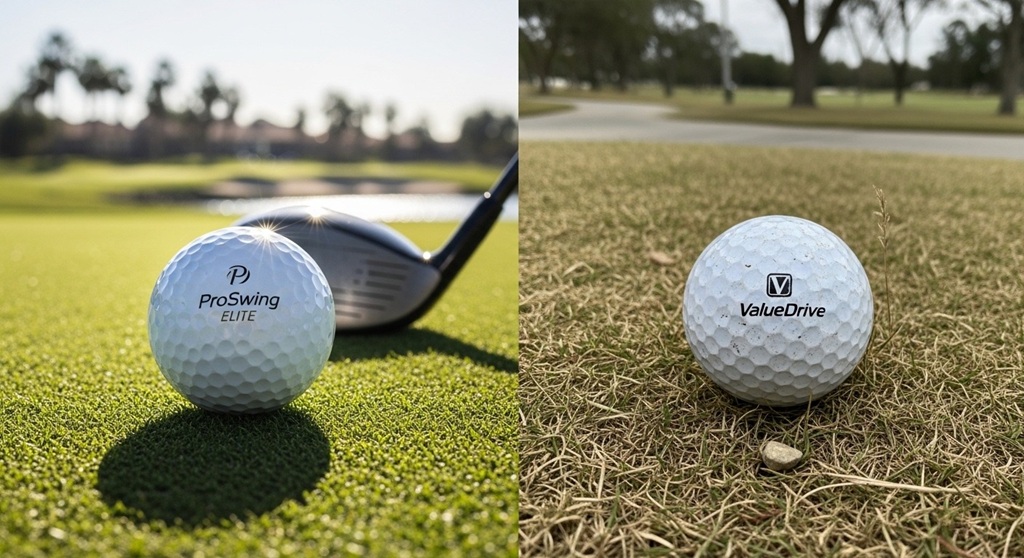
Short Answer: Premium golf balls cost more because of advanced materials, complex manufacturing processes, and performance optimization for skilled players.
The price difference is largely driven by technology.
Premium balls typically include:
- Urethane covers that increase spin and feel
- Multiple mantle layers that control spin rates
- High-performance cores designed for faster energy transfer
Manufacturing these layers requires more precision and higher-quality materials.
For example, a tour ball can involve dozens of production steps. Budget golf balls use fewer materials and simpler molds, reducing manufacturing cost.
According to equipment reports from Golf Datatech, the average price of a dozen premium balls ranges between $45 and $55. Budget balls typically range between $15 and $30.
The key takeaway is that premium balls are engineered for performance optimization rather than cost efficiency.
Do Premium Golf Balls Actually Improve Performance?
Short Answer: Premium golf balls improve short-game control and spin but may not significantly increase distance for most amateur players.
This is one of the most misunderstood topics in golf equipment.
Many golfers believe premium balls automatically create longer drives. In reality, driver distance differences are often small.
A robot test conducted by Golf Laboratories compared multiple golf ball types. The results showed that driver distance differences between premium and mid-range balls averaged only 2–5 yards.
The real performance difference appears in the short game.
Premium balls generate higher spin rates with wedges and irons. This allows better stopping power on the green.
For skilled players who rely on spin control, this advantage matters.
For beginners or high-handicap golfers, the difference may be less noticeable.
Who Should Use Affordable Golf Balls?
Short Answer: Beginners, high-handicap players, and golfers who lose balls frequently benefit most from affordable golf balls.
Budget balls provide solid performance without the cost penalty of losing expensive balls.
Here are situations where affordable golf balls make the most sense:
- New golfers learning the game
- Players with handicaps above 18
- Golfers who prioritize distance over spin
- Courses with water hazards or heavy rough
Because these balls produce lower spin, they can sometimes reduce sidespin as well. This can help minimize hooks and slices.
Durability is another advantage. Ionomer covers resist cuts and scuffs better than softer urethane covers.
This means the same ball can last multiple rounds.
Who Should Consider Premium Golf Balls?
Short Answer: Skilled golfers with consistent swings benefit most from premium balls because they can take advantage of higher spin and better feel.
Players who should consider premium golf balls include:
- Low handicap golfers
- Competitive tournament players
- Golfers with fast swing speeds
- Players focused on short-game performance
These golfers often rely on shot shaping and precise distance control.
The urethane cover of premium balls allows wedge shots to stop quickly on the green. This can improve scoring opportunities.
For example, PGA Tour players consistently generate wedge spin rates above 9,000 rpm. Premium balls are designed to support these high-spin shots.
How Does Golf Ball Compression Affect Your Choice?
Short Answer: Compression measures how much a ball deforms during impact. Lower compression balls suit slower swing speeds, while higher compression balls work better for faster swings.
Compression influences both feel and distance.
Low Compression Balls
- Easier to compress
- Better for swing speeds below 90 mph
- Softer feel
High Compression Balls
- Require faster swing speeds
- Offer greater control
- Typically used in tour golf balls comparison studies
If a golfer cannot fully compress a ball, energy transfer becomes less efficient. This can reduce distance.
That is why many budget balls are designed with lower compression cores.
Tour Golf Balls Comparison: Premium vs Budget
Short Answer: Tour balls offer superior spin and control, while budget balls provide distance and durability at a lower cost.
| Feature | Premium Golf Balls | Budget Golf Balls |
|---|---|---|
| Construction | 3–5 layers | 2 layers |
| Cover Material | Urethane | Ionomer / Surlyn |
| Spin Control | High | Low |
| Durability | Moderate | High |
| Price (per dozen) | $45–$55 | $15–$30 |
| Best For | Low handicaps | Beginners / casual players |
This tour golf balls comparison highlights that the choice depends on player skill level rather than simply choosing the most expensive option.
How Can You Test Which Golf Ball Works Best for You?
Short Answer: The best way to choose a golf ball is through on-course testing with different models.
Many golfers pick balls based only on brand reputation. Testing provides more accurate insights.
Here is a simple testing process:
- Choose three ball types (premium, mid-range, budget)
- Hit driver shots and measure distance
- Hit wedge shots and observe spin and stopping power
- Evaluate feel on putting
Some golf retailers also offer ball fitting sessions using launch monitors.
These tests measure launch angle, spin rate, and ball speed to recommend suitable models.
Are Mid-Range Golf Balls a Better Compromise?
Short Answer: Mid-range balls combine moderate spin with reasonable cost, making them a balanced choice for many golfers.
Many manufacturers now produce hybrid designs with three layers and ionomer covers.
These balls deliver:
- More spin than budget balls
- Lower cost than premium balls
- Good distance performance
For golfers transitioning from beginner to intermediate skill levels, mid-range options often provide the best balance.
Conclusion: Should You Choose Premium or Budget Golf Balls?
Choosing between premium and budget golf balls ultimately comes down to how you play the game.
Premium balls deliver measurable advantages in spin control, feel, and short-game precision. Skilled players who rely on shot shaping and consistent ball striking often benefit from these features.
However, most recreational golfers will not see dramatic improvements in distance or scoring simply by switching to expensive balls. For players who lose balls frequently or prioritize durability, affordable golf balls offer excellent value.
The smartest approach is to match the ball to your skill level and playing habits rather than assuming higher cost equals better performance.
If you want to improve your golf performance, experiment with several ball types and observe how they behave during real rounds. Data from your own game is more valuable than marketing claims.
CTA: Ready to find the right golf ball for your game? Test a few different models during your next round and track your results. The right ball can improve consistency, confidence, and overall enjoyment of the game.
Frequently Asked Questions About Premium vs Budget Golf Balls
Are premium golf balls worth the money?
Premium golf balls are worth the cost for players who benefit from increased spin and control around the greens. Skilled golfers often see better short-game performance with urethane-covered balls. For beginners, the performance difference may not justify the higher price.
Do affordable golf balls reduce slices or hooks?
Some affordable golf balls produce lower spin rates, which can slightly reduce sidespin. This may help limit severe hooks or slices. However, swing mechanics remain the main factor influencing ball flight.
How long does a golf ball last?
A golf ball can last multiple rounds if it is not lost or damaged. Budget balls with ionomer covers tend to last longer because they resist scuffs and cuts better than softer urethane covers.
What compression golf ball should beginners use?
Beginners generally benefit from low to mid compression golf balls. These balls compress more easily, helping players with slower swing speeds achieve better distance and feel.
Why do professional golfers use tour balls?
Professional golfers rely on tour balls because they offer high spin rates and consistent control during approach shots and wedge play. These characteristics allow professionals to stop the ball quickly on the green.
Are refurbished golf balls a good option?
Refurbished balls can be cheaper, but quality varies depending on the restoration process. Some players prefer recycled balls instead, which are cleaned but not repainted.
Can switching golf balls improve your score?
Switching balls can influence performance, especially in the short game. However, the biggest scoring improvements usually come from practice, course management, and swing consistency.
Read More Also: How to Choose the Right Footwear for Women Who Love Surfing
Find out: How to Protect Your Dog From UV Rays During Summer Walks